A fresh angle: focus on pattern meanings
Many students make an opera mask handwritten newspaper by writing only about color meanings. A more interesting idea is to focus on patterns, lines, and painted details. This gives the project more depth and makes it feel more creative.
You can even use a question-style title, such as why mask patterns look different or what eyebrow and eye designs show on stage. This makes the page easier to understand from the very beginning.
Section ideas you can place on the page
Section one: where the patterns appear
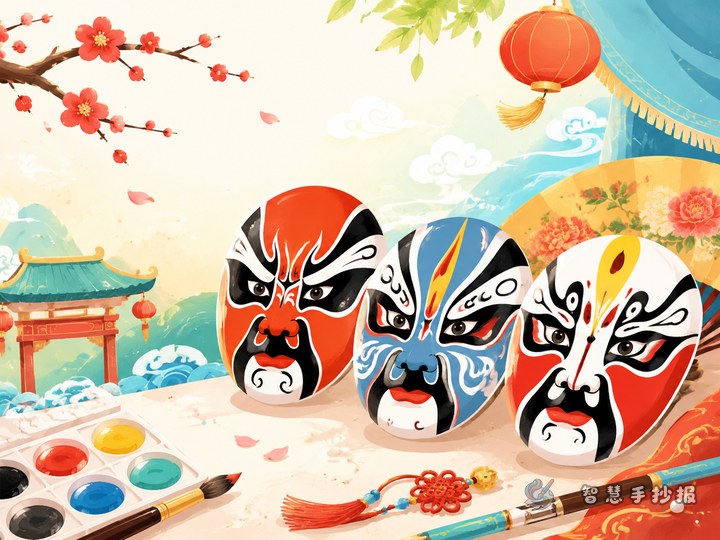
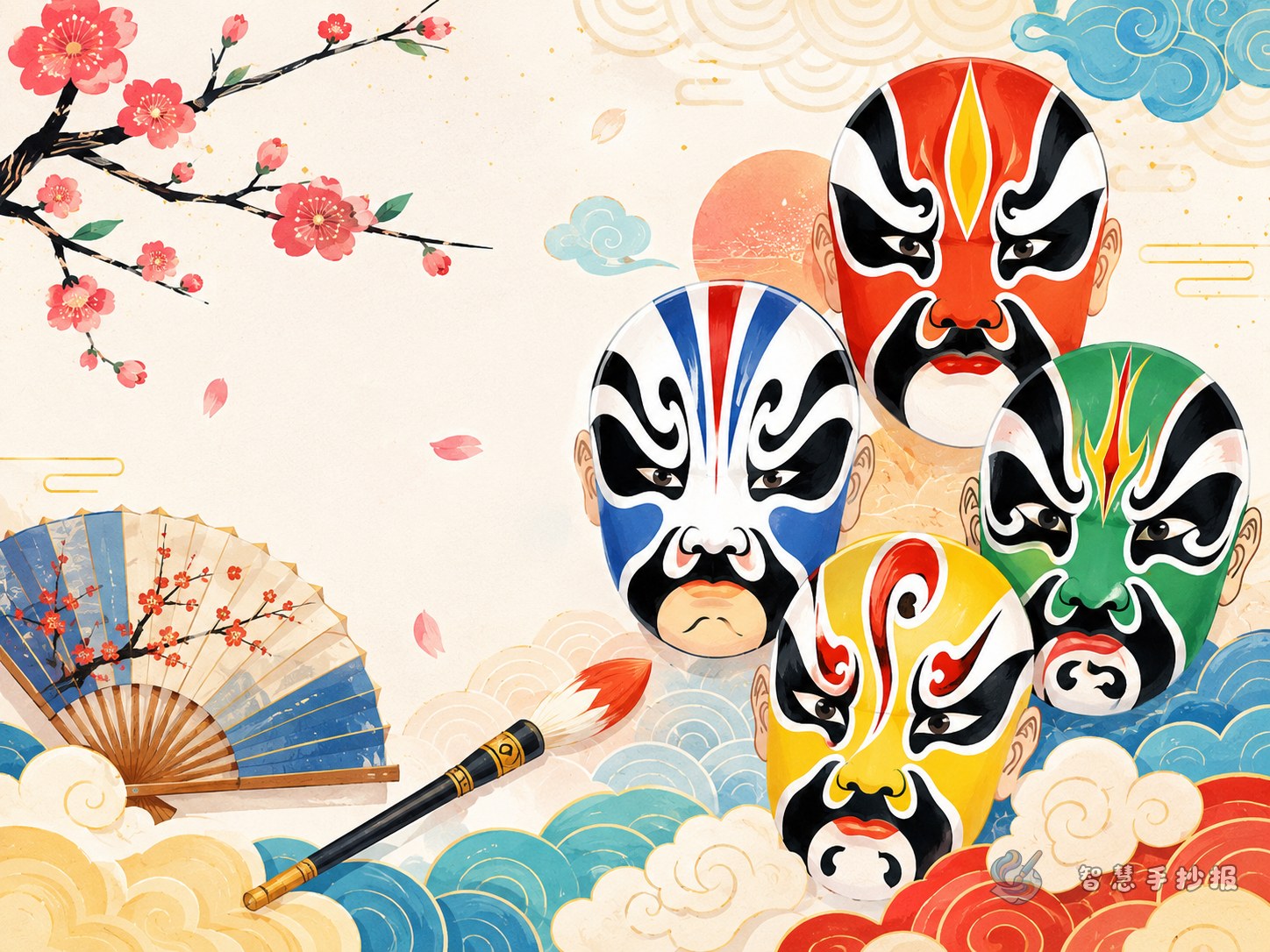
Introduce common pattern areas such as the forehead, around the eyebrows, the eye sockets, the sides of the nose, and near the mouth. Explain that different positions create different visual effects.
Section two: why lines matter
The lines on a mask are not random. Thick lines can make a role look powerful, curved lines can make the expression feel lively, and symmetrical shapes often make the whole face look strong and complete.
Section three: one detail I noticed
Choose just one small feature to describe, such as a flame-like forehead design, a crescent shape, or a swirling line. This is easy for children to write and helps the page stay focused.
Section four: why masks suit the stage
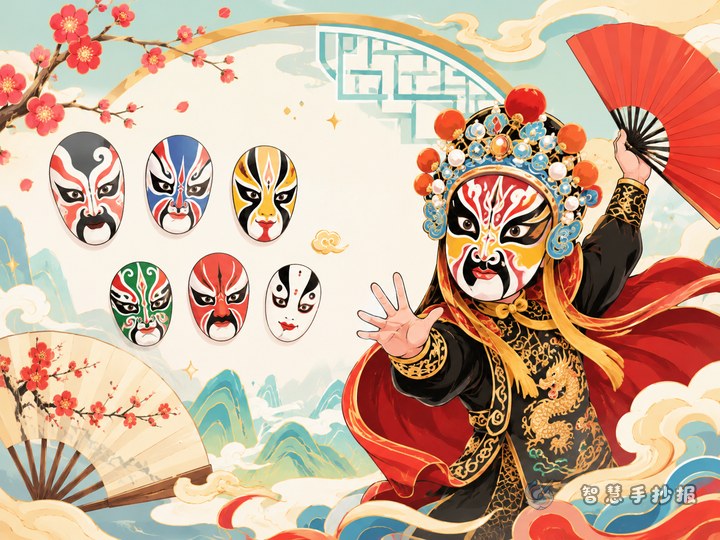
You can add a simple point that opera is performed at a distance, so bold and clear mask patterns help the audience understand the character more quickly.
Short writing materials for students
- Patterns on opera masks are not only beautiful but also meaningful.
- Different lines and shapes help show a character more clearly.
- The forehead, eyebrow area, and nose details are important places to observe.
- Balanced designs make a mask easier to recognize from far away.
- Opera masks combine painting, symbolism, and stage performance.
A simple layout that looks effective
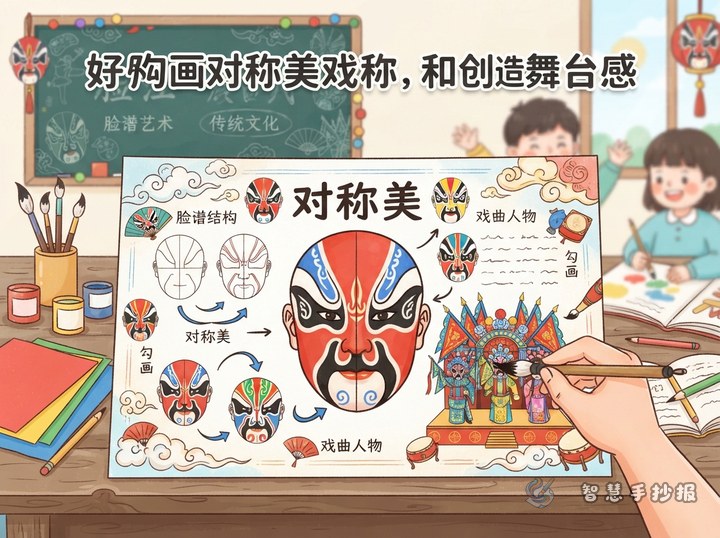
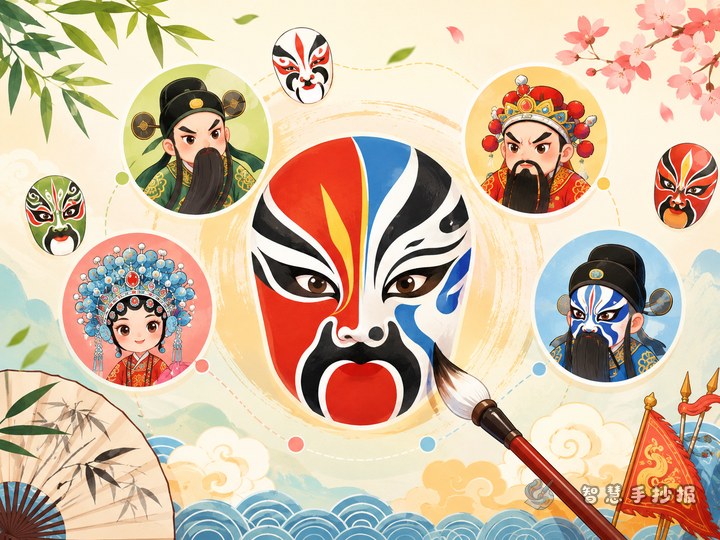
This topic works very well with a center-focused layout. Draw one large opera mask in the middle of the page and place four small text boxes around it. The boxes can be shaped like fans, clouds, or stage signs to match the traditional style.
- Put the main title at the top in a larger font.
- Use the center area for the main mask drawing.
- Add short knowledge sections on the left and right.
- Leave a small box at the bottom for personal thoughts or favorite details.
If drawing a full mask feels difficult, half of a face with arrows and labels can also work well.
Three small details that improve the final page
- Do not overcrowd the page: leave some blank space so the mask stands out.
- Use only a few main colors: three or four colors are enough.
- Keep a clear visual order: let readers notice the mask first and the text second.
If you already have the topic but want help organizing the layout or polishing the content, you can continue in the Smart Handwritten Newspaper WeChat mini program.