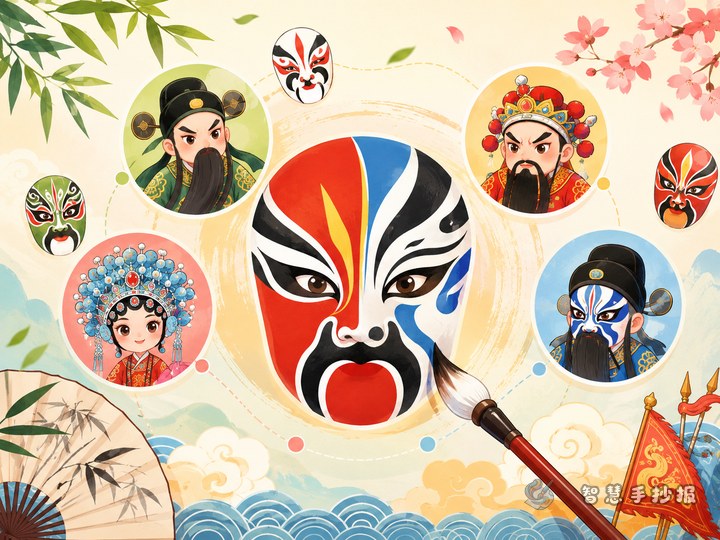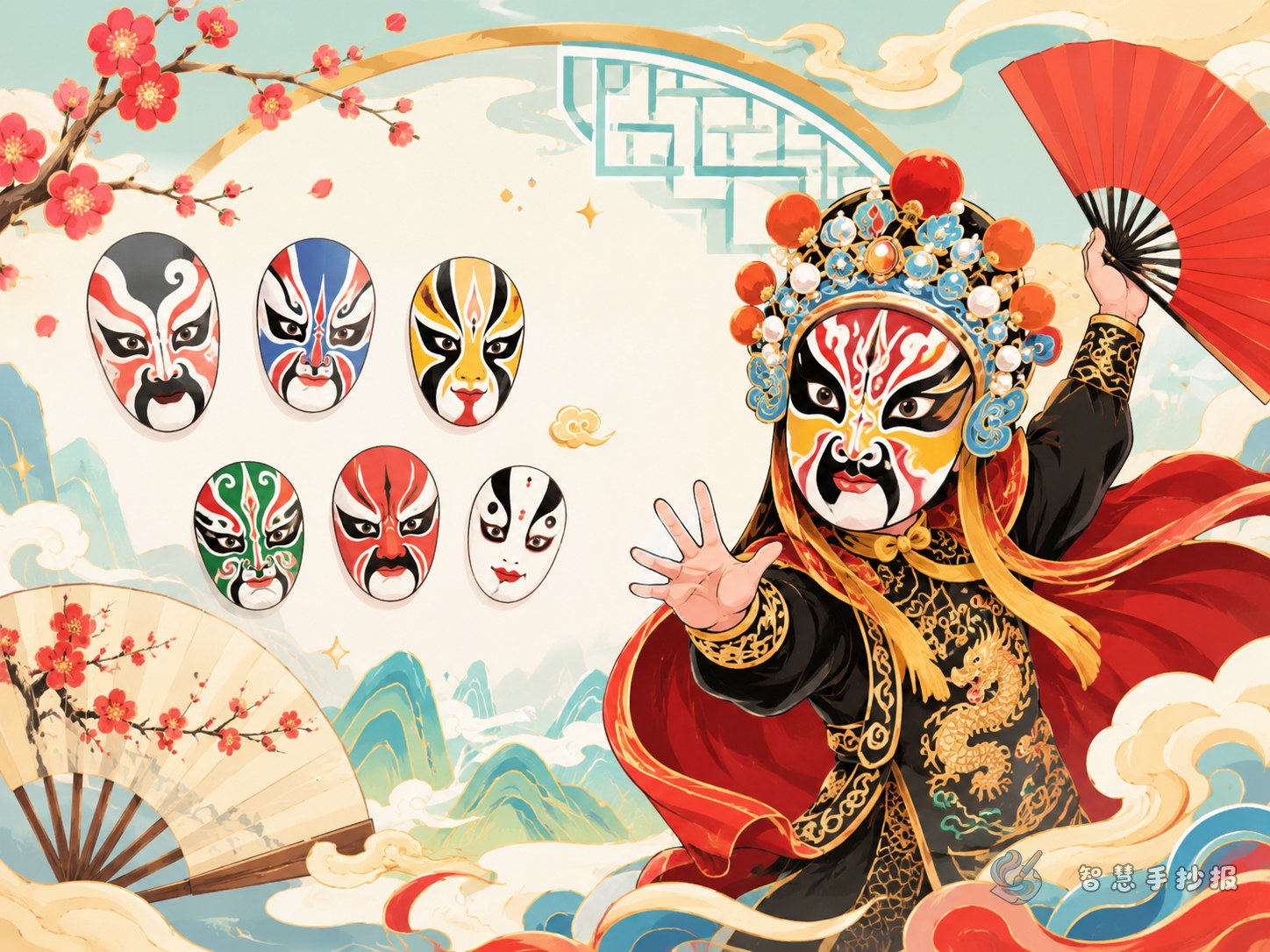
A richer theme comes from combining performance and mask art
If a poster only explains mask colors, it may feel too narrow. When students combine Sichuan Opera face-changing with traditional opera masks, the page becomes both lively and informative. One part focuses on stage magic, and the other explains visual character design.
This makes the topic especially suitable for school activities about traditional Chinese culture.
Useful sections students can write directly
What is face-changing?
Face-changing is a famous performance skill in Sichuan Opera. Performers change facial appearances in a very short time, creating surprise and dramatic effect on stage. It often appears in intense or exciting moments of a play.
What do opera masks do?
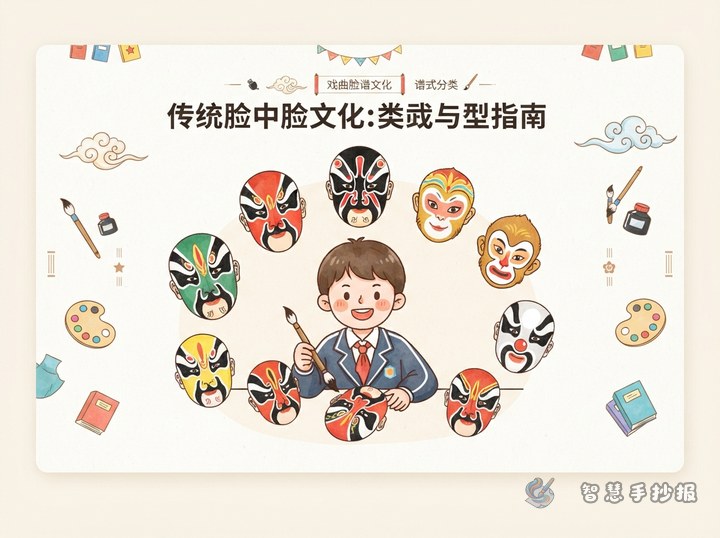
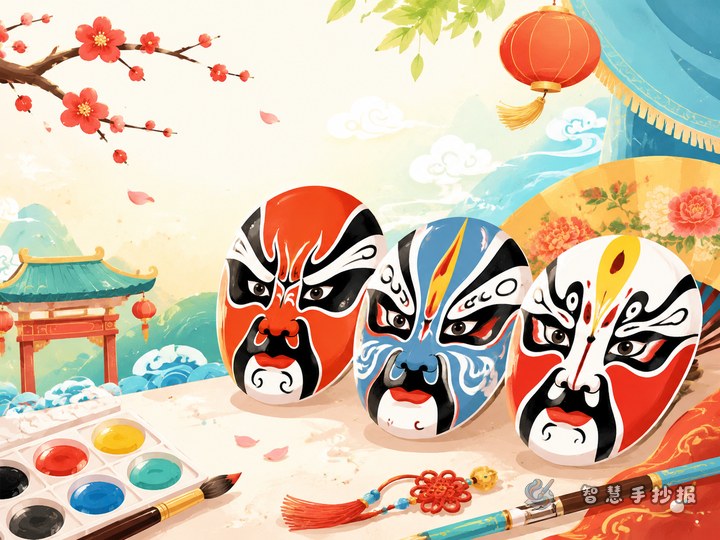
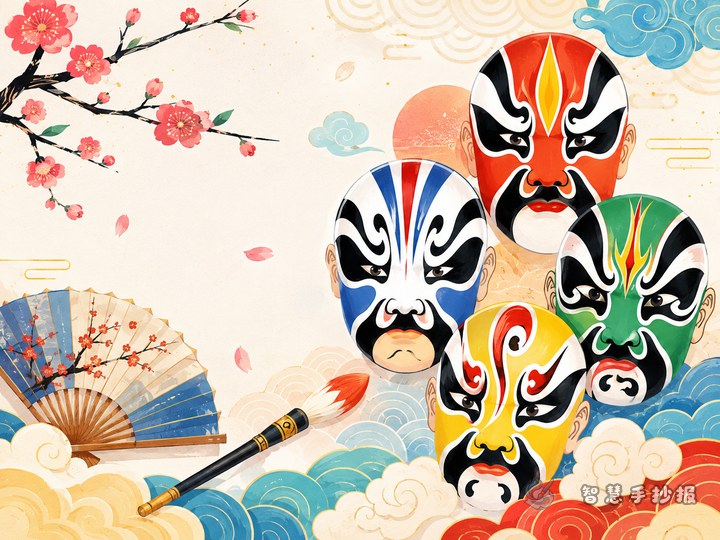
Opera masks are more than decoration. They help the audience recognize a character’s style and presence more quickly. Through shapes, lines, and colors, masks make stage roles more vivid and memorable.
Easy opera features to observe
- Bright and eye-catching costume colors
- Bold facial designs that stand out
- Stylized body movements and gestures
- A mix of singing, speaking, acting, and movement
Choose simple writing material for a student-friendly poster
The best poster text is clear and short. Instead of long explanations, students can use brief sentences that are easy to read and copy neatly.
- Start with one sentence about face-changing as a special opera performance.
- Add one sentence explaining that masks help show character features.
- Include a few observation words such as colorful, lively, dramatic, and artistic.
- End with a short reflection on the beauty of traditional culture.
Students may also add sections like “The mask I want to draw most” or “What I learned from opera art” to make the poster more personal.
Try a stage-style layout instead of equal boxes
This topic looks best when the page feels like a small opera stage. Put the main title at the top like a theater banner, draw one large mask or a performer silhouette in the middle, and place text sections on both sides. The bottom area can hold color notes or a short closing paragraph.
- Use red, black, and gold as main colors for a classic opera feeling
- Add borders inspired by curtains, clouds, or fan shapes
- Keep subheadings short so the page stays tidy
- Leave blank space to avoid a crowded look
If students want a cleaner layout and a more polished final page, they can continue designing in the Zhihui Shouchaobao WeChat mini program.
How to make the poster look meaningful, not just colorful
A strong poster is not about filling the page with facts. It should have a clear flow: attract attention first, explain the cultural idea second, and end with a personal understanding. Face-changing can catch the eye, while mask art helps explain the cultural side of opera.
A simple closing line can be: Opera masks are the language of color on stage, and face-changing is a brilliant performance art. Learning about them helps us appreciate the charm of traditional Chinese culture.