Build the poster around a clear learning journey
An oracle bone script poster works best when it connects museum study experience with cultural relic knowledge. A strong theme could be “How I discovered oracle bone script in a museum” or “Ancient writing carved on bone and shell.” This gives the poster a clear center and keeps it from feeling like a list of copied facts.
You can also add a short subtitle under the main heading, such as “Exploring one of the earliest mature forms of Chinese writing.” A simple line like this helps the whole page feel more complete.
Three kinds of content that work especially well
1. What oracle bone script is
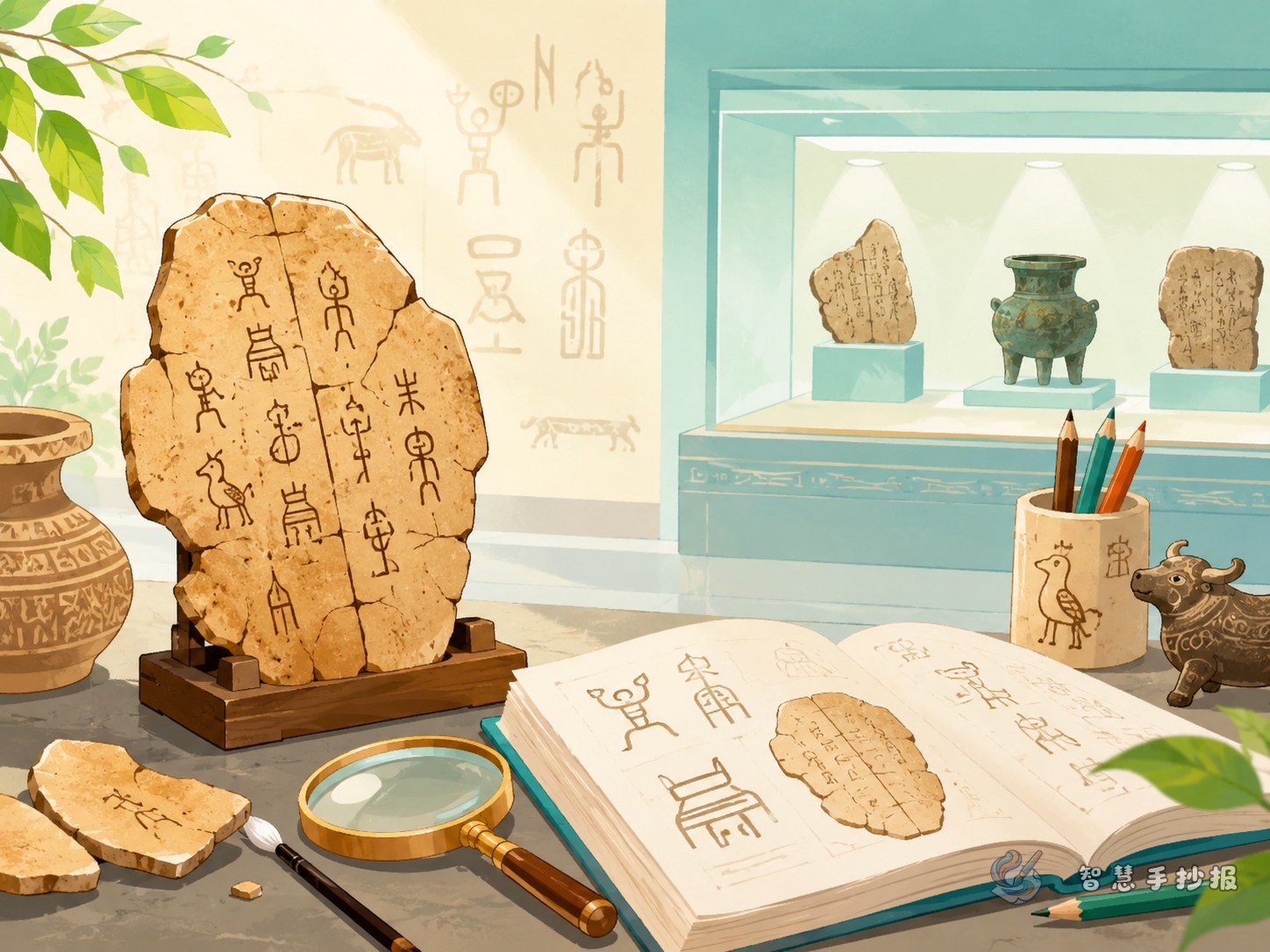
Explain it in easy language: oracle bone script is ancient writing carved on turtle shells and animal bones. It is important for learning about early Chinese civilization and the history of characters. Keep this part clear and student-friendly.
2. What can be observed in a museum
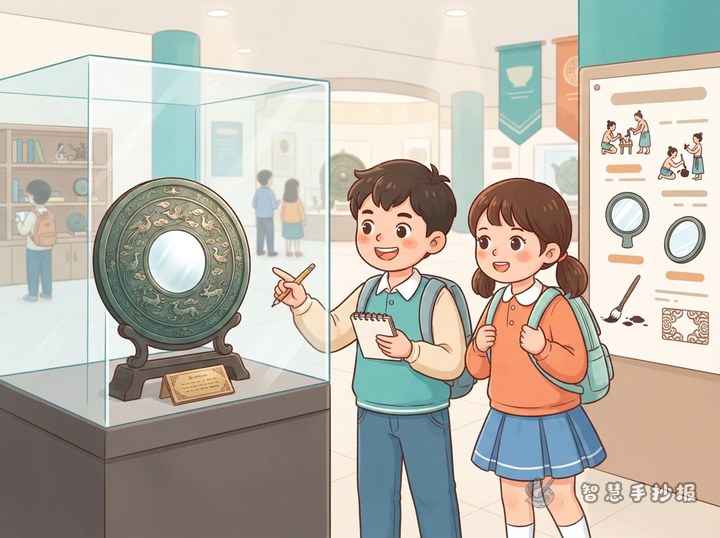
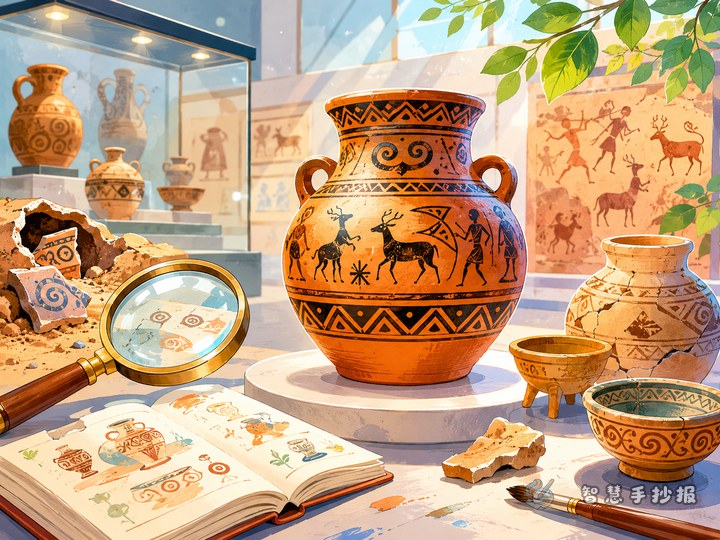
Write about details students might notice in an exhibition, such as the color of the bone pieces, the carved lines, the arrangement of the characters, and the difference between real objects and replicas. This part adds a strong study-tour feeling.
3. How it relates to modern characters
Choose a few easy examples, such as sun, moon, mountain, or water, and show how ancient forms looked more picture-like while modern writing became more regular. This section is both interesting and easy for children to understand.
Suggested sections for a richer poster
- Relic Profile: materials, use, and features of oracle bone script.
- What I Saw in the Museum: personal notes and observations.
- Characters Through Time: compare 2 to 4 ancient and modern forms.
- Fun Facts: oracle bone script, record-keeping, and ancient life.
- What I Learned: a short reflection in two or three sentences.
If there is extra space, add a small guessing game such as “Can you tell what this ancient character means?” to make the poster more interactive.
Create a historical feel through layout and color
This topic works well with a calm and slightly vintage visual style. Place the main title at the top center, divide the page into left and right sections, and use a central bone-shaped box as the visual focus. Decorations can include simple ancient lines or cloud patterns, but do not overcrowd the page.
Colors such as beige, brown, earth yellow, and dark gray can help create a museum-like atmosphere. Make important words bold so the reading order is clear.
Short lines you can place in the poster
- Oracle bone script is an ancient key to understanding Chinese civilization.
- A single piece of bone can record how people once thought and lived.
- In the museum, I learned that writing can be observed, not only read.
- From oracle bone script to modern characters, culture continues to grow.
- A study tour is not just a visit, but a journey of discovery.
These lines work well in small text boxes, side notes, or the closing section.
Check your poster before finishing
- Is the title clearly focused on oracle bone script?
- Does it include both relic knowledge and study-tour observations?
- Are there one or two sections that make classmates want to read more?
- Is the writing clear and not too crowded?
- Does the layout leave enough blank space and highlight key points?
If you want to keep improving the layout, expand section ideas, or quickly finish the design, you can continue your poster in the Zhihui Shouchaobao WeChat mini program.