Start with the right focus
A museum pottery handwritten newspaper should not feel like a long history article. The best approach is to organize the page around what you saw, what you learned, and how to turn that into clear sections. That makes the work feel like a real study-tour project.
You can use a title such as “Exploring Pottery in the Museum” or “Ancient Pottery I Learned About,” then add a subtitle like “Study Tour Notes” or “Relic Knowledge Page” to make the design feel complete.
Four kinds of content that are easy for children to write
1. What pottery is
Write that pottery is made from clay and fired at high heat. It has a long history and was closely connected to everyday life in ancient times.
2. Common pottery objects
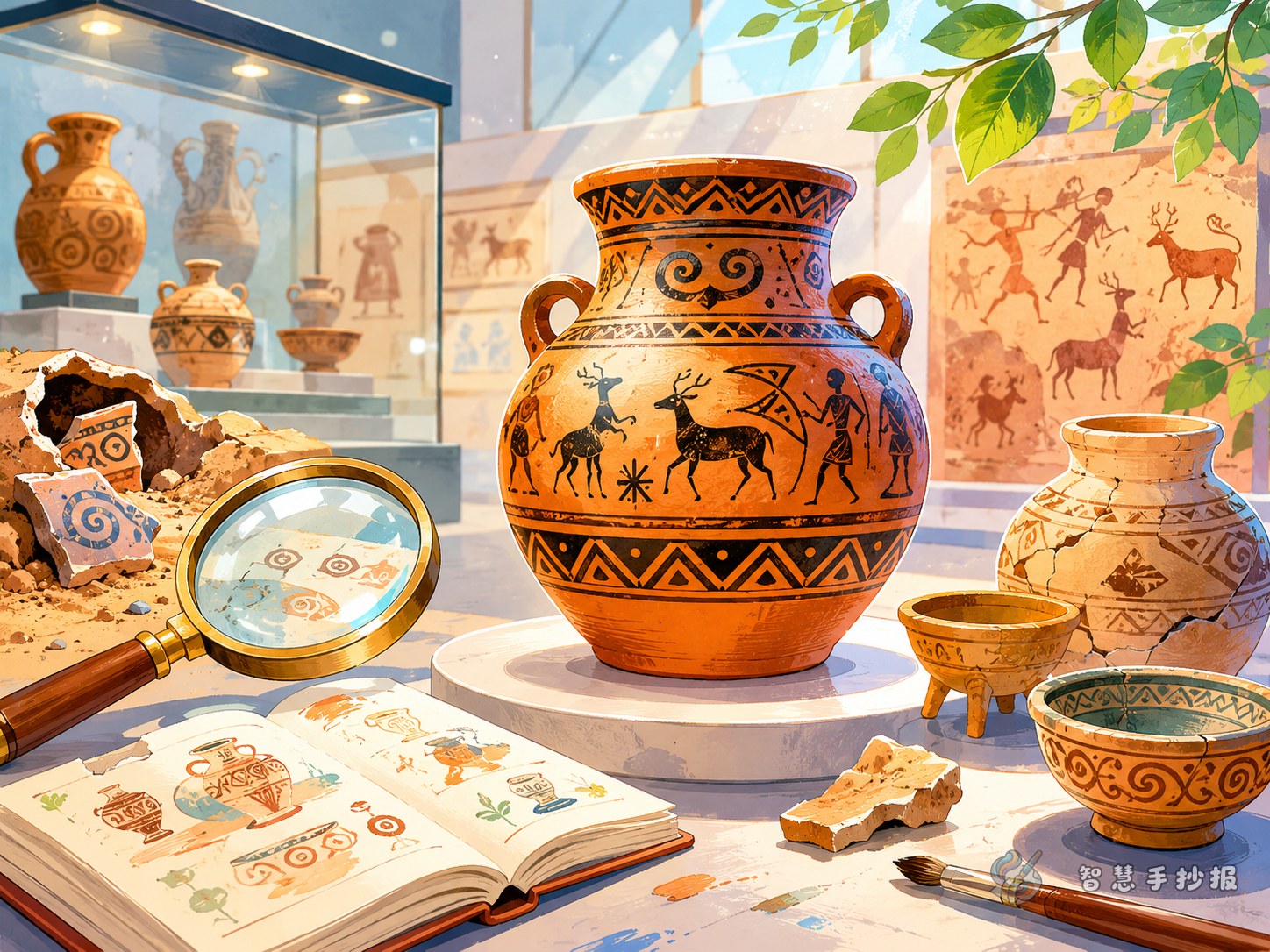
- Pottery jar: used to store water or grain
- Pottery bowl: a common daily utensil
- Pottery ding: sometimes linked to cooking or ritual use
- Pottery figurine: shows people, animals, or scenes of life
3. Shape, color, and patterns
Students can describe the rim, body, and base of a vessel, and note whether the color is reddish brown, gray, or yellowish clay. They can also mention rope patterns, carved lines, or wave-like decoration.
4. What pottery tells us
Pottery helps us understand ancient food habits, storage methods, craftsmanship, and aesthetic ideas. When a handwritten newspaper connects objects with daily life, it becomes more vivid and meaningful.
Ready-to-use writing materials for the page
- Pottery fact: Pottery was an important part of ancient life, and many pieces help us learn how people lived long ago.
- Observation note: The pottery I saw looked simple in color but steady in shape, showing the wisdom of ancient makers.
- Pattern note: Some pieces had lines and geometric decorations that were both beautiful and skillful.
- What I learned: A small pottery object can tell a very long story about history.
- Relic care reminder: Do not touch exhibits, speak softly, and read museum labels carefully.
A layout idea: build an observation map
This topic works well with a layout that feels like a field note page. Put the main title at the top, keep a central box for “My Favorite Pottery Object,” and place four smaller sections around it: basics, common types, visual features, and study-tour reflections.
- Use a large title at the top in brown or clay-red colors.
- Place “What is pottery?” and “Common objects” on the left.
- Put “Details I noticed” and “Pattern discoveries” on the right.
- Add “How to protect relics” or “Museum reminders” at the bottom.
For decoration, use simple curves, vessel outlines, or rope-style borders. Keep the page clean instead of overcrowded.
How to make the project feel more personal
If the student has visited a museum, add lines such as “The first thing I noticed was the color,” “The museum label explained its use,” or “The pattern looked like waves to me.” Personal observation makes the handwritten newspaper feel more real and engaging.
If you want to keep improving the layout, you can bring your title ideas, sections, and text materials into the Zhihui Shouchaobao WeChat mini program to continue designing the page more easily.