Start with a clear storyline
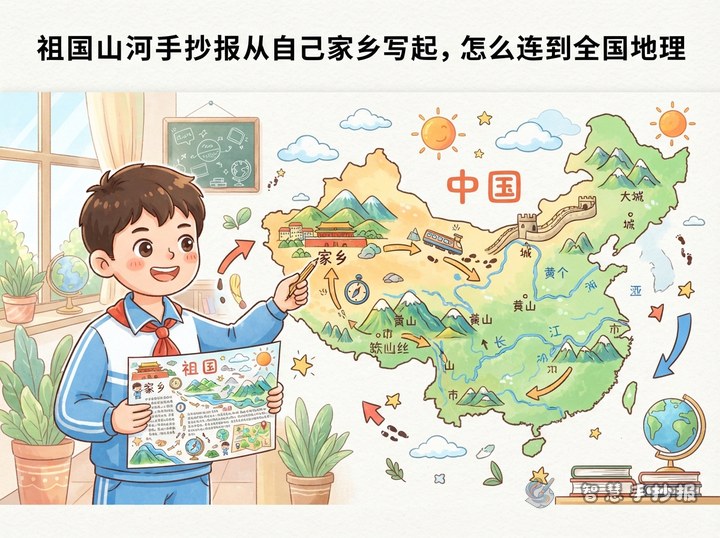
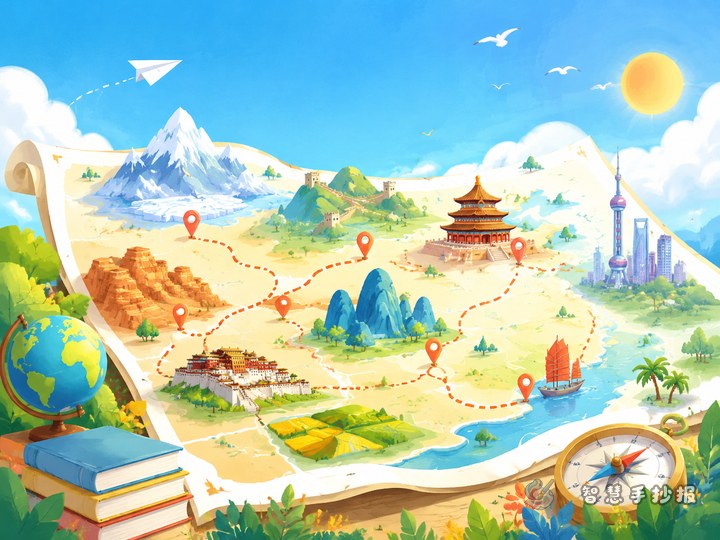
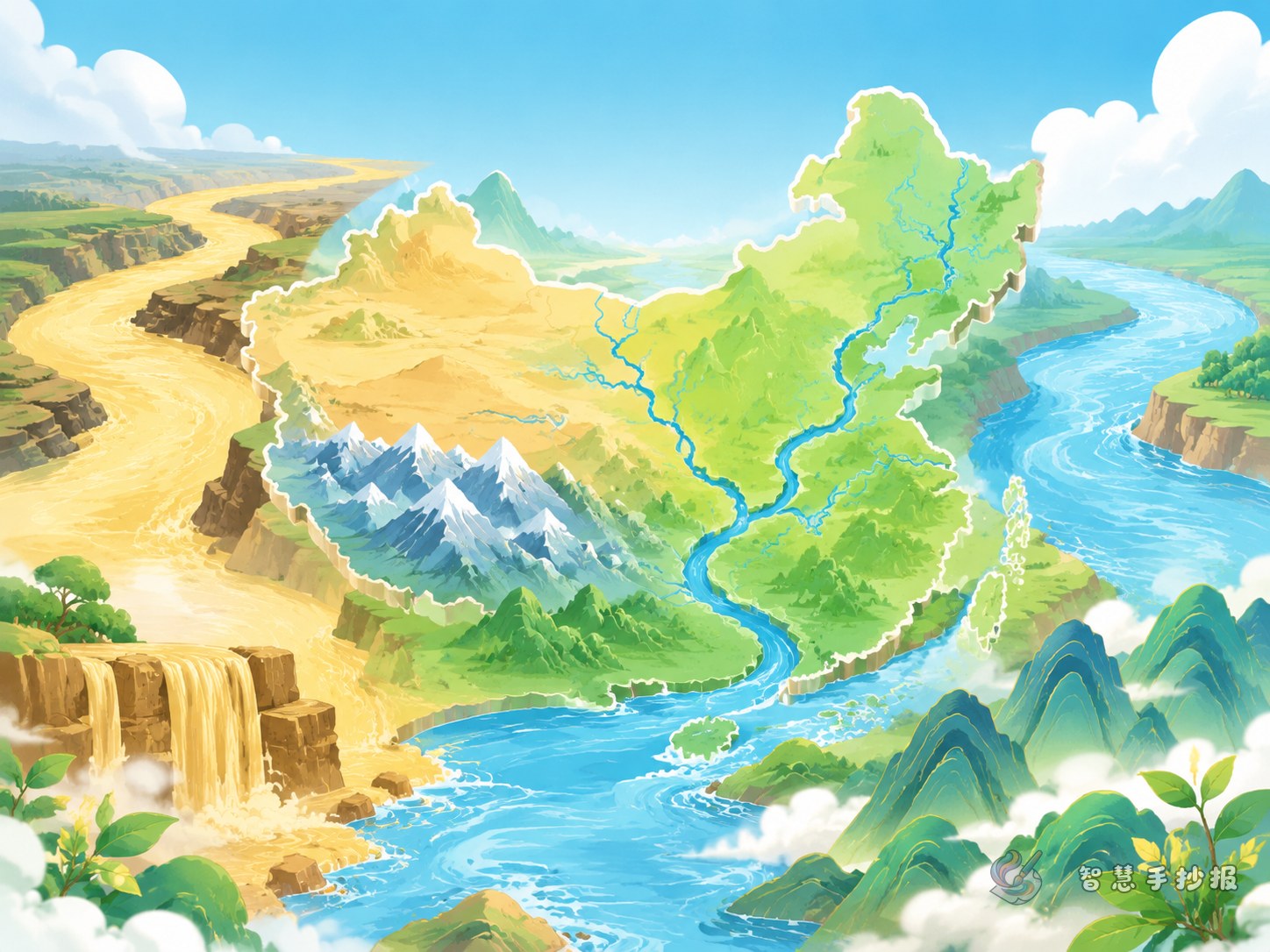
If this kind of handwritten newspaper only lists mountains and rivers, it can feel scattered. A better approach is to build one simple storyline, such as "From plateaus to plains", "From the Yangtze River to the Yellow River", or "See China’s landscapes on one page". With a clear theme, the whole layout becomes easier to organize.
It works best to focus on both the beauty of China’s landscapes and a few basic geography facts, so the poster looks attractive while still being educational.
Four content blocks that fit this theme
1. Landscape profile section
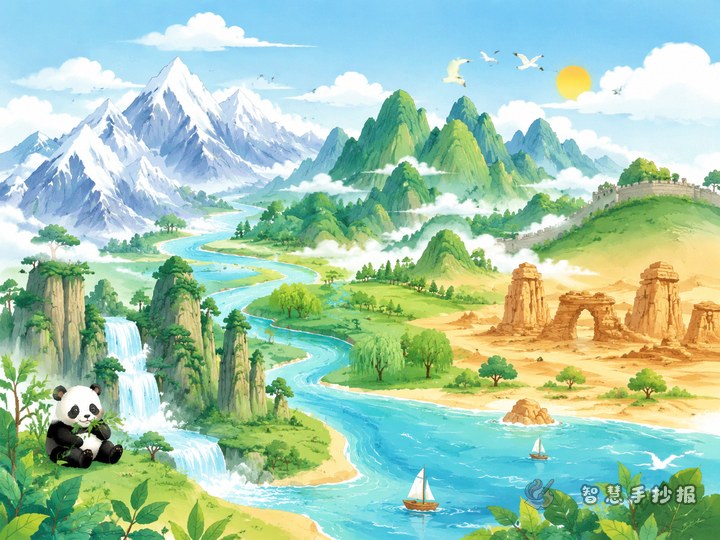
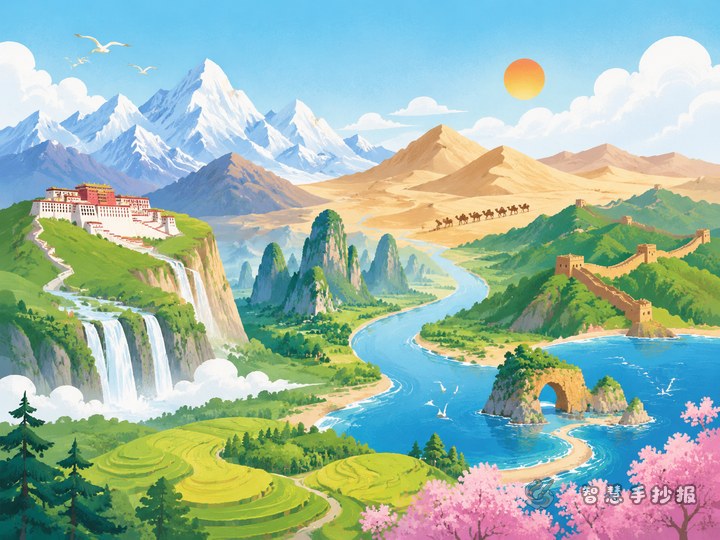
Choose three to five representative items, such as the Yangtze River, the Yellow River, Mount Qomolangma, the Qinghai-Tibet Plateau, and the North China Plain. Write two or three short sentences for each one about location, features, and importance.
- Yangtze River: The longest river in China, flowing through many provinces and important cities.
- Yellow River: Often called the Mother River, known for its connection to the Loess Plateau and rich sediment.
- Qinghai-Tibet Plateau: A very high plateau, often called the "Roof of the World."
- Mount Qomolangma: The world’s highest peak, located in the Himalayas.
2. Geography facts section
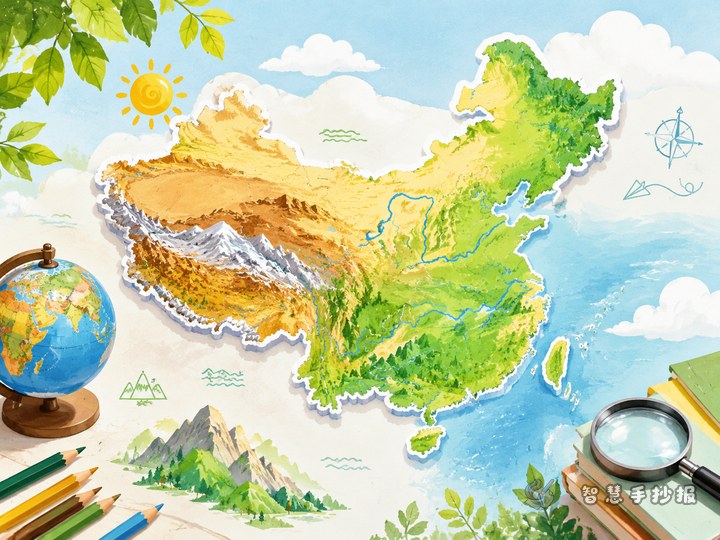
This part can include simple facts such as “China’s terrain is higher in the west and lower in the east,” “many rivers flow from west to east,” and “mountains, plateaus, plains, basins, and hills make up China’s varied landforms.”
3. Beautiful lines about China
Add one to three short lines to make the page warmer and more expressive, such as “China’s mountains and rivers are grand and beautiful” or “Learn geography, know our country; see the landscapes, love our homeland.”
4. My own discovery
Include a small personal section, for example: “I found that major rivers are often connected with plains and cities,” or “The place I most want to learn about is the Qinghai-Tibet Plateau.” This makes the work feel more like a student project.
A layout that looks neat and clear
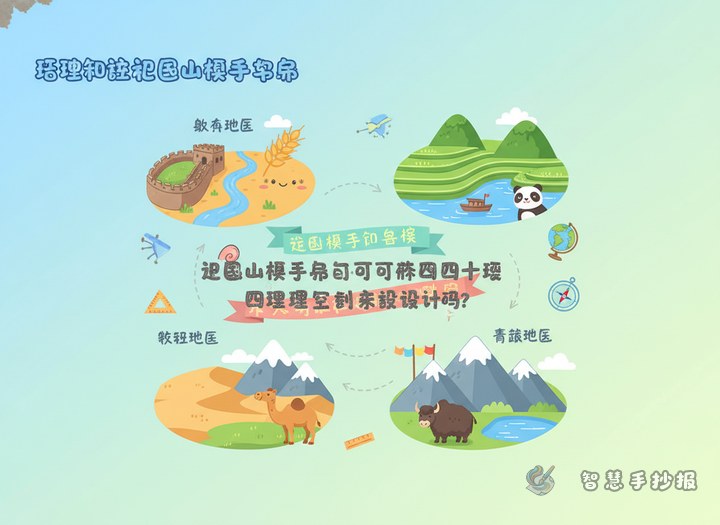
A practical design is a large center title with sections around it. Put the main title in the middle, such as “The Beauty of China’s Mountains and Rivers,” and place blocks like “Famous Mountains and Rivers,” “Geography Facts,” “Short Lines,” and “My Discovery” around it.
If you want a stronger geography feeling, place mountain content at the top, river content at the bottom, facts on the left, and reflection on the right. Keep the title larger than the body text and avoid crowding too many words into one area.
Short lines students can copy directly
- China’s landscapes are magnificent and diverse.
- From plateaus to plains, from snowy mountains to great rivers, every place is worth learning about.
- The Yangtze flows on, and the Yellow River carries history.
- To know the mountains and rivers is to know our country.
- Geography helps us see natural beauty and understand the land.
Small details that improve the final result
- Use blue and green as the main colors to show sky, rivers, and land.
- Keep the section headings in a similar style for a cleaner page.
- Limit each content block to three to five lines so the page can breathe.
- Add simple borders like waves, mountain lines, or clouds, but do not overdecorate.
- Draft the layout first, then copy it neatly onto the final paper.
If you want more layout ideas, ready-to-use section combinations, or a faster way to continue designing, you can also explore the Zhihui Shouchaobao WeChat mini program.