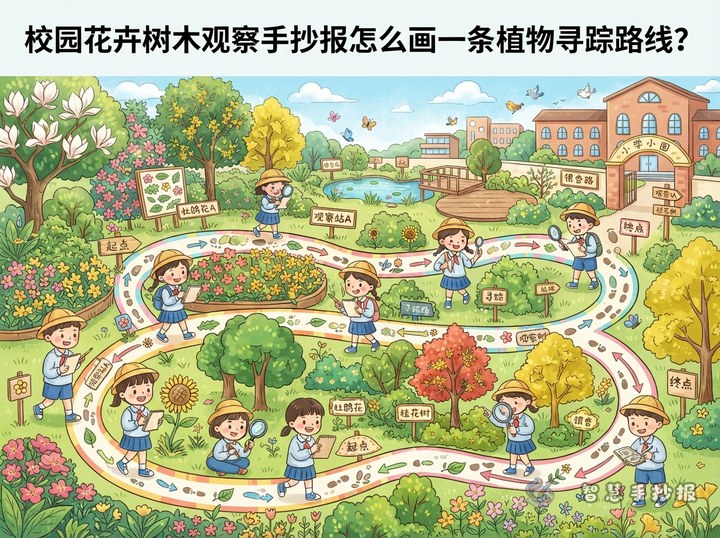
Start with a clear angle instead of a broad topic
This kind of newspaper works best when you focus on common plants you really see at school, such as camphor trees, osmanthus, magnolia, roses, bougainvillea, or hedges. Instead of using a very broad title, choose a more specific angle like “Plants Near the Teaching Building” or “My Notes from the School Garden Corner.” That makes the content feel more real.
If you want the work to read like an observation record, add the date, place, and weather at the beginning. That small detail makes the whole page stronger and more connected to actual school life.
Build sections that feel like observation notes
The layout can be divided into four or five parts. It does not have to be perfectly equal. A large main title with smaller surrounding sections works very well. Here is a practical structure:
- Observation Today: date, place, weather, and the plants you observed.
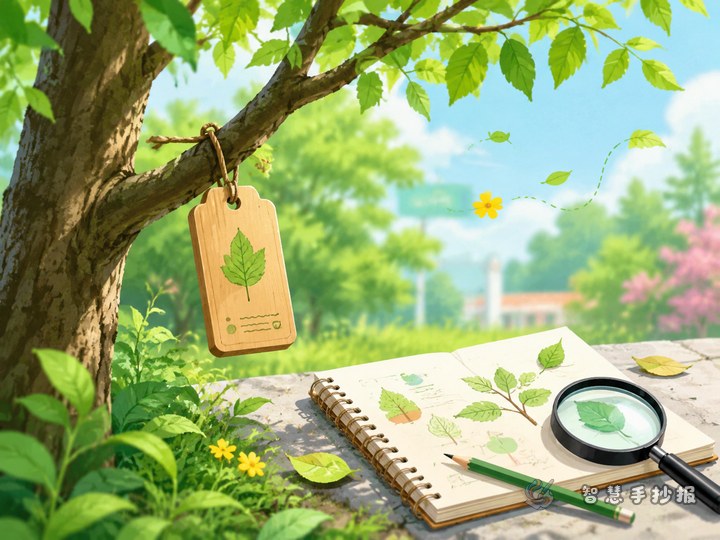
- Tree Profile: trunk, leaves, crown shape, and overall look of one tree.
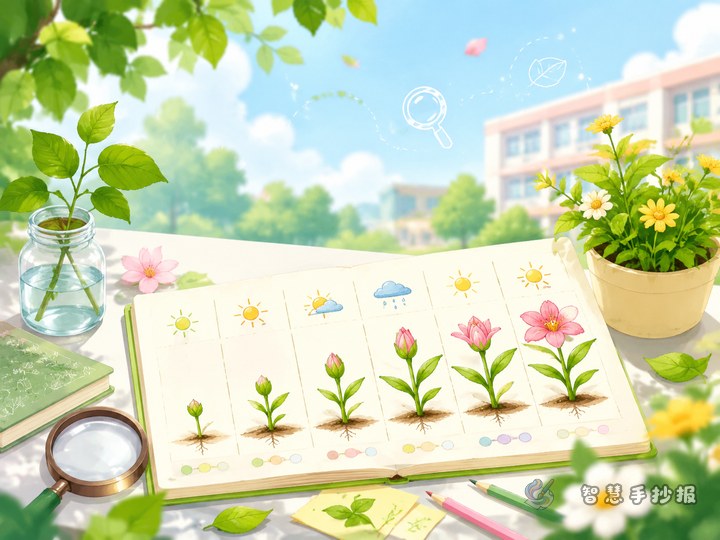
- Flower Discovery: color, petal shape, smell, and blooming condition.
- What Changed: differences between morning and afternoon or sunny and cloudy days.
- Protect Our Campus Plants: simple reminders such as no picking and no stepping on flower beds.
This structure combines knowledge, observation, and personal participation, which makes the page more lively.
Use short writing instead of long paragraphs
The best text for a handwritten newspaper is brief, direct, and written like personal notes. You can use ideas like these and adjust them to match your real observation:
- I saw bright flowers in the school flower bed, and the petals opened layer by layer.
- The leaves showed different shades of green, and the side facing the sun looked brighter.
- The tree bark felt rough, with thin lines and patterns on the surface.
- The same kind of plant grew differently in different places, and the sunnier area looked fuller.
- When observing plants, we should look carefully and never pick flowers or break branches.
If you want more variety, add a short section about your favorite plant and explain why you like it.
Make the page look fresh and balanced
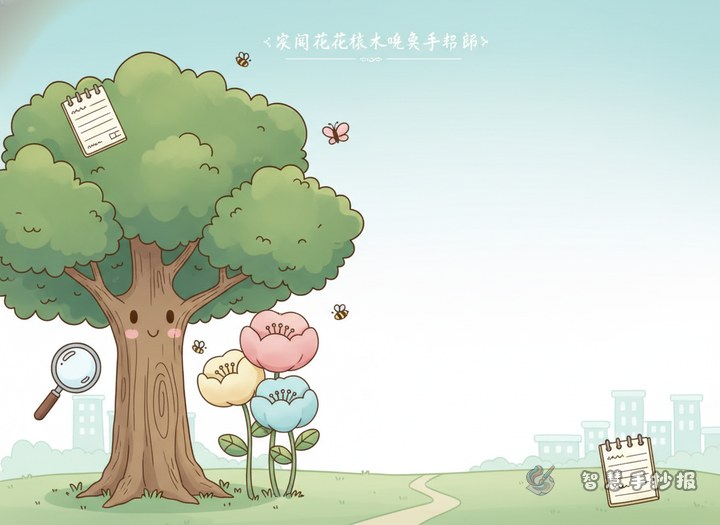
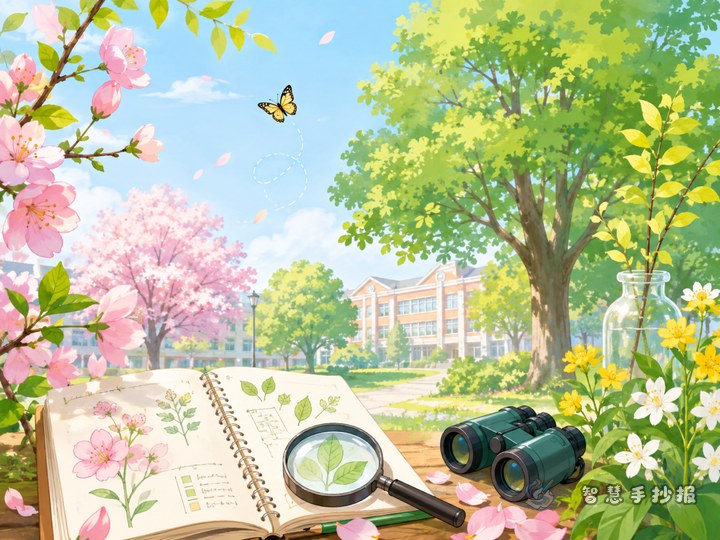
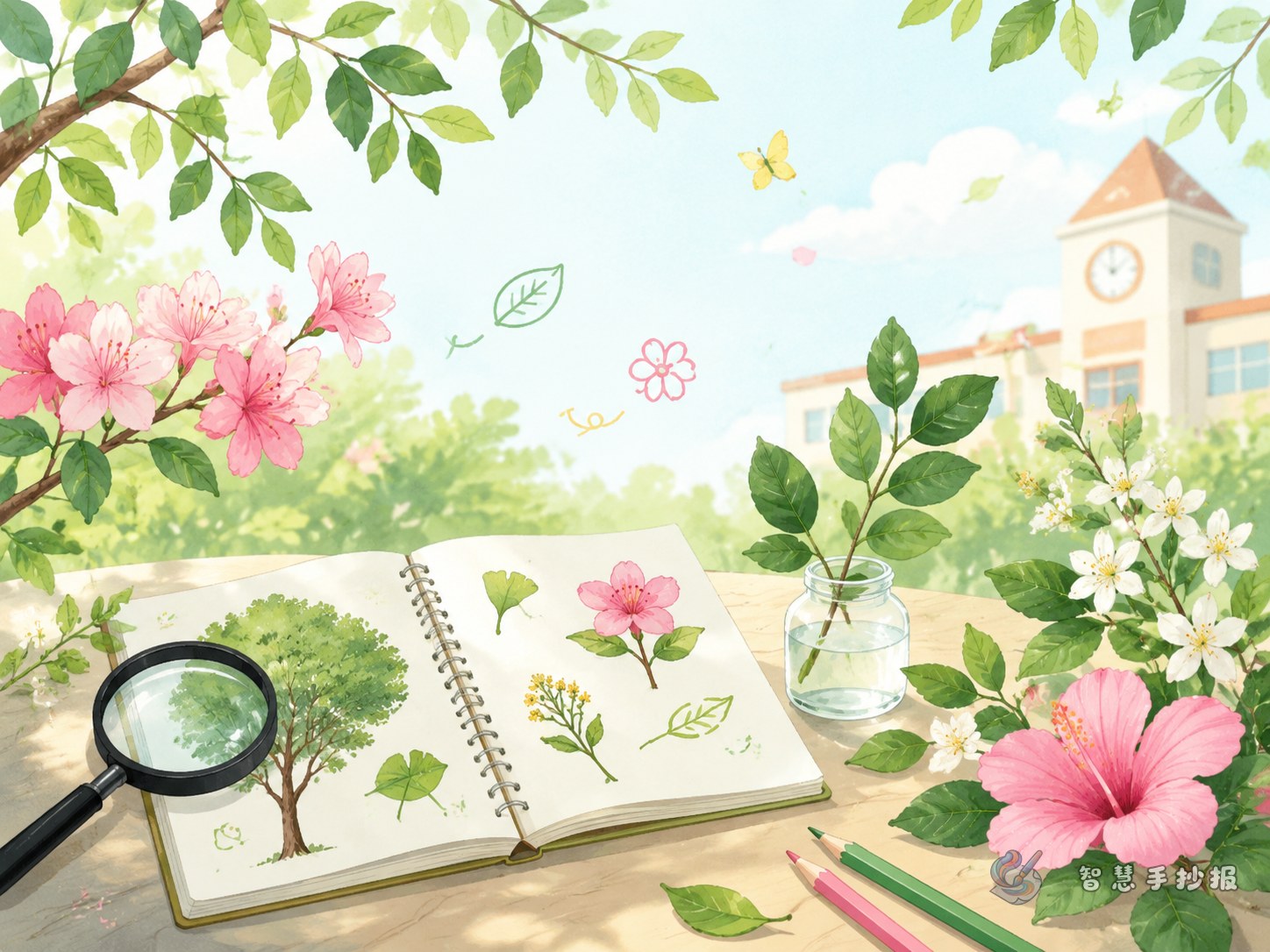
This topic looks great with natural colors such as green, light yellow, pink, and pale blue. Put the main title at the top center and decorate around it with leaves, petals, or vine lines. Tree content works well on the left or lower area, while flower content can be placed in the center or right side for balance.
Your borders do not need to be complicated. Leaf chains or rounded boxes are enough to separate sections. Keep the title larger than the body text, and limit each paragraph to just a few lines so the page does not feel crowded. If you want to keep improving the layout, colors, and title style, you can continue designing in the Zhihui Shouchaobao WeChat mini program.
End with what the observation taught you
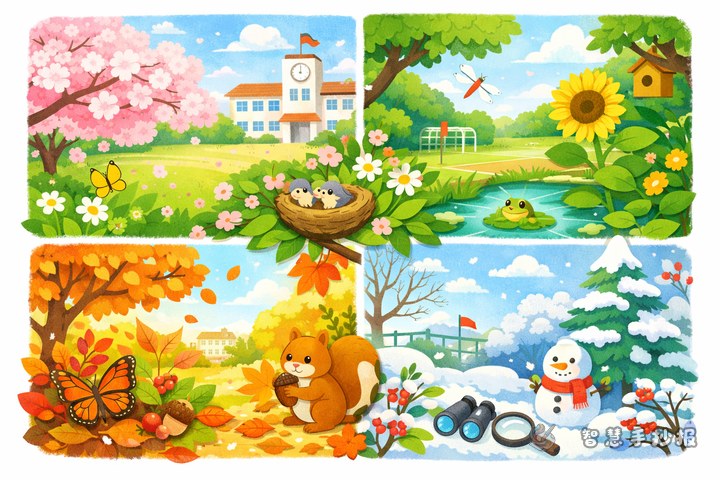
The final part can be very short. You can mention what you learned from observing school plants, such as noticing seasonal change, recognizing more flowers and trees, or understanding why campus greenery should be protected. That gives the newspaper a complete ending.
A strong campus plant observation newspaper is not about writing the most words. It is about careful looking, clear organization, and true personal notes. If you design it around what you saw, discovered, and learned at school, the whole page will feel natural and well ordered.