Start with one tree and one flower
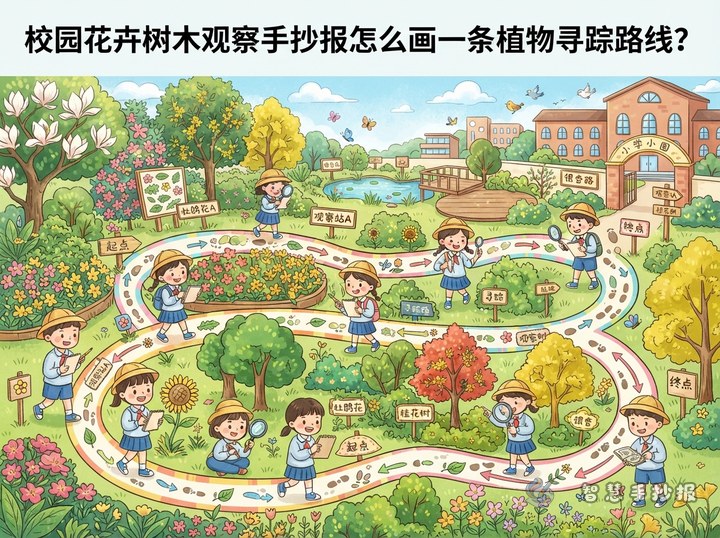
If a campus has too many plants to choose from, the easiest way to make a clear handwritten newspaper is to focus on one familiar tree and one common flower. A tree near the playground or flowers beside a school building are both easy to observe and describe. A focused topic makes the writing more specific and the page easier to organize.
This kind of title works best when it sounds like a real observation. Instead of collecting random facts, students can show what they actually noticed on campus.
Useful sections for the page
- My observation subjects: name the tree or flower, where it grows, and what it looks like.
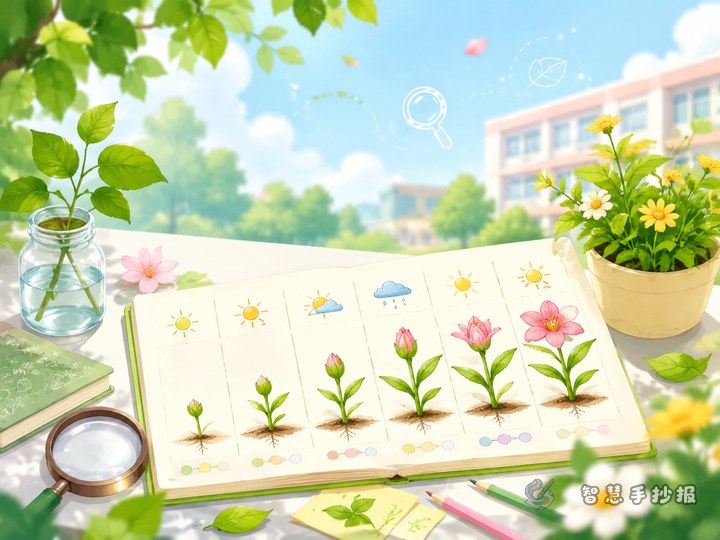
- Changes during the day: describe morning, noon, or afternoon differences in light, color, and energy.
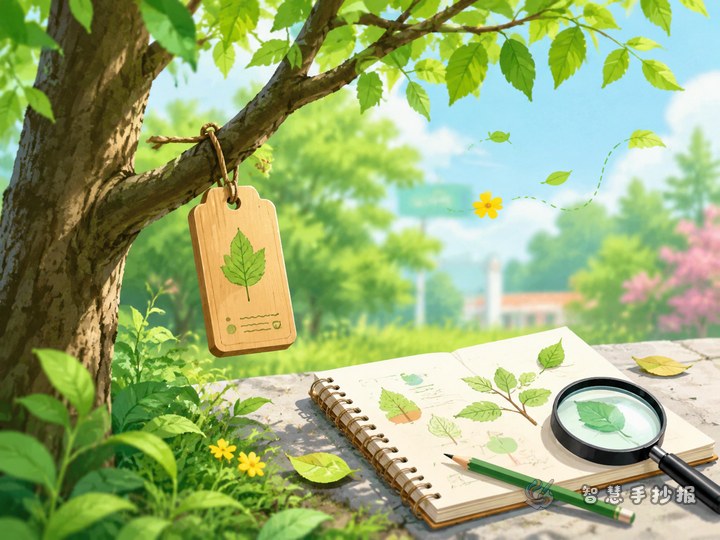
- Details I noticed: leaf veins, petals, bark texture, scent, or fallen leaves.
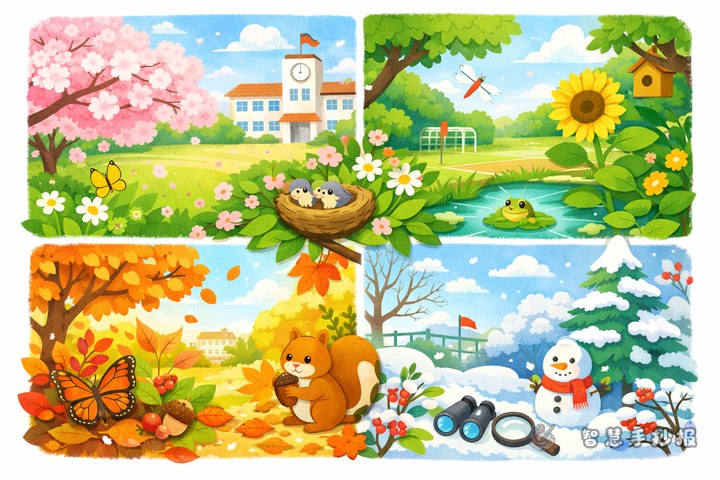
- Small campus discoveries: bees, butterflies, birds, or the environment around the plant.
- How to protect plants: do not step on flower beds or break branches.
If there is enough space, add a small box for the date and weather to make the work feel more like a real nature observation record.
Ready-to-use writing ideas
Tree observation lines
The tree beside the teaching building has a strong trunk and rough bark. Sunlight shines through the leaves and creates layers of dark green and light green. When the wind blows, the leaves move gently as if the tree is greeting the students.
Flower observation lines
The flowers in the school garden are bright and lively. Some are fully open, while some are still small buds. The petals look thin and soft in the sunlight, and a light fragrance makes this corner of the campus feel fresh and cheerful.
Personal reflection lines
By observing flowers and trees on campus, I learned that plants change quietly every day. If we look carefully, we can discover natural beauty in familiar places. This also reminds me to care for the green spaces around us.
A layout that feels like an observation record
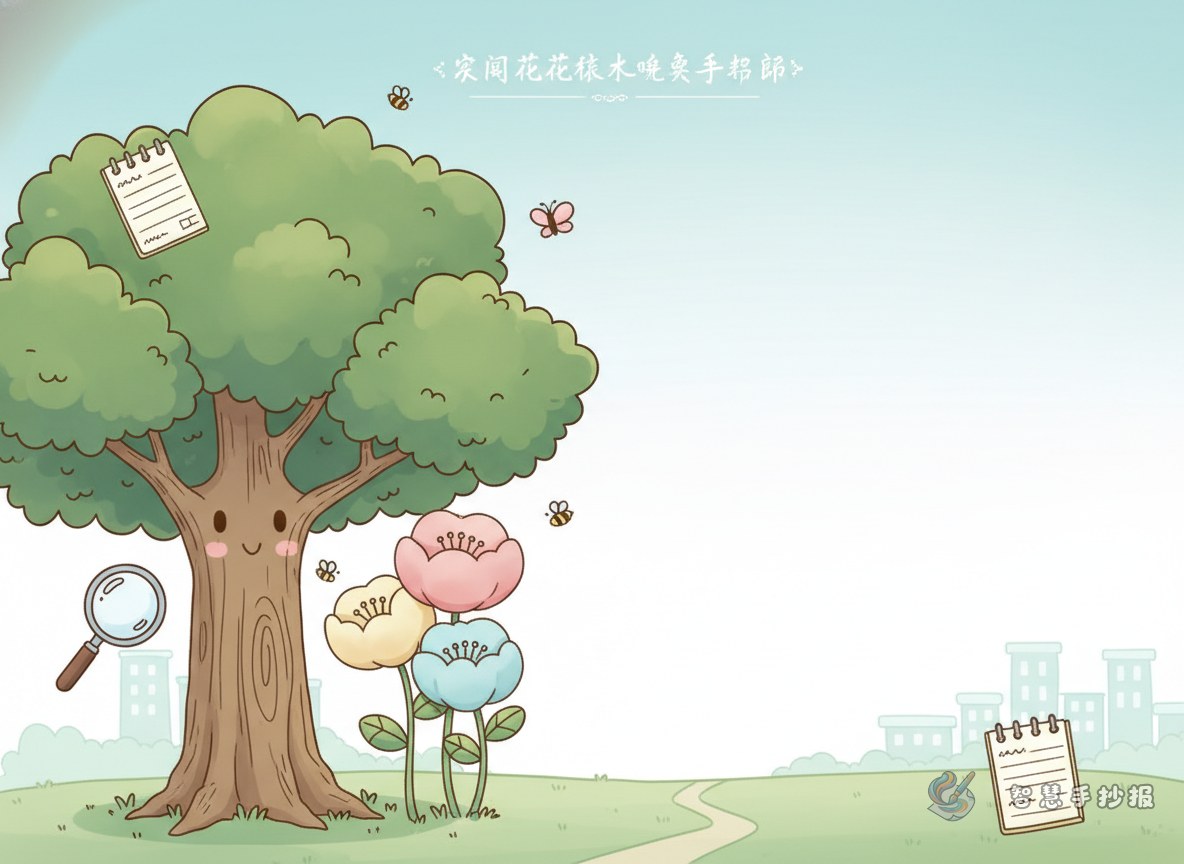
This topic looks better when the page is not overcrowded. A practical layout is a main title in the center with two side sections. Put tree observation on one side and flower observation on the other, then use the bottom area for “My discoveries” and “Plant protection tips.”
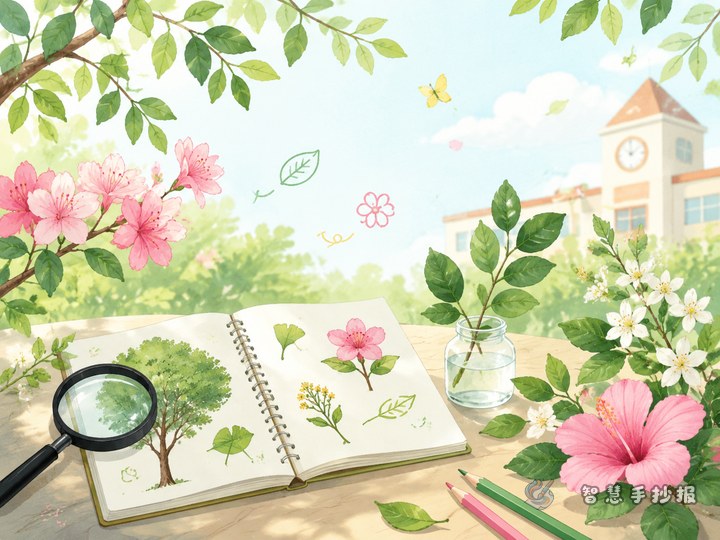
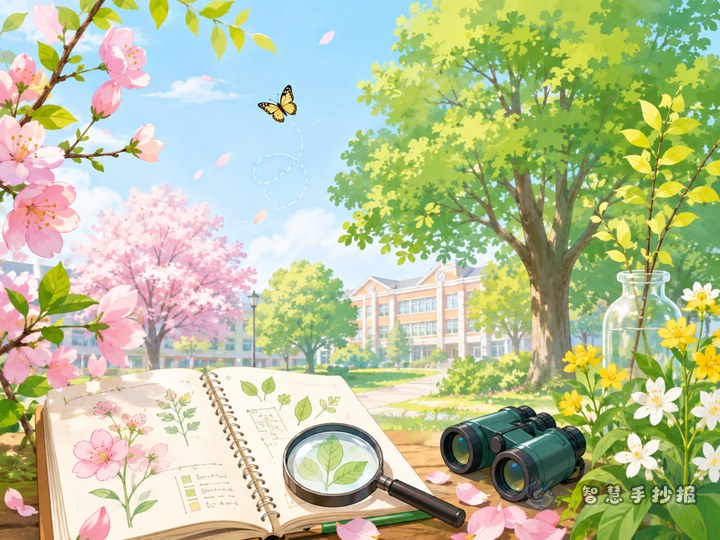
Decorations can include leaves, flowers, magnifying glasses, note cards, or weather icons. These small elements help the page look like a nature journal instead of a general information sheet.
How to make the work more personal
To avoid making the page sound too general, write from four angles: what I saw, what I smelled, what I touched, and what I thought. For example, students can describe color changes in leaves, the scent of flowers, the rough feel of bark, and their thoughts about protecting the campus environment.
If you want to keep improving the title design, section arrangement, or page style, you can continue creating in the Zhihui Shouchao Bao WeChat Mini Program for a cleaner and more complete campus plant observation newspaper.