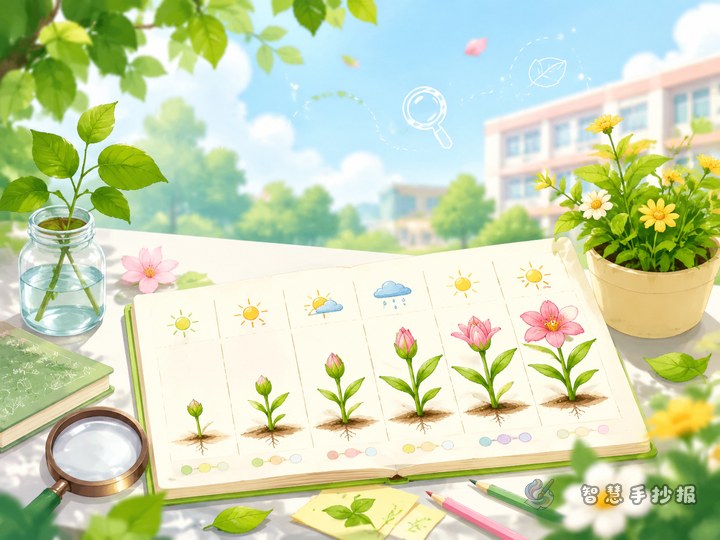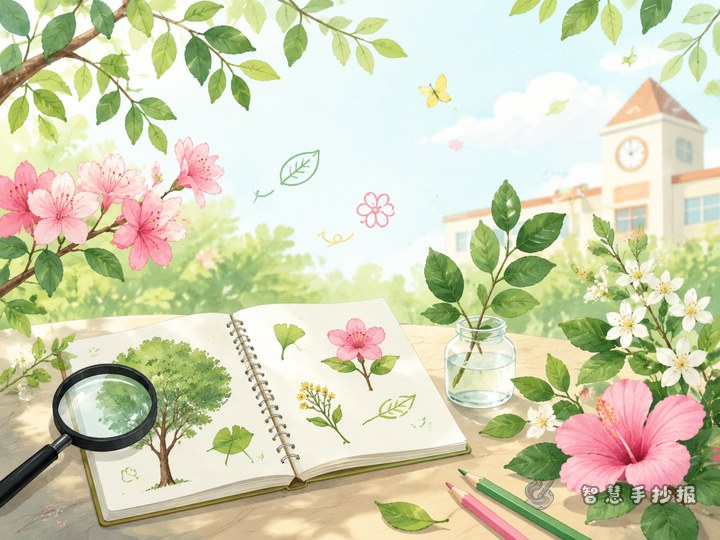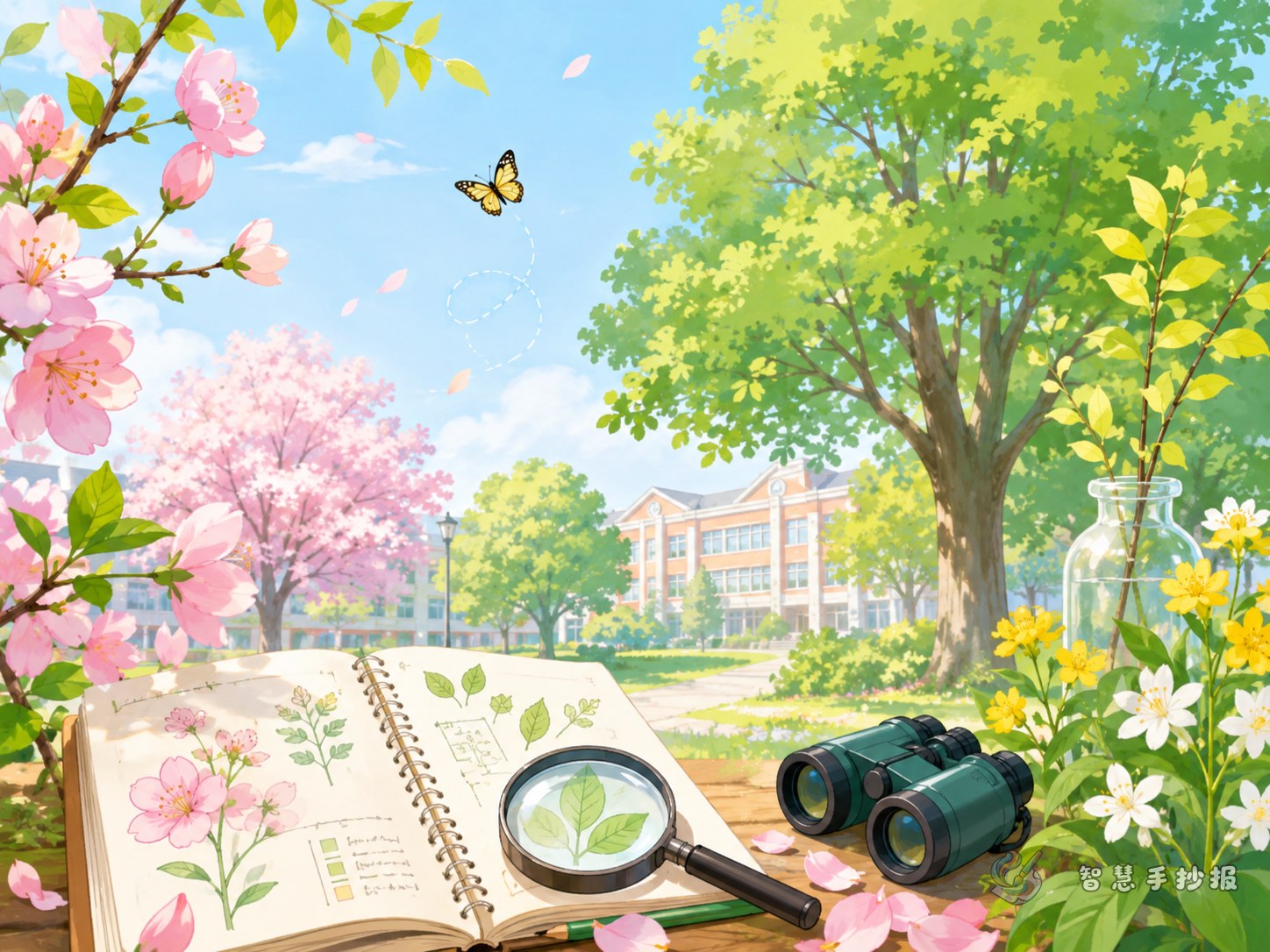
Campus Flowers and Trees Observation Handwritten Newspaper

春天校园里的花和树怎么观察并做成手抄报?

A spring campus flowers-and-trees handwritten newspaper works best when it follows a clear observation theme. Students can record plant names, visible changes, growth features, feelings, and green protection ideas, making the page both informative and lively.

Direct Answer

If you want to make a handwritten newspaper about spring flowers and trees on campus, choose 3 to 5 plants you can really observe at school, such as flowering shrubs, shade trees, or evergreen trees. Organize the page around what you saw: names, colors, leaf shapes, blooming changes, where the plants grow, and simple care ideas. Add short observation notes, a small comparison section, and a green campus message. This makes the page more specific than a general plant introduction and easier for primary school students to complete. If you want to continue arranging the page, you can also use the WeChat mini program of Zhihui Shouchaobao for further creation.

What to Focus on in a Spring Campus Flowers and Trees Page

A strong handwritten newspaper does not need too many plant species. It is better to choose a few flowers and trees that you can really observe on campus and write about visible details such as color, leaf shape, blooming changes, and where they grow. This keeps the page true, clear, and easy for children to finish.

Useful Section Ideas

  • Plants I Found on Campus: list 3 to 5 flowers or trees.
  • My Observation Notes: write what changed in spring.
  • Flower and Tree Comparison: compare flowers and trees by color, height, leaves, or smell.
  • Green Campus Message: add simple ideas about caring for plants.

Writing Materials You Can Use

You may write short and practical sentences such as: spring flowers bloom one after another, young leaves begin to unfold, some trees stay green all year, some petals fall with the wind, and the campus becomes brighter because of flowers and trees. Keep each paragraph short so the page looks neat.

How to Make It Feel Like Observation

Add simple records like observation date, weather, plant location, and the biggest change you noticed. You can also include one sentence about your feeling, such as how the flowers made the playground feel warmer or how the trees gave shade near the classroom building.

Layout Tips for Students

You can place the title in the top center, use one side for flowers and the other side for trees, and leave a middle area for your observation notes. Small bullets and short paragraphs work better than long text blocks. If you want to continue polishing your page, you can go to the WeChat mini program of Zhihui Shouchaobao for more layout inspiration.

FAQ

What plants are suitable for a spring campus observation newspaper?

Choose common and easy-to-see plants on campus, such as winter jasmine, magnolia, cherry blossoms, roses, osmanthus trees, plane trees, camphor trees, or pines. Picking 3 to 5 plants you have actually observed makes writing easier and more specific.

What if I do not have many observation notes?

You can still expand the content by writing about plant names, shapes, color changes, blooming time, leaf features, where they are found on campus, your feelings, and simple green protection tips.

How can the page look more like a real observation project?

Focus on sections such as observation date, plant target, changes noticed, and my conclusion. With short records and clear labels, the newspaper will feel more like observation work instead of a simple plant introduction.

WeChat mini program QR code

Scan with WeChat

WeChat mini program QR code Scan with WeChat