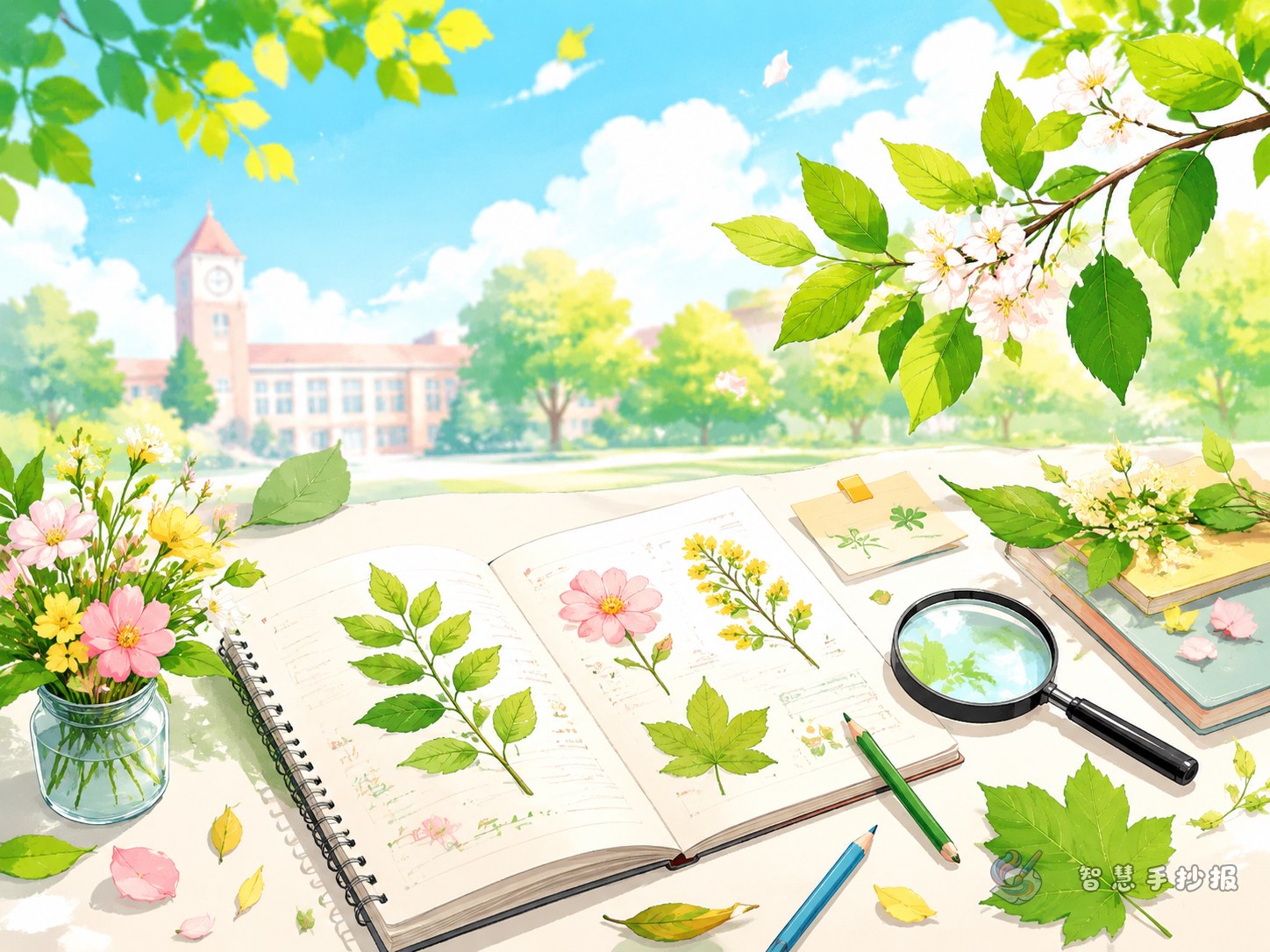
Decide the focus before you start
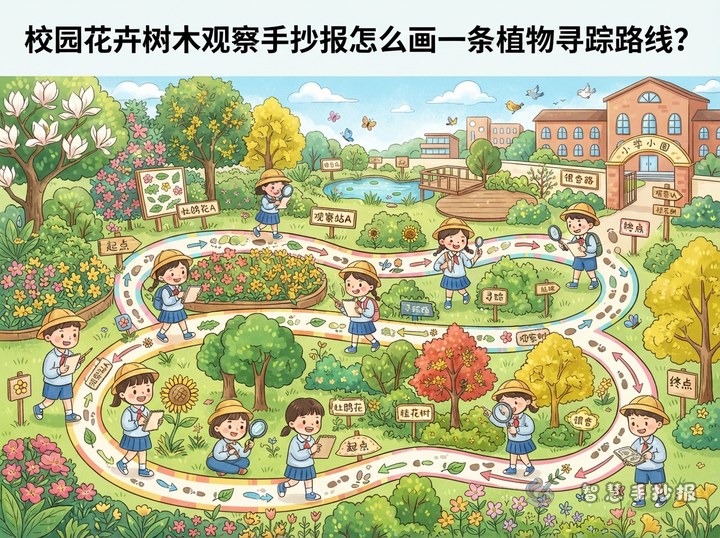
A campus leaf and flower observation handwritten newspaper does not need to cover every plant at school. It works better when it focuses on two or three familiar plants that students actually saw, such as flowers in the garden bed or trees beside the playground.
If the topic is too broad, the page can feel messy. A better approach is to center the content on leaf observation and flower observation, then add personal discoveries and simple care tips.
Section ideas that make the page clear
1. What I observed on campus
This opening section can briefly mention the time, place, and weather to set the scene.
- Time: during recess or after school
- Place: garden bed, playground, or school building area
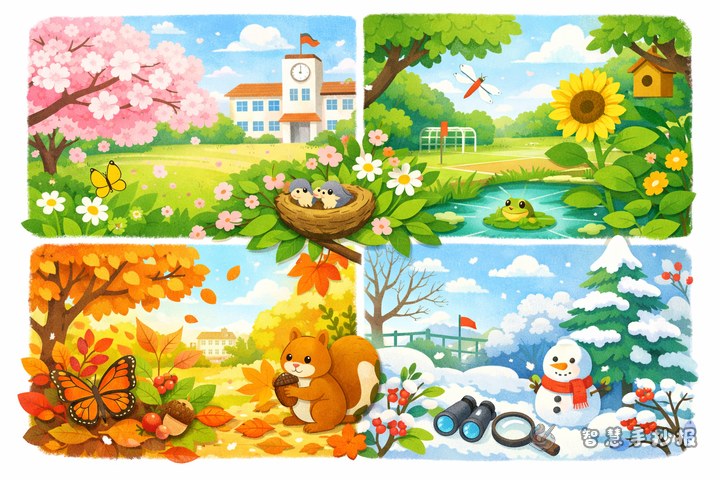
- Weather: sunny, cloudy, or breezy
2. Leaf notes
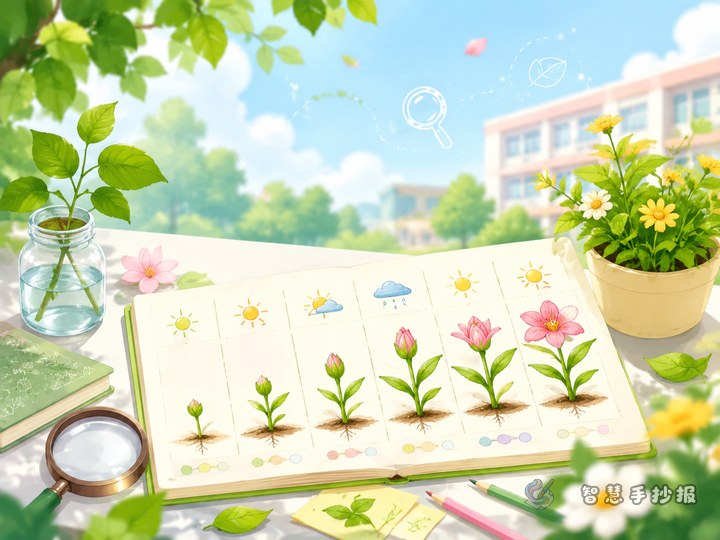
Use this section to describe the leaf color, shape, edge, size, and touch. For example, is it oval, fan-shaped, or long and narrow? Is the edge smooth or saw-like?
3. Flower notes
This section can include petal color, number of petals, smell, and blooming condition. Specific details always make observation writing feel more real.
4. My discoveries
This is often the most interesting part. Students can write things like “Leaves on the same tree have different shades of green” or “The flowers looked fresher in the morning.”
5. Protect our campus plants
End with a short reminder such as not stepping into flower beds, not picking leaves, and helping keep the school green and beautiful.
Simple text materials students can use
If writing feels difficult, these short lines can help:
- I saw several small flowers in the school garden, and their colors looked bright in the sunlight.
- Some leaves were dark green, while others were turning yellow at the edges.
- I noticed that leaves do not all have the same shape. Some are round, some are long, and some look like little fans.
- The flowers were not only colorful but also gave off a light fragrance.
- When we observe school plants carefully, we can discover nature all around us.
Students can also add one personal feeling, such as “I did not know the trees I pass every day could change so much.” That makes the newspaper more vivid and authentic.
Layout tips to make it more attractive
One common mistake is giving every section the same size, which makes the page feel flat. It is better to create a clear main focus.
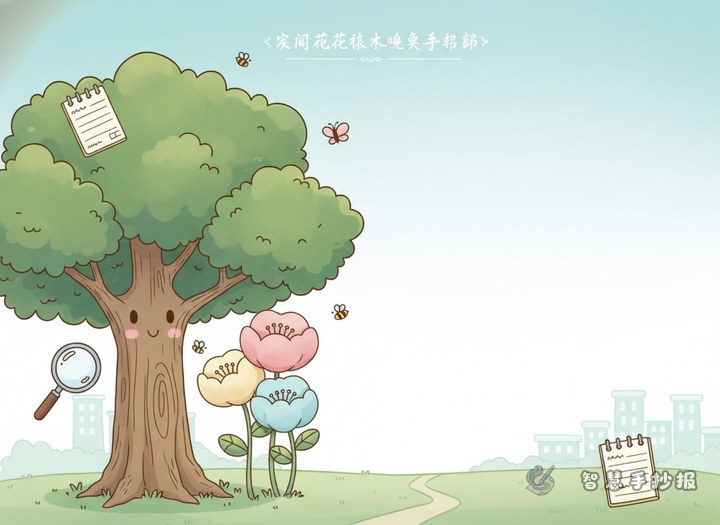
- Place the main title at the top center with leaf or flower decorations.
- Put leaf observation on one side and flower observation on the other.
- Use the bottom area for personal discoveries or plant protection ideas.
- Add small leaves, buds, or grass patterns in the corners without filling every empty space.
Green, light pink, and pale yellow are good color choices for this theme. Make the title bold, keep the body text neat, and leave a little blank space so the page feels clean.
Small making tips for a cleaner final result
- Sketch the sections lightly with pencil first.
- Keep each section focused on one main point.
- Draw plant decorations along the edges so they do not block the text.
- Use matching borders for related sections.
- Check at the end that the title stands out and the sections are easy to read.
If you already have your topic and text but want a nicer final layout, you can continue making your work in the Zhihui Shouchaobao WeChat mini program for easier design and arrangement.