Turn the topic into a small campus investigation
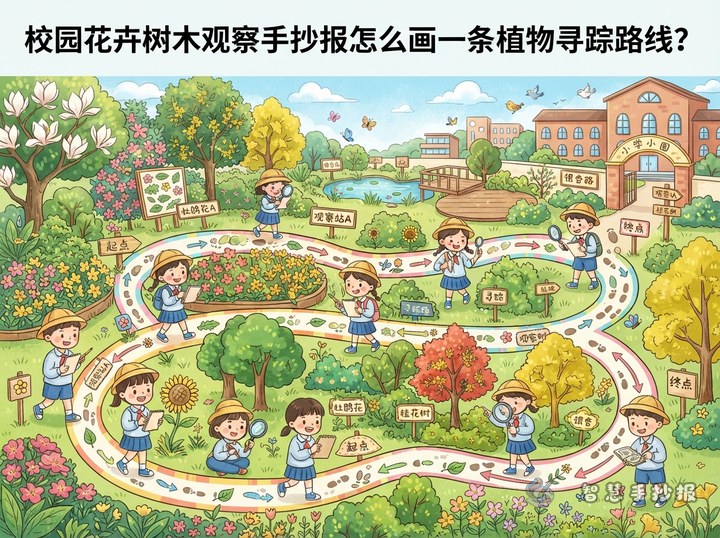
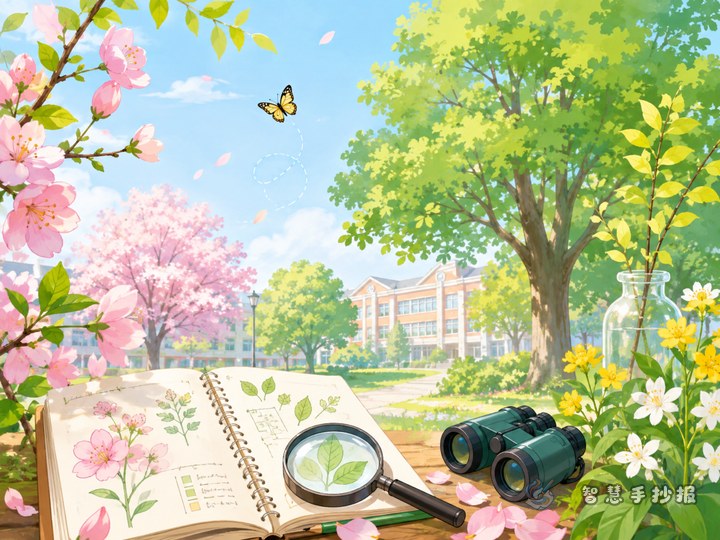
The best part of a tree tag survey theme is that it does not read like a simple plant introduction. Instead, it feels like a real observation task on campus. You can choose a short route, such as from the teaching building to the playground, and look for several easy-to-recognize trees. For each one, note the location, visible features, and your first impression.
Under the main title, add a short introduction such as I explored the trees on campus, observed their names, leaves, trunks, and shapes, and completed a simple survey record.
Use a few sections, but make them meaningful
This kind of handwritten newspaper works well with a structure based on route, records, and findings. You can include these sections:
- Survey Route: Explain where the observation took place.
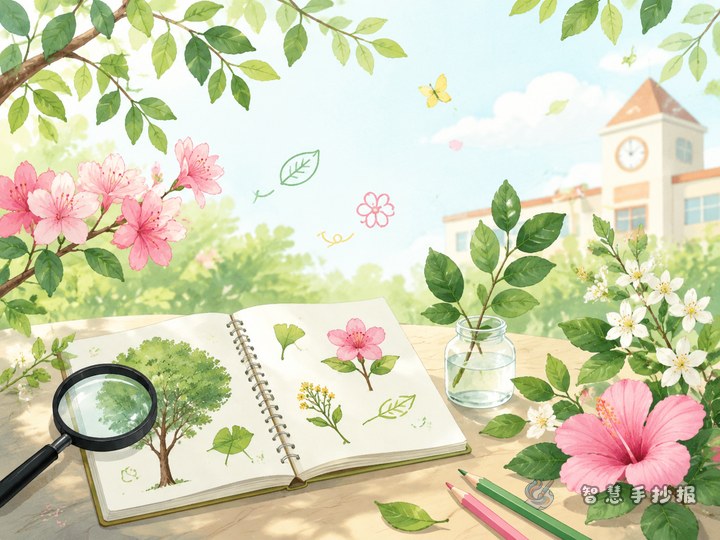
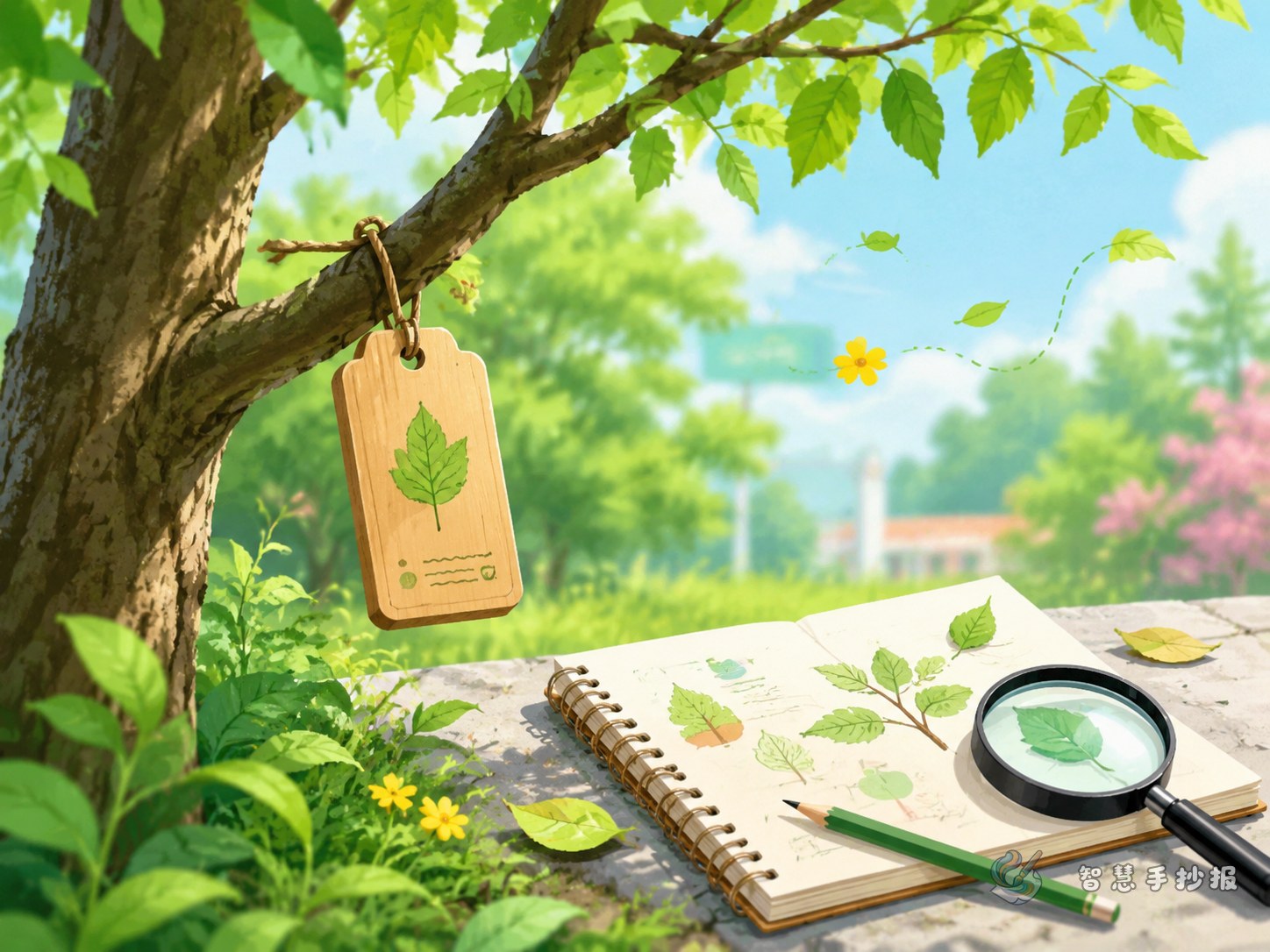
- Tree Profile Cards: Give each tree a small block with name, location, and features.
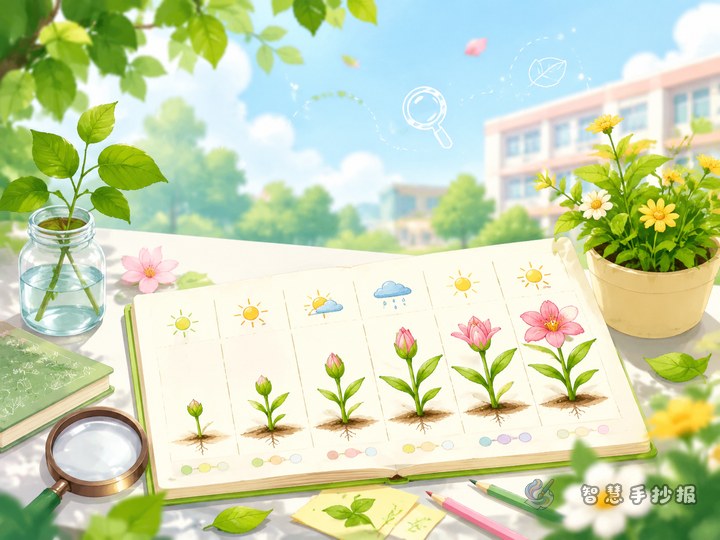
- Observation Lens: Record details such as bark, leaves, canopy shape, and color changes.
- What I Noticed: Compare similarities and differences among the trees.
- Protect Campus Greenery: Add simple action tips for caring for trees.
If your page space is limited, do not make every section too long. The key is to show a clear observation process.
Easy writing material you can place directly on the page
When writing tree profile cards, keep the language short, specific, and based on what you really saw. A simple pattern is:
- Tree Name
- Location
- Appearance
- Observation Impression
For example: The tree beside the playground has a straight trunk, dark bark, and a wide canopy. Standing under it, I could see many layers of leaves.
You can also add comparison sentences such as This tree has broader leaves, while that one has narrower leaves. One spreads outward, while another looks more compact.
Make the layout feel like a real observation board
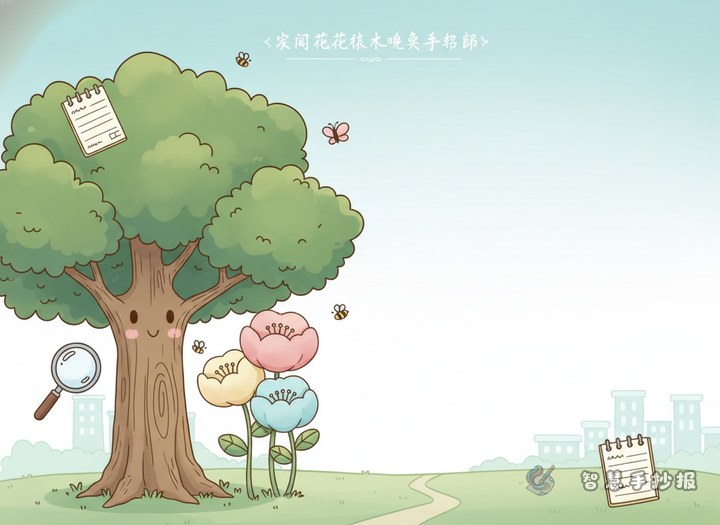
Instead of using equal blocks everywhere, try designing the page like a survey board. Put the main title at the top, use medium-sized content boxes for each tree, and leave a narrow side area for the route, date, or brief notes.
Green, light brown, and pale yellow are good color choices for this theme. Section labels can be shaped like leaves or small tree tags. Avoid long heavy paragraphs. Keep each tree entry to a few clear sentences so the page stays readable.
You can highlight key observations in bold, such as rough bark, long leaves, or dense canopy.
End with action, not only feelings
Many students finish with a general line like “I like plants,” but this theme can end more strongly. Write what you learned from the survey and add practical ways to care for campus trees.
- Do not step on tree pits or grass areas.
- Do not break branches or pick leaves.
- Observe plant changes carefully and be a responsible recorder.
- Remind classmates to protect campus greenery together.
If your observation notes are ready but you still want a cleaner layout or better section arrangement, you can continue creating in the Smart Handwritten Newspaper WeChat mini program.