Build the Page Around a Ball's Safe Journey
Draw a basketball, playground ball, or soft ball in the center, then use a colorful path to connect four stages: choosing a place, agreeing on rules, playing safely, and putting the ball away. A heading such as Pass, Bounce, and Play Safely makes the theme lively while keeping the safety message clear.
Three Checks Before the Game Starts
- Check the place: Use a flat, open area approved by a teacher. Stay away from stairs, classroom doors, and busy walkways.
- Check the ball: Make sure it is not damaged or flat. Choose a ball that is easy for children to hold and control.
- Check the group: Limit the number of players and agree on boundaries, turns, and a stop signal.
Ready-to-Use Safety Notes
A Bouncing-Ball Rhyme
Look ahead and bounce with care; leave enough room everywhere. If the ball rolls out of play, stop and bring it back the safe way.
Passing Promises
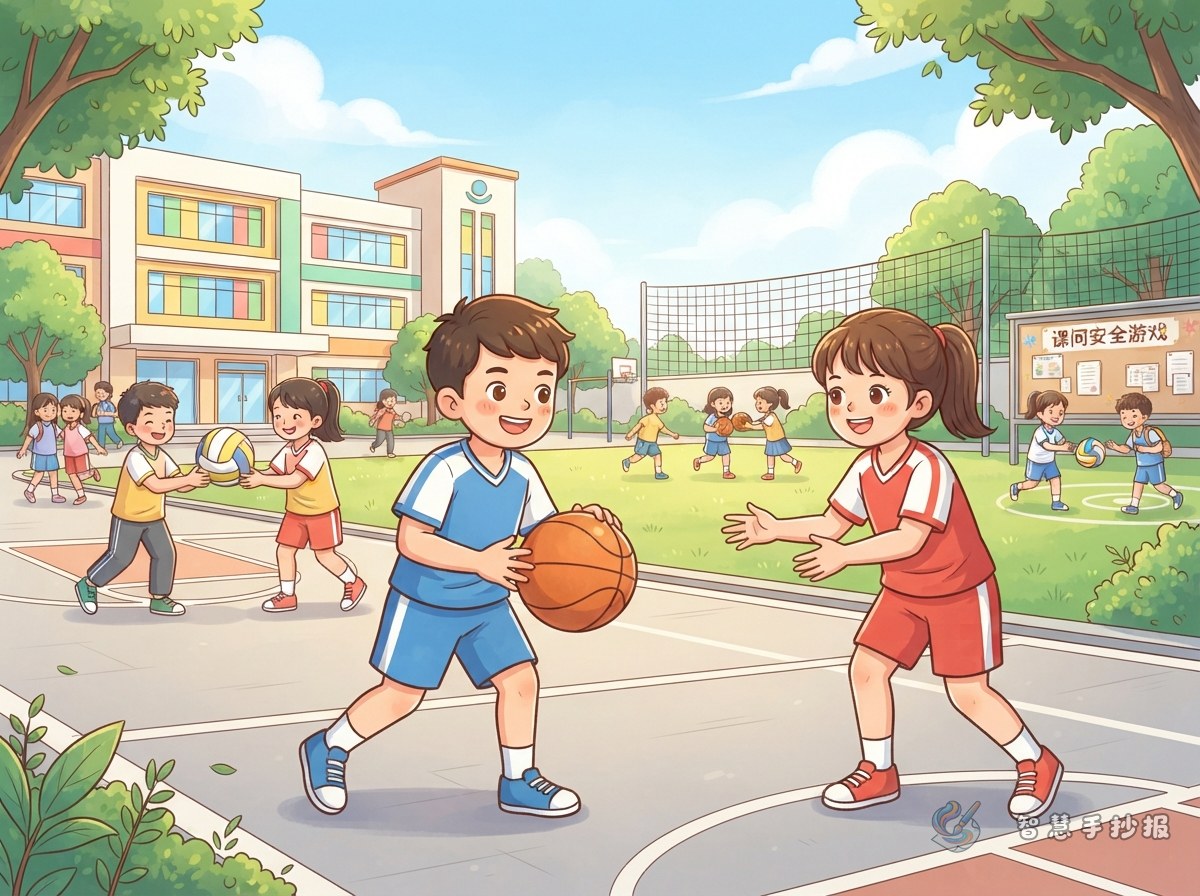
- Make sure a partner is ready before passing.
- Aim gently toward the chest, never the head or face.
- If the ball leaves the play area, pause before retrieving it.
- Do not push or grab. Stop and tell a teacher if someone gets hurt.
Show Safe and Unsafe Choices Side by Side
Use one green section for safe actions, such as bouncing in place, making short two-person passes, and waiting for a turn. Add an orange section for actions to correct, such as bouncing in a hallway, throwing across a crowd, or sprinting after a rolling ball. Short captions make the comparison easy for younger pupils to understand.
Colors and Finishing Touches
Blue, green, and orange can represent play, safe movement, and caution. Decorate the border with ball patterns, whistles, footprints, and boundary lines without covering the writing. Sketch the sections in pencil first, add headings and notes, then outline and color. To explore more layouts and continue making the project, open the 智慧手抄报 WeChat Mini Program.