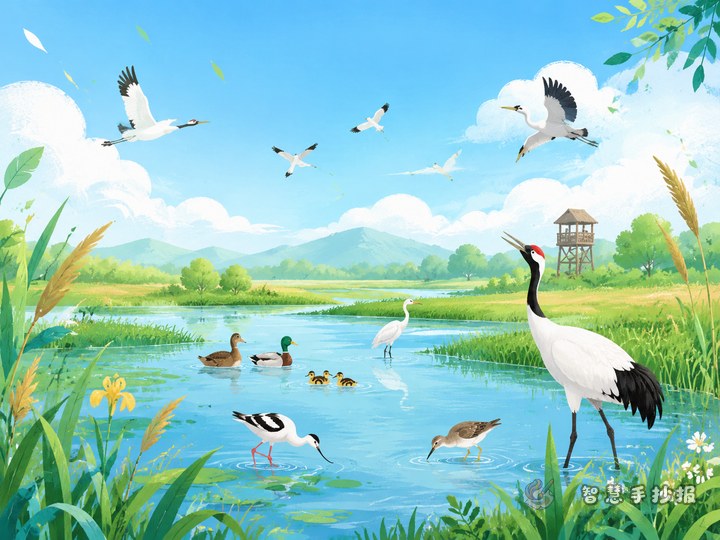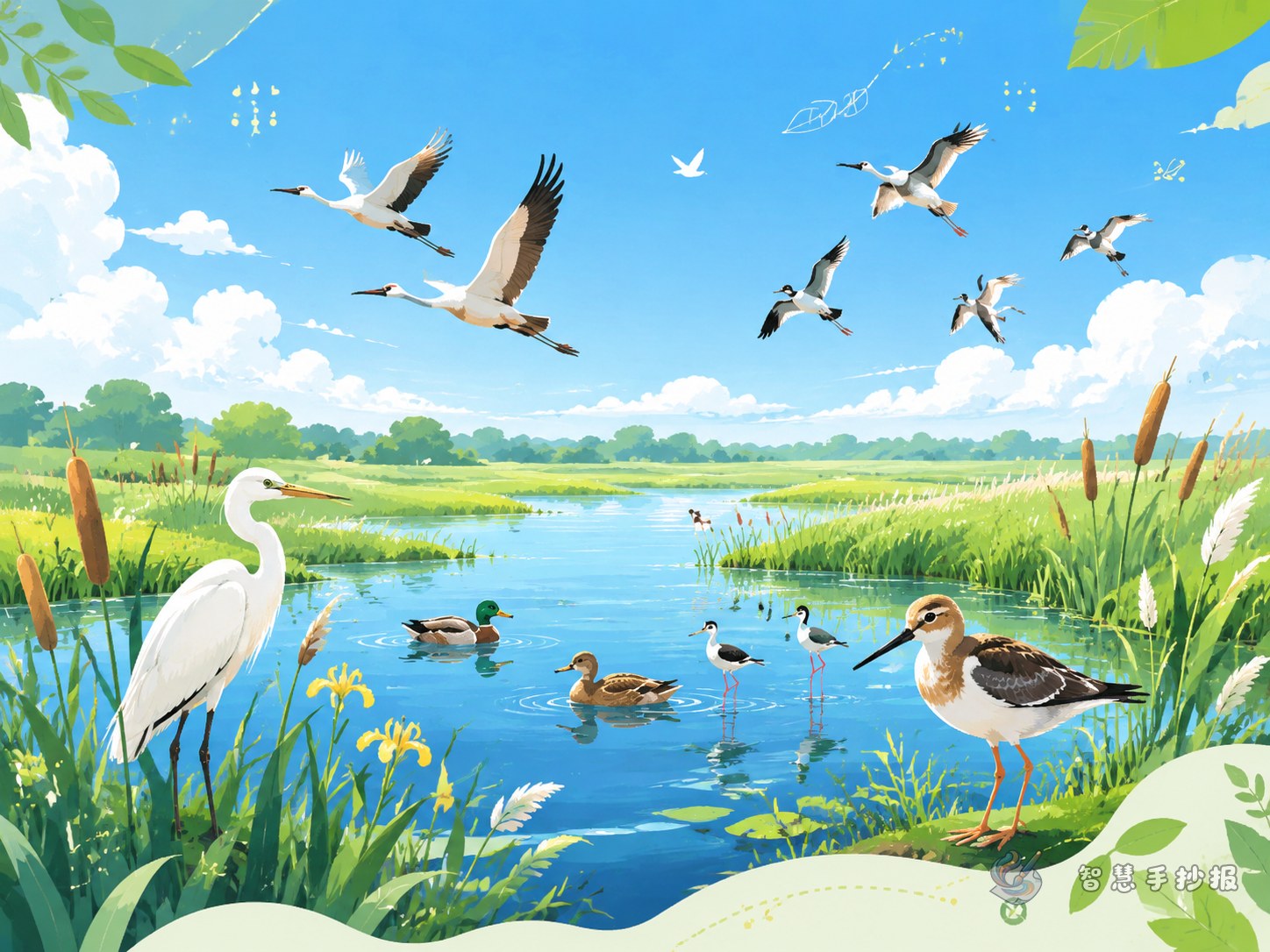
Start with an easy picture in the reader’s mind
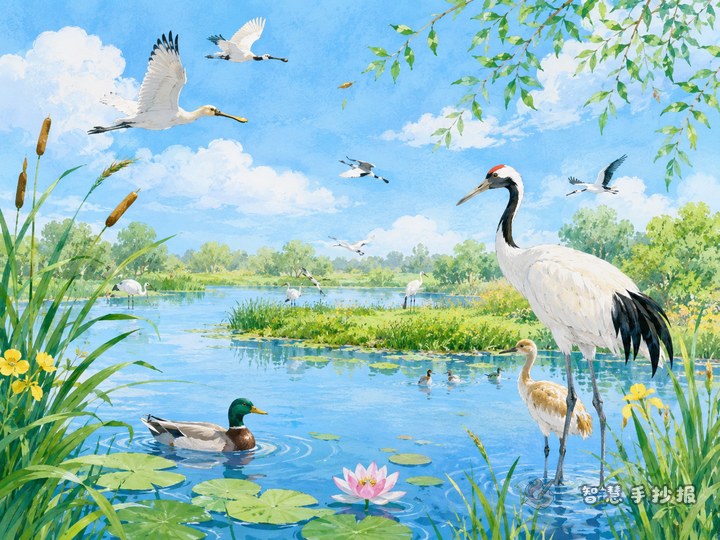
This poster can describe wetlands as a fuel station, dining place, and rest stop for migratory birds. During long journeys, birds need safe places to land, feed, and recover their strength. Wetlands offer shallow water, reeds, mudflats, insects, fish, and other food sources.
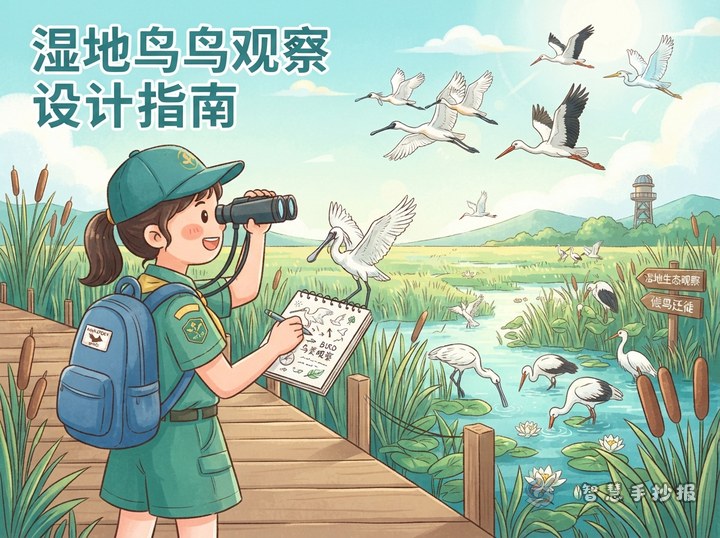
Near the title, you can draw a bird landing over a wetland. Add reeds, water, mud, small fish, and clouds so the main idea is clear at first sight.
Key ideas to include in the poster
What wetlands provide for birds
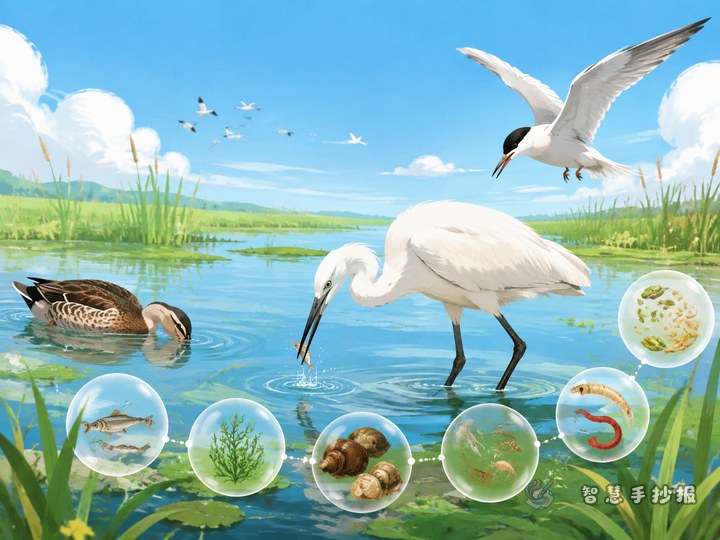
- Food: Shallow water and mudflats contain small fish, shrimp, snails, and aquatic insects.
- Rest: Migratory birds fly long distances and need quiet wetlands to rest and regain energy.
- Safety: Reeds and open water help birds avoid danger and provide a suitable habitat for some species.
What happens when wetlands are damaged
If wetlands disappear or become polluted, birds may lose important stopping places along their migration routes. Poor water quality and litter can also reduce the number of fish, insects, and other small animals that birds depend on.
Short writing material for students
Wetlands are warm resting stations in nature for migratory birds. During migration seasons, many birds stop at wetlands to rest, search for food, and build up energy. Clear water, green reeds, fish, shrimp, and mudflats together form a life-support station on their long journey. Protecting wetlands means protecting the road home for migratory birds and caring for the ecological home around us.
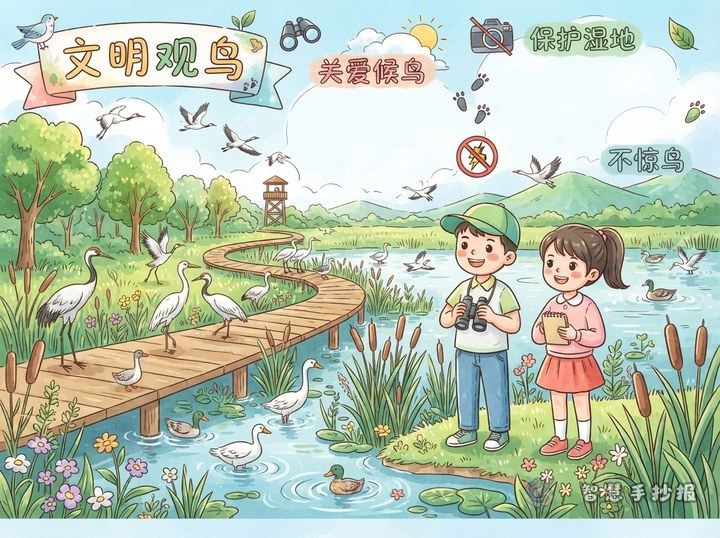
We can help by not throwing litter, not disturbing birds, and not damaging plants near the water. A quiet and clean wetland gives every traveling bird a safer place to land.
Design the layout like a bird refueling map
- Top left: Place the title and draw a bird with open wings.
- Center: Draw a wetland scene with sky and birds above, and water plants, fish, mudflats, and insects below.
- Right side: Add a column called “Three Roles of Wetlands” and use water-drop frames for food, rest, and safety.
- Bottom strip: Write “What We Can Do” with small icons for keeping quiet, taking away litter, and protecting plants.
Color and decoration tips
Use blue for water, green for reeds, light yellow for mudflats, and white or gray for birds. Decorations can include waves, feathers, water drops, and reed leaves. The page does not need to be complicated; a clean layout often looks better.
If you want to plan the page faster, divide the draft into a title area, main picture area, and text boxes first. You can then enter the Zhihui Handwritten Poster WeChat mini program for more layout inspiration and continue making a classroom-ready wetland and migratory bird poster.