Begin with a Message That Inspires Action
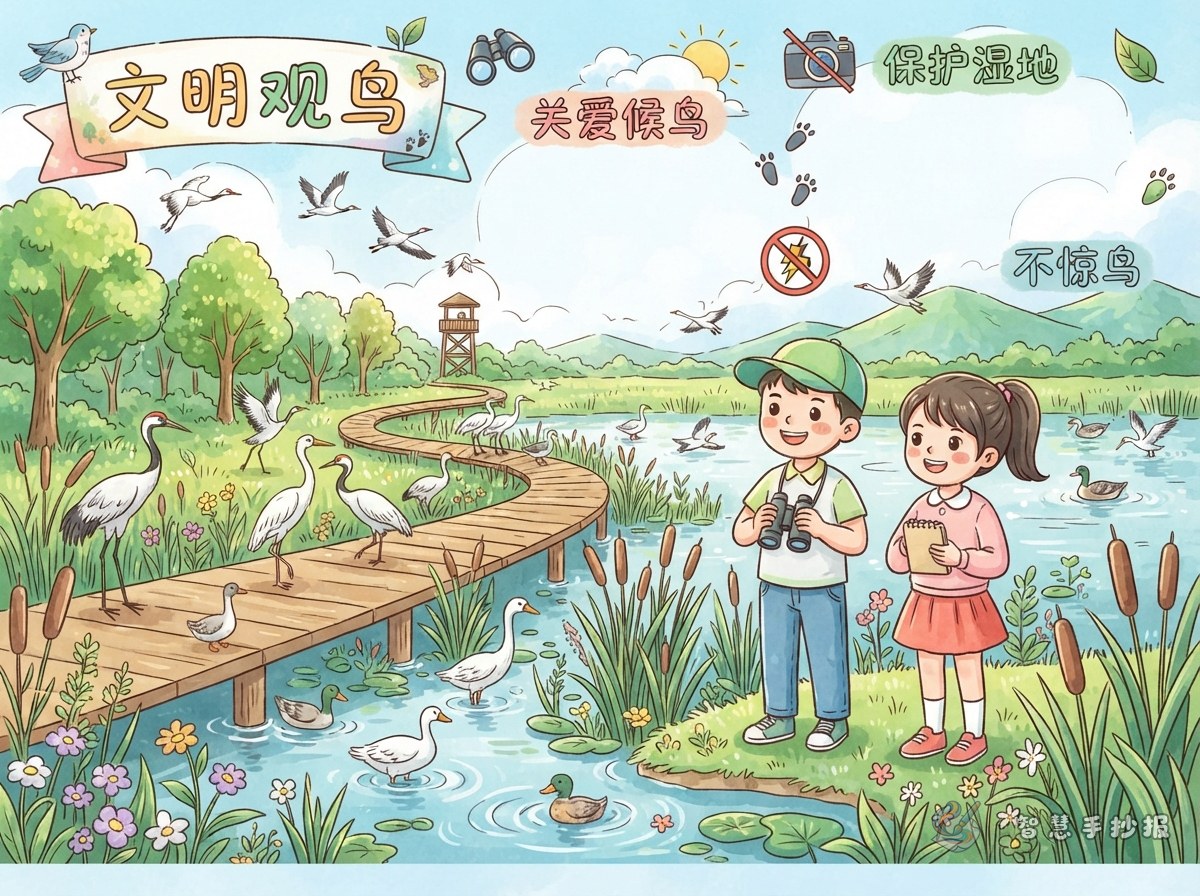
The poster does not need to explain every fact about wetlands. Keep its message focused: responsible birdwatching means giving wild birds space. A main heading such as “Watch Birds Without Disturbing Them” can be paired with the line “Look from afar, listen quietly, and walk gently.”
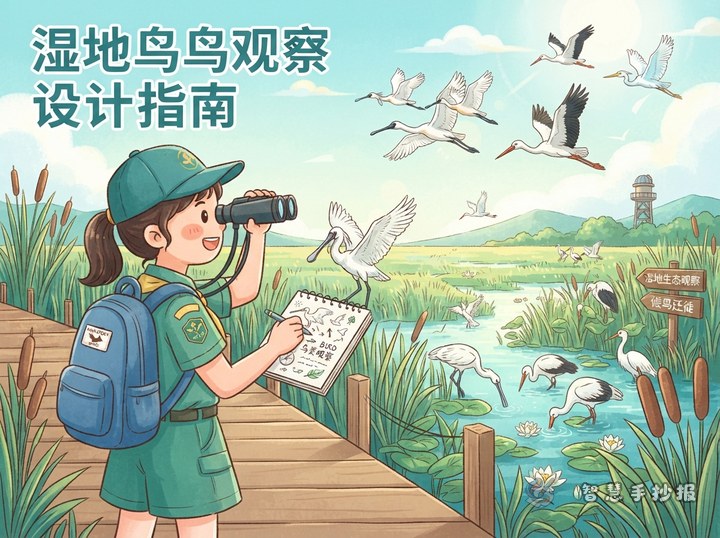
Decorate the title with binoculars whose lenses contain small scenes of reeds and flying birds. A bird beside the heading could say, “Thank you for keeping your distance.” This makes the design friendly while keeping the conservation message clear.
Show Good and Harmful Choices Side by Side
Divide the center of the page into “Good Birdwatching Choices” and “Things We Should Never Do.” Pair each short rule with a small symbol so readers can understand the contrast quickly.
Good Birdwatching Choices
- Observe from a suitable distance and use binoculars for a closer view.
- Walk slowly, speak softly, and avoid surrounding resting or feeding birds.
- Follow local photography rules and never move closer just to get a picture.
- Take all litter home and avoid stepping on reeds, mudflats, or wetland plants.
Behaviors That Disturb Birds
- Do not chase, capture, or touch birds, nests, or eggs.
- Do not feed wild birds bread, snacks, or other unsuitable food.
- Do not play recorded bird calls or repeatedly shine bright lights at birds.
- Keep pets away from flocks so they cannot frighten or chase wildlife.
Ready-to-Use Writing for the Poster
Why Birds Need Peace
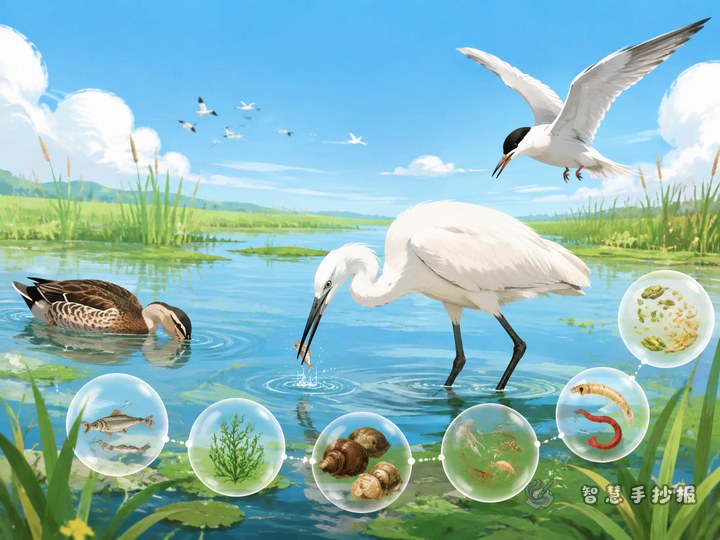
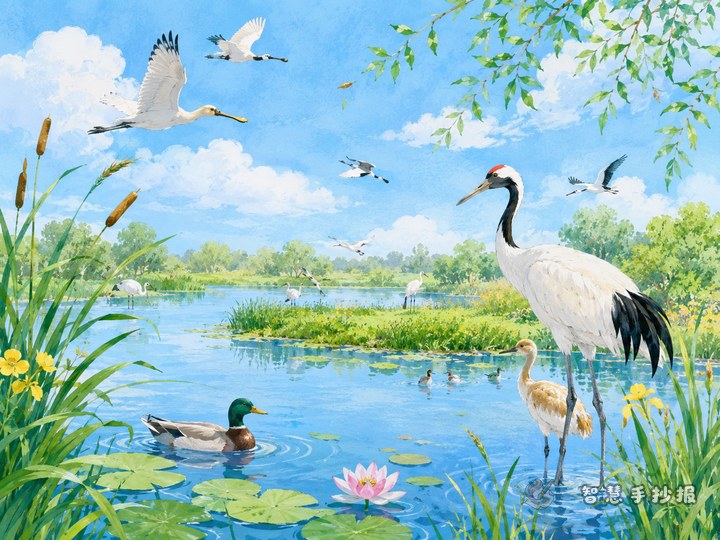
Wetlands provide many migratory birds with places to rest, feed, and shelter from danger. During a stop, birds need time and quiet to restore their energy. Crowding, loud noises, and repeated disturbance may interrupt their normal behavior. Keeping a respectful distance is one of the simplest ways to protect them.
A Short Conservation Pledge
Let us become thoughtful young birdwatchers. We will not chase, feed, frighten, or capture wild birds. We will protect wetland plants, carry away our litter, and give every bird the space it needs. May each encounter with wildlife be peaceful and safe.
Short Lines for Empty Corners
- If you love wild birds, give them freedom and space.
- Softer footsteps bring clearer birdsong.
- Take home your notes and leave no litter behind.
- Not disturbing wildlife is the finest birdwatching manners.
Turn the Page into a Quiet Wetland Visit
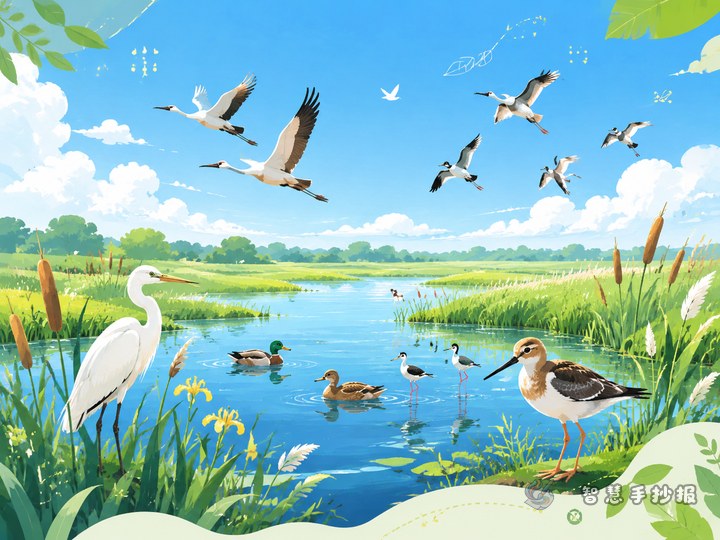
- Draw a shoreline: Add a curved strip of shallow water near the bottom to create natural content zones.
- Choose a visual focus: Place the title at the top and draw a small observer with binoculars on one side, leaving enough room for text.
- Add four content panels: Feather shapes, binocular lenses, or rounded signs can hold rules, warnings, facts, and the pledge.
- Use wetland colors: Combine pale blue, fresh green, and reed yellow, with a little orange for warnings.
- Protect reading space: Keep the heading bold, leave comfortable gaps between lines, and prevent decorations from covering words.
Finish with a Birdwatcher’s Checklist
Check whether the poster clearly explains distance, quiet observation, no feeding, and habitat protection. Make sure the birds look natural, the sections follow a clear order, and the colors do not overwhelm the writing. To explore different heading styles, panel shapes, and wetland color schemes, continue your project in the 智慧手抄报 WeChat Mini Program.