Turn a big topic into one small daily action
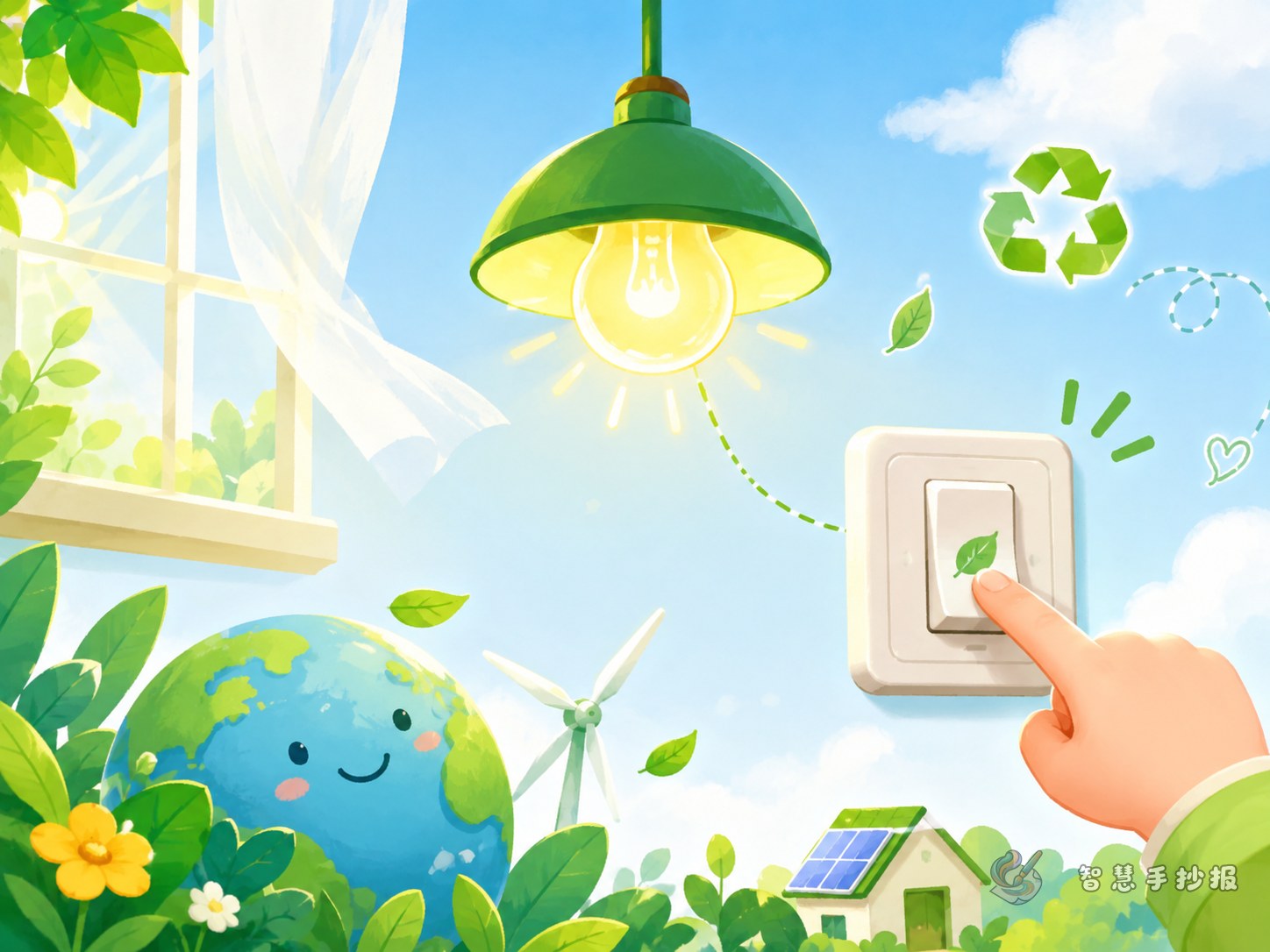
An energy-saving green living handwritten paper can feel too general if it only says “save energy.” A stronger idea is “Turn Off the Lights for a Week”. It is easy for children to understand, easy to connect with real life, and simple to illustrate. The moment someone reads the title, they know the page is about a practical electricity-saving habit.
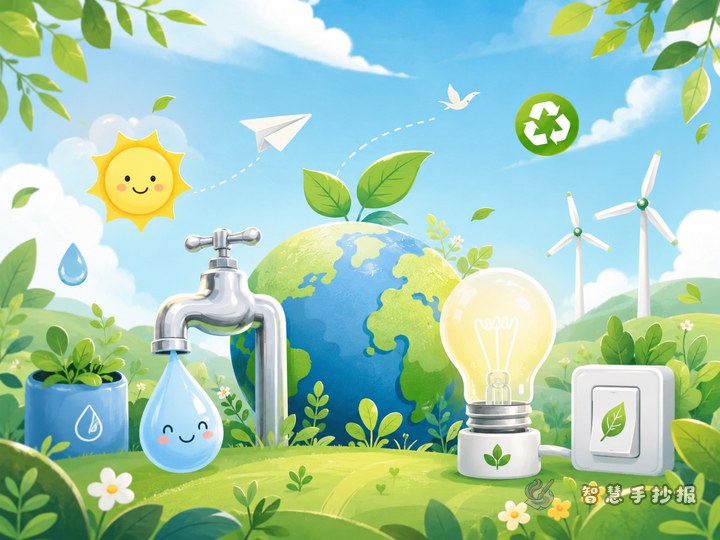
You can place a large light bulb in the center as the main visual. Around it, create small sections such as why turning off lights matters, where people often forget, my weekly check-in, useful slogans, and three actions I can do. This makes the page clear and balanced.
Sections you can write directly on the page
Why should we turn off lights in time?
Lights use electricity whenever they stay on. Turning them off when they are not needed is a simple but meaningful way to save energy. It also helps students build the habit of not wasting resources. Green living often begins with very small actions.
Where do people often forget?
- When leaving a room in a hurry
- When natural daylight is already bright enough
- In classrooms, hallways, or bathrooms after short use
- After homework, reading, or getting ready for bed
Small actions I can do
- Check the light switch before leaving a room
- Use natural daylight first during the day
- Remind family members and classmates gently
- Turn off lights in empty spaces when I notice them
Make the page more vivid with a weekly plan
One of the best parts of this theme is the weekly check-in chart. Draw seven small boxes for Monday to Sunday. Each day, if you remember to turn off lights when leaving a room, add a star, smiley face, or little leaf. This turns the handwritten paper from just a reading page into a record of real action.
You can also add short notes next to the chart, such as “The classroom was bright enough with sunlight today” or “I remembered to turn off the study lamp after homework.” These small details make the work feel personal and real.
Useful slogans and short lines
- Turn off the light, save a little power every day.
- Use sunlight when possible, switch off when leaving.
- No more always-on lights, be an energy-saving helper.
- Save each bit of electricity, support green living.
- Start today and make saving energy a habit.
You can also include a short pledge such as: “I will start with myself, turn off lights when leaving rooms, remind people kindly, and make green living part of every day.”
Color and layout ideas
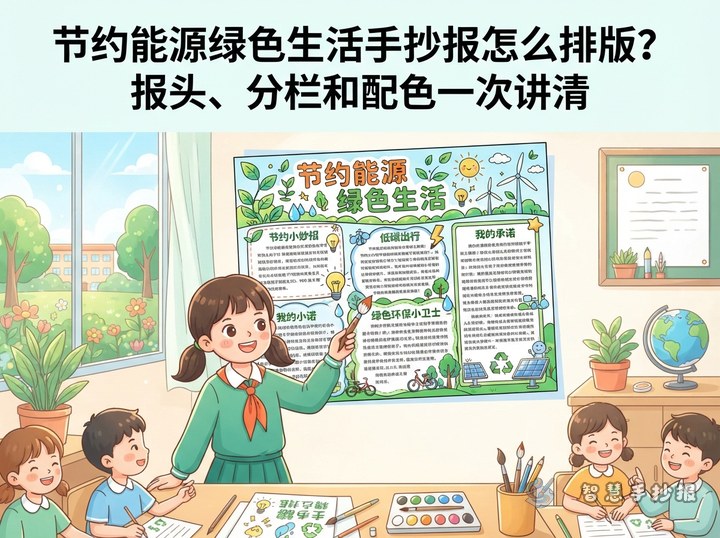
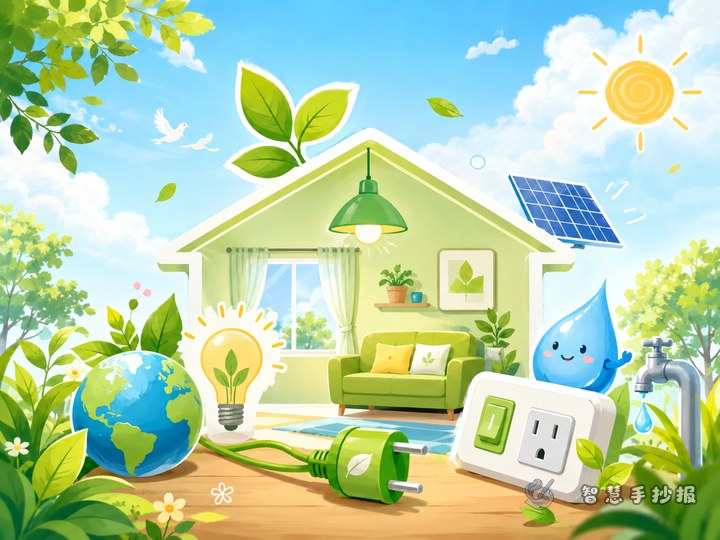
Green, yellow, and light blue are good main colors. Green suggests environmental care, yellow matches lights and warmth, and light blue keeps the page fresh and bright. Borders can be shaped like light bulbs, leaves, clouds, or switches.
For a horizontal layout, place the title in the center, information sections on the left, and the weekly plan on the right. For a vertical layout, put the title at the top, main content in the middle, and the action pledge at the bottom. Leave some blank space so the page does not feel crowded.
A simple ending that feels complete
Your ending can be short and clear: “Saving energy is not only a slogan. It is a small action we can do every day. By turning off lights in time, we can help protect resources and build a greener life.”
If you want to keep refining the design, you can also continue arranging your sections and layout in the Smart Handwritten Paper WeChat mini program.