Start With One Clear Message
The biggest trap with an energy-saving, green-living handwritten newspaper is trying to say everything at once, so the page ends up looking like a wall of sticky notes. Before you draw anything, choose one line, for example "Every unit of electricity saved is a gift to the Earth", and treat it as the eye of the whole page. The masthead and the largest block should both point back to it.
Then decide on three small questions the reader should be able to answer: Why save energy? How do we save it in daily life? What can I do today? These three blocks fit the topic and make dividing the page much easier.
Making the Masthead Pull Its Weight
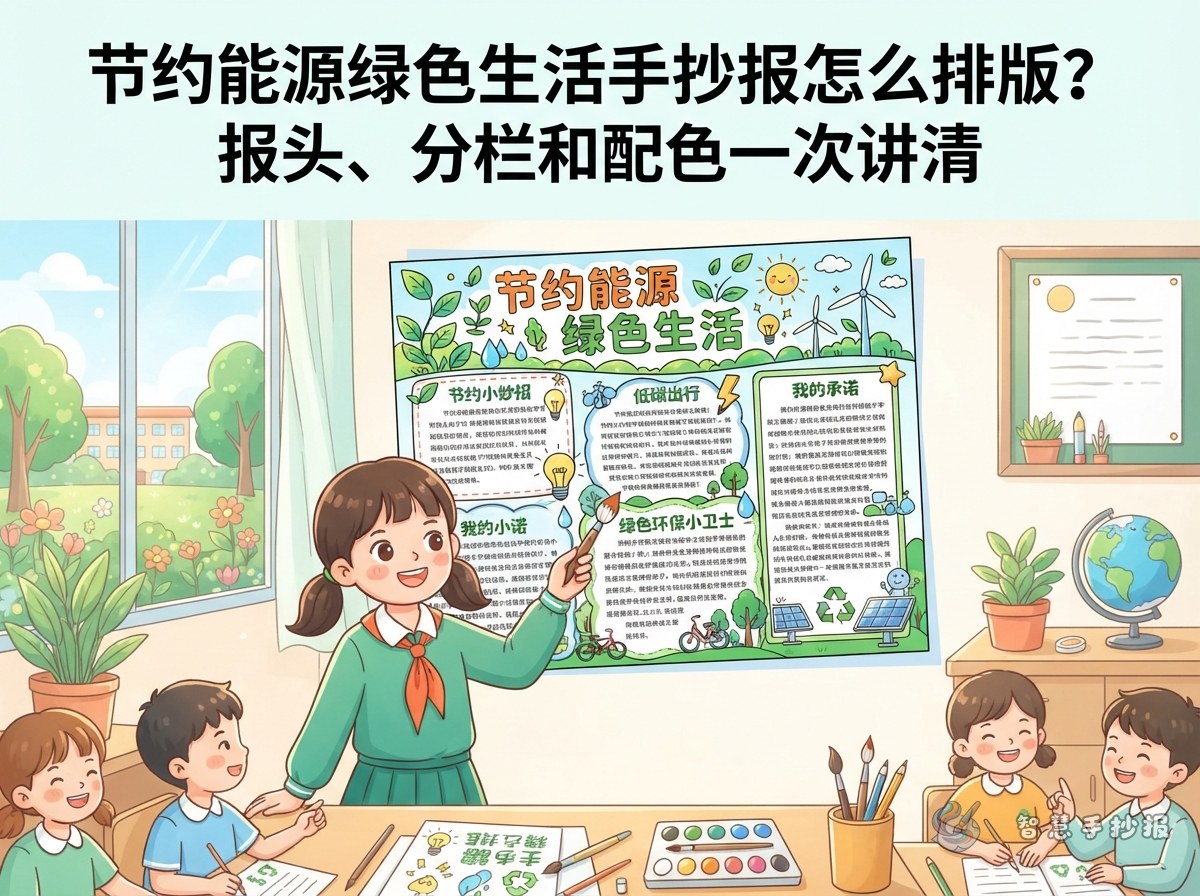
The masthead takes up roughly the top quarter of the sheet. The main title should be bold and at least twice the size of the body text.
Three title patterns that work
- Nickname style: Little Energy Savers, Green Little Masters, The Low-Carbon Team
- Call-to-action style: Did You Save Energy Today? Give the Earth a Rest
- Paired style: Save Energy, Live Green
Subtitle and signature
Add a small subtitle under the main title, such as "Start with me, start today", and leave a neat little box in a corner for your class, name and date. Keep that writing small and tidy.
Three Column Layouts That Are Easy to Draw
Two columns
Divide the page down the middle with a wavy or dotted line. Write "Why save energy?" on the left and "What can I do?" on the right. This is the safest choice for a first attempt because the amount of copying stays manageable.
Three stacked rows
Put the masthead on top, then three small boxes in a row for saving water, saving electricity and green travel, and finish with a long strip at the bottom for a slogan. The result looks neat, like three beads on a string.
Centre circle with four blocks
Draw a globe or a light bulb in the middle of the sheet and let four blocks radiate outwards: save water, save electricity, use fewer plastic bags, walk more. Sketch faint pencil lines first so all four blocks match in size.
Whatever you choose, leave about half a centimetre of white space between blocks so the writing never touches the border.
Colour and Drawings: Stick to Three Main Colours
Green, blue and pale yellow suit this topic best. Use green for leaves and grass, blue for water drops and sky, and pale yellow as a background or as the glow around a bulb. Keep the whole page to three main colours plus black outlines and it will never look crowded.
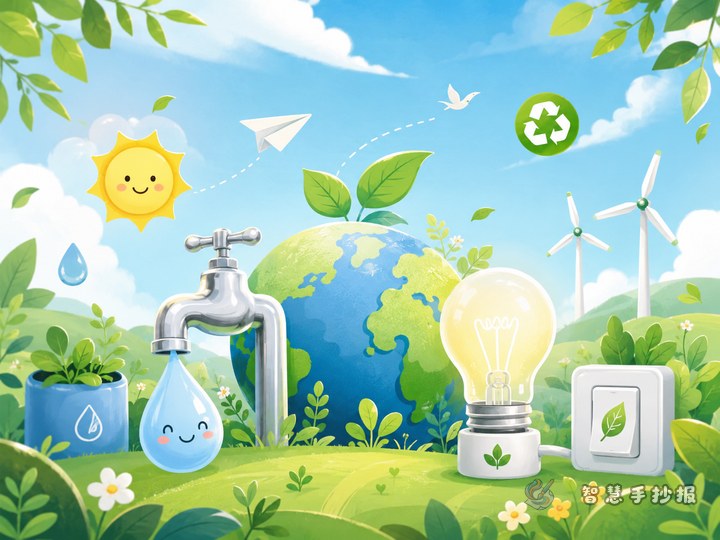
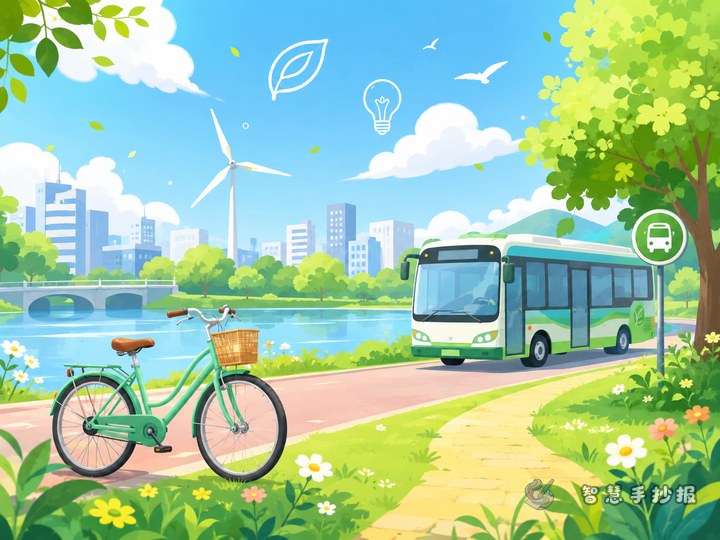
- Simple shapes that work: leaves, water drops, light bulbs, the globe, bicycles, recycling bins, the sun
- Borders that work: vines, clouds, water drops, small footprints
- Avoid: large areas of solid black, mixed neon colours, more drawings than text
Short Lines You Can Copy Straight Into a Box
Keep each block to three to five lines, short and easy to read aloud.
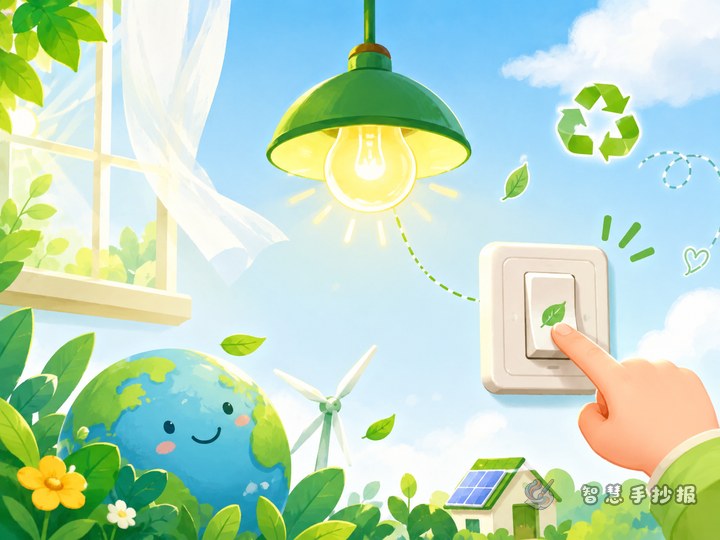
- Switch off the light when you leave, and turn the tap off tightly.
- Set the air conditioner to twenty-six degrees - cool and efficient.
- Use both sides of every exercise book page.
- Walk or cycle for short trips instead of taking the car.
- Take a cloth bag shopping and skip one plastic bag.
- Old bottles and boxes can be used one more time with a little work.
To make the lines stand out, write the key words large and in colour, such as "off", "save", "again" and "less".
The Order to Work In
- Sketch the masthead and columns lightly in pencil and check the proportions.
- Write the text first, then outline and colour, so your hand does not smudge the page.
- Add drawings and small decorations last; a little white space looks better than a full page.
If you get stuck on the layout, open the ZhiHui Handwritten Newspaper mini program on WeChat, pick a ready-made layout, swap in your own title and short lines, then copy it onto paper. It saves a lot of time.