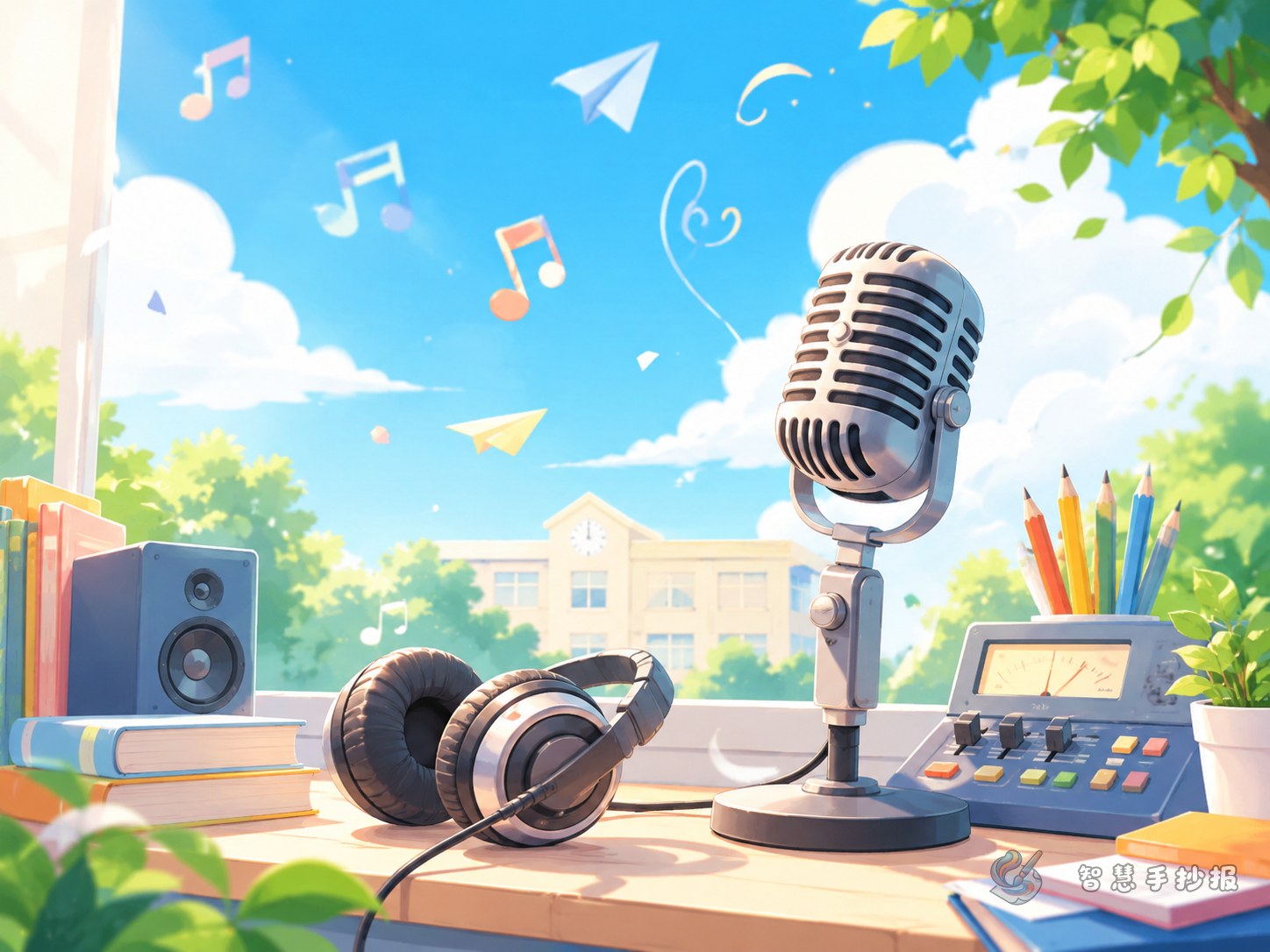
Build the theme around “A Day in the Broadcasting Room”
A campus broadcasting station poster becomes much stronger when it is based on one real experience. You can describe when you entered the room, how tasks were divided, and whether you helped with reading scripts, organizing notes, or checking equipment. This makes the handwritten newspaper feel vivid instead of general.
Under the title, add a short lead sentence such as: In the broadcasting room, I learned careful preparation, polite speaking, and teamwork. This gives the whole page a clear focus from the beginning.
Sections that fit the topic best
Role snapshot
Briefly explain what the school broadcasting station does, such as sharing campus notices, reading reminders, recommending books, or playing music. This helps readers understand that the role is both interesting and responsible.
Before the broadcast
- Check whether the script is smooth and clear
- Practice pronunciation and pauses
- Keep the desk and equipment organized
- Arrange the order of the program
This part shows care, order, and responsibility, so it is worth writing in a slightly more detailed way.
My own task
You may write that you were a young announcer, a script organizer, a record keeper, or a music helper. Even if you experienced only one small part, explain it clearly so the content feels real.
What I learned
You can focus on responsibility, cooperation, speaking skills, and time awareness. Simple and honest reflections work better than exaggerated writing.
Ready-to-use writing materials
Material 1: When I first entered the school broadcasting room, I realized that broadcasting is not just about picking up a microphone. We had to prepare scripts, check the order, adjust the sound, and speak clearly and politely. Behind every smooth broadcast is careful teamwork.
Material 2: The broadcasting station may not look like traditional physical labor, but it is still a form of service to the school. Some students write, some announce, and some organize materials or equipment. Everyone has a task, and every task matters.
Material 3: Through this experience, I learned to prepare before working, to speak with respect, and to cooperate with classmates on time. The small broadcasting room taught me that labor also means doing my duty seriously.
Try a flowing layout instead of equal blocks
This theme works very well with a layout that feels like sound moving across the page. You can divide the page into three parts: role introduction on the left, process in the middle, and reflections on the right. You can also connect sections with sound-wave lines.
- Use a curved headline with a microphone drawing
- Make the center area about before, during, and after broadcasting
- Add a small corner for polite speaking tips
- Place personal reflections at the bottom
Bright blue, orange, and green are good color choices because they look cheerful and school-friendly.
Small details that make it feel authentic
If you want the poster to feel more real, include tiny moments from the experience, such as feeling nervous before speaking, misreading one word, being reminded by a classmate, or feeling proud after finishing the task. A few true details can make the whole page much more believable.
You can also add a small section called “Broadcasting Promises,” such as speak clearly, use polite words, follow time rules, and take care of equipment. This adds both content and educational value.
A quick way to finish the page
Start with the main title, choose four or five small sections, keep each section around a short paragraph, and then add borders and illustrations. If you want to organize the layout faster, you can continue your design in the Smart Handwritten Newspaper WeChat mini program and complete the final page more easily.