Make the topic specific from the beginning
This theme should focus on the experience of the role, not just a general introduction to the school canteen. In the opening, briefly explain that you entered the campus canteen, learned how helpers work, and discovered why every meal deserves respect. This makes the purpose clear right away.
Sections that fit this theme best
- Job profile: Explain what a canteen helper does, such as washing vegetables, arranging ingredients, setting out tableware, cleaning counters, and assisting with meal service.
- Experience record: Write the work steps in order so the page feels vivid and realistic.
- What I discovered: Share how cafeteria work requires patience, teamwork, and responsibility.
- Food-saving reminders: Connect the experience to school life with ideas like clean plate habits and not wasting food.
- What I learned from labor: Summarize personal growth such as gratitude, cooperation, and respect for workers.
Sample text you can adapt
During my campus canteen helper experience, I realized that a warm meal does not appear easily. From preparing ingredients to arranging dishes, from cleaning work areas to helping with serving, every step depends on careful labor. Cafeteria workers start early and stay busy so students can enjoy clean and tasty meals on time. This experience helped me understand that labor is not only about working with our hands, but also about taking responsibility for others.
I also learned the importance of valuing food. Every dish on the table comes from many people’s hard work. If we waste food, we waste their effort too. From now on, I want to take only what I need, eat seriously, and respect every worker through my actions.
Try a layout that looks like a serving station
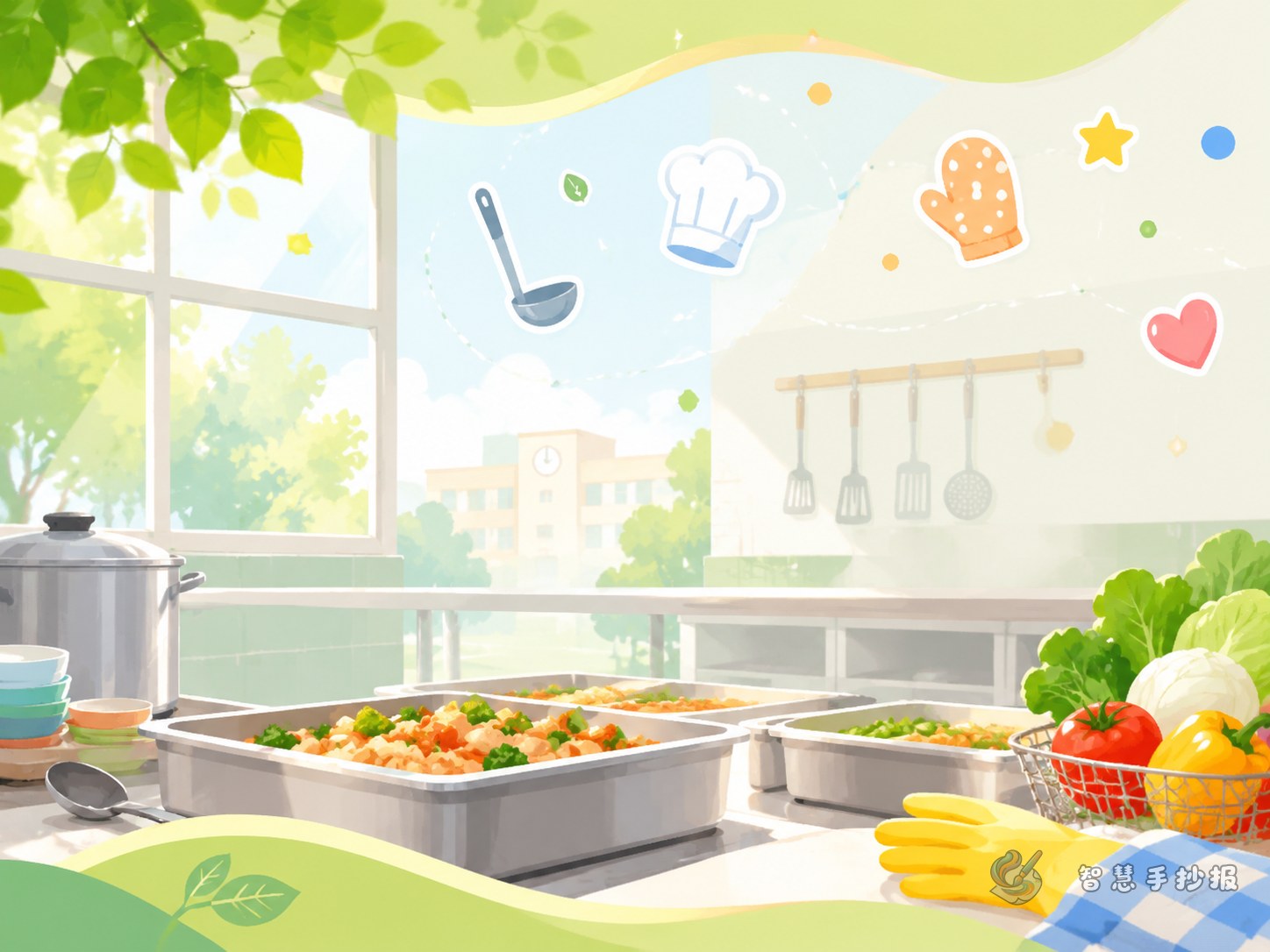
Instead of a simple left-right layout, you can design the page like a canteen counter. Put the main title at the top, then divide the middle area into tray-shaped blocks for job duties, experience, food-saving advice, and dining manners. Small drawings of aprons, chef hats, spoons, vegetables, and plates can make the page lively and suitable for the topic.
If there is enough space, turn the work process into a visual route: ingredient prep, counter cleaning, tableware setup, serving help, and final cleanup. This makes the content neat and clearly connected to the role experience.
How to write feelings in a natural way
Avoid empty phrases. Start from one real detail, such as realizing that lining up plates neatly takes patience, or noticing how hard cafeteria staff work before students arrive. Short and sincere sentences often feel more believable and are easier to read in a handwritten newspaper.
- Use real work details instead of broad slogans.
- Explain what makes the work hard, such as early hours, many steps, and the need for cleanliness.
- Show clear learning outcomes like cooperation, gratitude, and saving food.
End with a clear message
You can close with a simple line: this canteen helper experience helped me see the responsibility behind ordinary school jobs and taught me to respect labor and cherish daily life. That kind of ending is warm, meaningful, and suitable for a school-themed handwritten newspaper.
If you already have your sections and text ideas, you can continue organizing and beautifying the page in the Smart Handwritten Newspaper WeChat mini program for a more complete final result.