Start with people, not just water
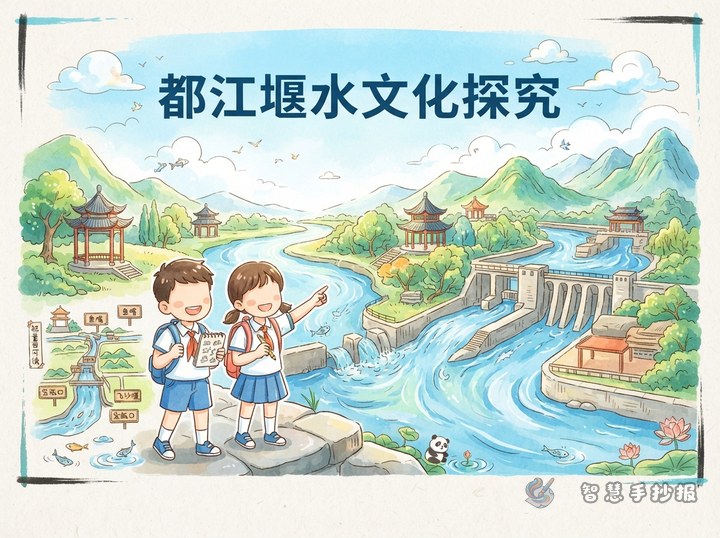
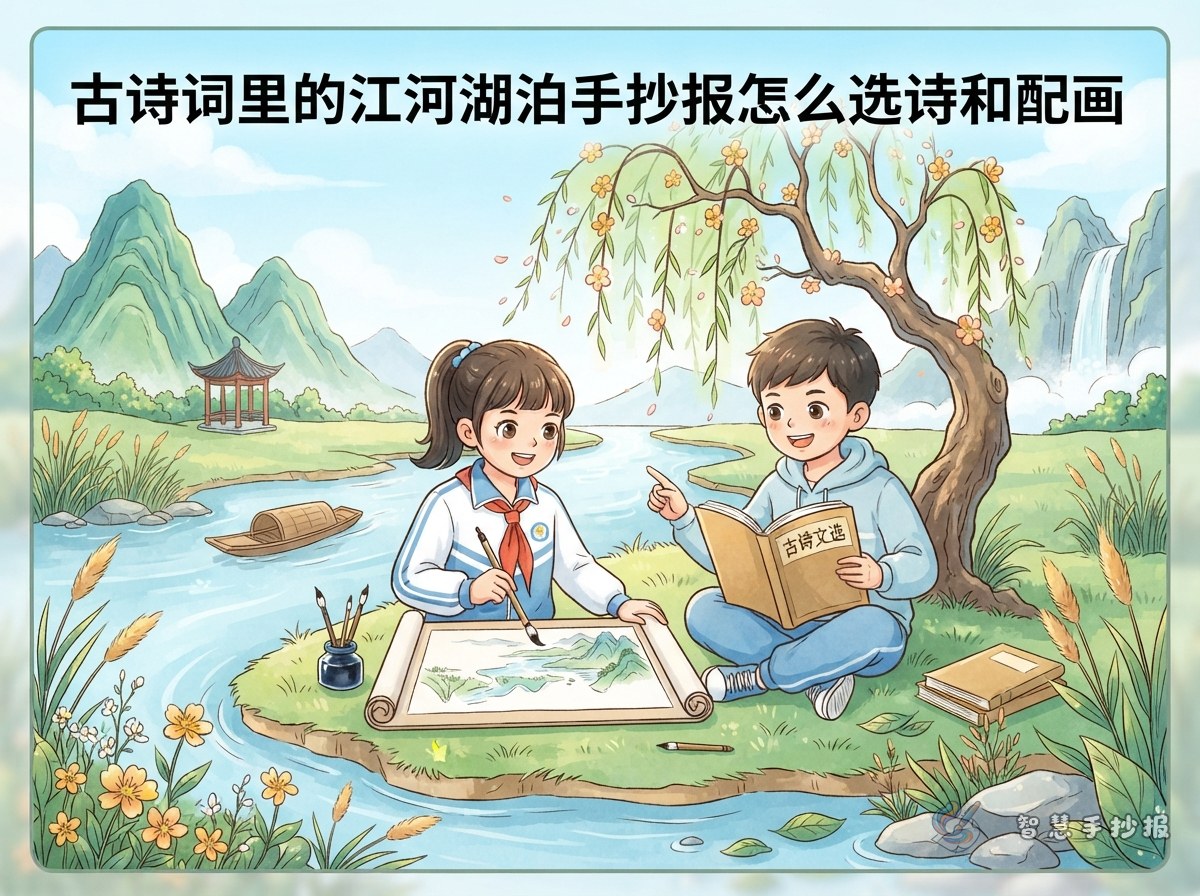
A rivers and lakes water culture newspaper that only says “this lake is big and this river is long” reads like a geography sheet. Water culture is really about the relationship between water and people: how they lived by the river, wrote poems, held festivals and controlled floods. Classical poems keep both sides of that story, so using them as the main thread gives you both image and meaning.
Keep one order in mind: choose the water scene first, then the poem, then the layout. Do it the other way round and you may end up with a page full of waves and nothing to write inside them.
Three steps, three poem lines
- Choose the water scene. Decide whether the page is about a great river, lake scenery, a tidal bore or a spring and stream. A narrower topic makes material much easier to find.
- Choose the mood. Grand, quiet or lively? Great rivers and tidal bores feel grand; Dongting Lake, West Lake and mountain streams feel calm.
- Choose the headline line. From two or three candidates pick the one that reads best and is easiest to illustrate. Put it in the masthead and give the other lines to smaller sections.
Poem lines you can copy straight onto the page
These lines come from well-known classical poems. They are short and vivid, which makes them easy for primary school students to copy by hand. Check each character against a textbook or poetry collection before writing.
- Great rivers: “The lone sail's far shadow vanishes in the blue sky; only the Yangtze flows to the horizon.” “Beyond the Yellow River the white clouds rise; a lonely wall stands among ten thousand peaks.” “The river flows beyond heaven and earth; the mountains fade between presence and absence.”
- Lake light and moonlight: “Lake light and autumn moon blend together; the still surface is an unpolished mirror.” “The water shines on sunny days, lovely as can be; the hills are dim in mist and rain, wonderfully strange.”
- Tidal bores and waves: “In the eighth month the tide roars up from the ground; waves tower several zhang and strike the hills back.” “Spring river tides merge with the sea; over the sea the bright moon rises with the tide.”
- Springs and streams: “The spring mouth is silent, sparing its thin stream; tree shade loves the soft clear water.” “The waterfall drops three thousand feet; it must be the Milky Way falling from the nine heavens.”
If there is still space, add a “water culture note”: why ancient towns grew beside rivers, why lakesides are full of pavilions and temples, or why dragon boat races are held on water during festivals. A short fact like this makes the paper feel complete.
Turn the page into four or five boxes
Think of the sheet as four or five boxes, each doing only one job. The page reads cleanly that way:
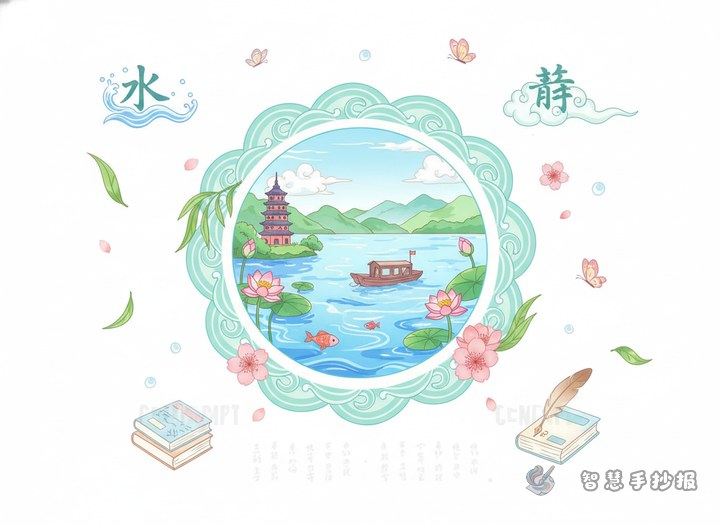
- Masthead: the main title, using a water word or a phrase from your poem line, with a ripple drawn beneath as a divider.
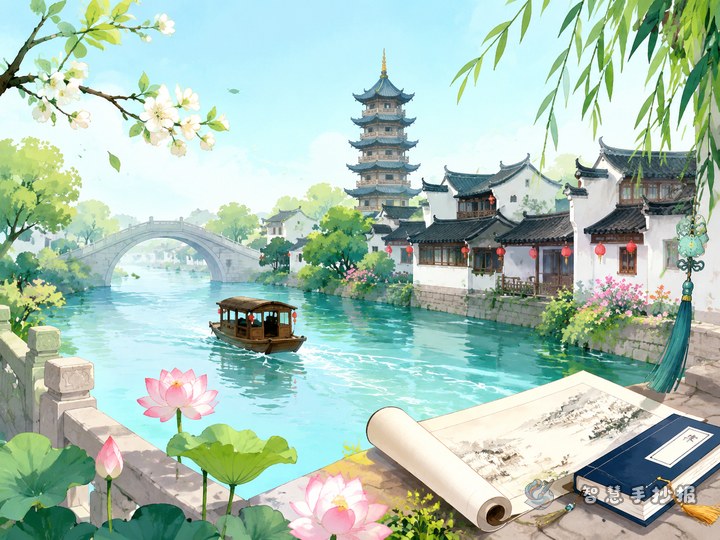
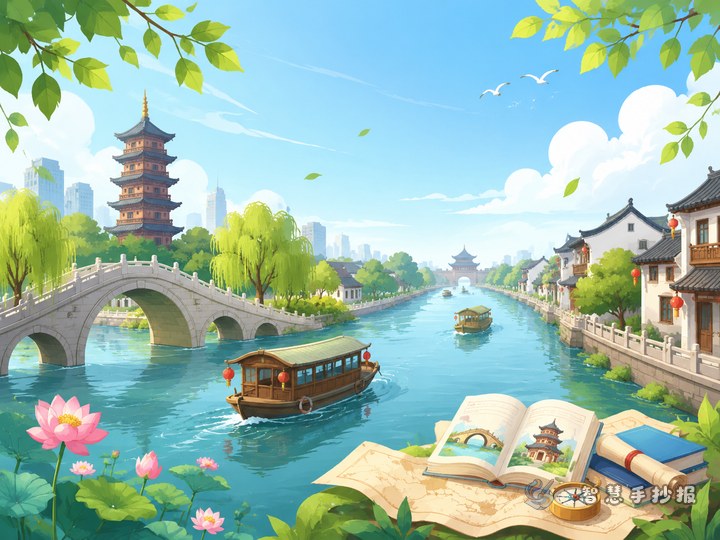
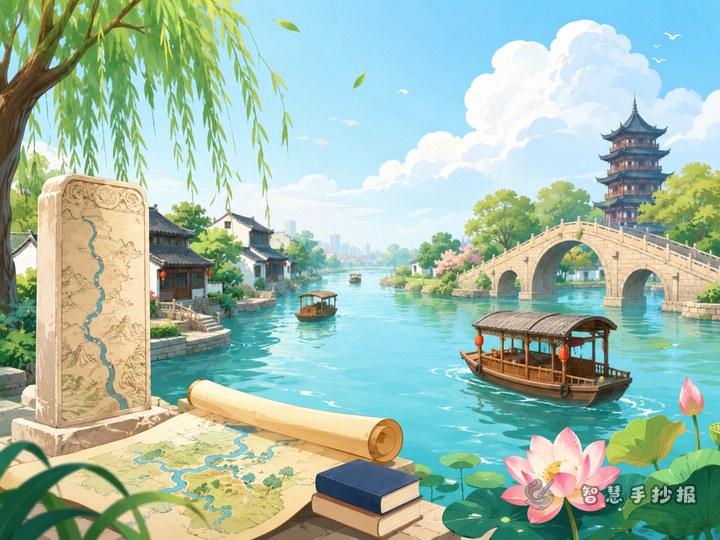
- Poem and picture: the original lines on the left, a river or lake drawn on the right, with a boat, willow, bird or pavilion at the bank to show the human side.
- Notes: one or two sentences explaining the poem in your own words rather than copying a whole paragraph from a source.
- My thoughts: what the line makes you think of, linked to a river, lake, rain or boat you have actually seen.
- Question box (optional): a small question and answer of your own, such as why ancient poets so often wrote about the moon over water.
Drawing water without drawing everything
You do not need to fill the page with waves. A few curves in different directions are enough: straight lines for a calm lake, short choppy waves for fast water, and layered arcs for spreading ripples. Blank space matters, because blank space is the water surface. Draw only two or three objects: a distant hill, a near boat, a willow on the bank. The picture will hold together.
A small square seal in one corner, with a single character such as 水, 湖 or 江, gives a classical touch more cheaply than a pile of decorations. Use blue and cyan as the main colours, add a little ochre or pale yellow for the bank, and the whole sheet will look bright and neat.
Three small details that keep you on topic
- Keep to one version of each poem line. When a line has several written forms, use the textbook version and stay consistent.
- Do not turn the sheet into a pure landscape painting. Text should take up more than half the page; a beautiful drawing with too few words still looks empty.
- Do not just copy famous lines. Leave two or three sentences for your own explanation or feeling, so the paper shows real thought.
If you would rather spend your time writing and drawing ripples, build the layout first: search for the 智慧手抄报 mini program in WeChat, open a rivers and lakes water culture template, drop your chosen lines and title into the matching boxes, and check the overall proportions before drawing the grid on paper. Once you know where the masthead sits and how big each box should be, the final hand-drawn version is much easier to get right.