How Community Volunteer Work Is Different from Classroom Duties
Classroom duties usually stay inside the classroom, but community volunteer service takes students into real neighborhoods and real interactions. You can write about community cleaning, wiping stairway handrails, organizing a community bookshelf, visiting elderly residents, sharing garbage sorting tips, promoting responsible pet care, or helping at a charity sale. Instead of listing everything, choose one service you actually joined and describe the process clearly.
If you only write "I joined community labor and felt tired but happy," the poster will feel empty. Try starting with one small moment, like cleaning a section of handrail, sorting a row of books, or handing a sorting flyer to a neighbor.
Headline and Subtitle Ideas
- Little Community Helper — subtitle: A Memorable Volunteer Service
- Red Scarves in the Neighborhood — subtitle: Doing My Part for Our Community
- Labor Warms the Community — subtitle: My Volunteer Service Record
- From the Hallway to the Bookshelf — subtitle: A Community Labor Diary
Put the main headline at the top in larger letters. The subtitle can be smaller, placed below or beside it.
Three Must-Have Columns: Before, During, and After
Before — Why I Joined
Write about why you signed up, the meeting time, the task assigned by your teacher or community worker, and the tools you prepared, such as a cloth, gloves, garbage bags, or flyers. Add one or two sentences about wanting to do something for the community.
During — What I Did
This is the heart of the poster. Describe the place, the task, your actions, any difficulty, and how you solved it. For example: "My classmates and I wiped the handrails in our building from the first floor to the fourth. The cloth turned black quickly, so we rinsed it at the tap and kept going."
After — What I Learned and Noticed
Write about your feelings after the work, how residents responded, and what you realized. For example: "A grandmother thanked us, and I realized that even wiping a handrail can make someone happy." End with one sentence about what labor means to you.
Text Materials You Can Use
- Labor quotes: "Labor is the most glorious." "Happiness does not fall from the sky." "Work creates a better life."
- Short lines: "Bend once, pick up a piece of civility." "We polished the handrail and our mood." "Our community is our home; its beauty depends on us."
- Diary-style snippet: "At two in the afternoon, we put on our gloves, picked up garbage bags, and gathered at the community square..."
- Dialogue quote: "The grandmother smiled and said, 'Thank you, the hallway looks so much brighter now!'"
- Thank-you card: Draw a small card in the corner that says "Thank you to every worker."
Keep the materials short. Rewrite a sentence or two in your own words so it sounds like a real experience.
Layout Ideas That Make the Experience Feel Real
- Timeline: Draw a line from left to right and mark five points: gathering, setting out, serving, finishing, and sharing.
- Task cards: Draw three small cards labeled "My Task," "Tools I Used," and "A Difficulty I Faced."
- Speech bubbles: Draw two bubbles, one for a resident's words and one for your reply.
- Photo frames: Use simple rectangles instead of photos and add a caption such as "The cloth turned black while wiping the handrail."
- Mood stickers: Draw a sun, stars, or hearts in a corner to show how your mood changed before and after the service.
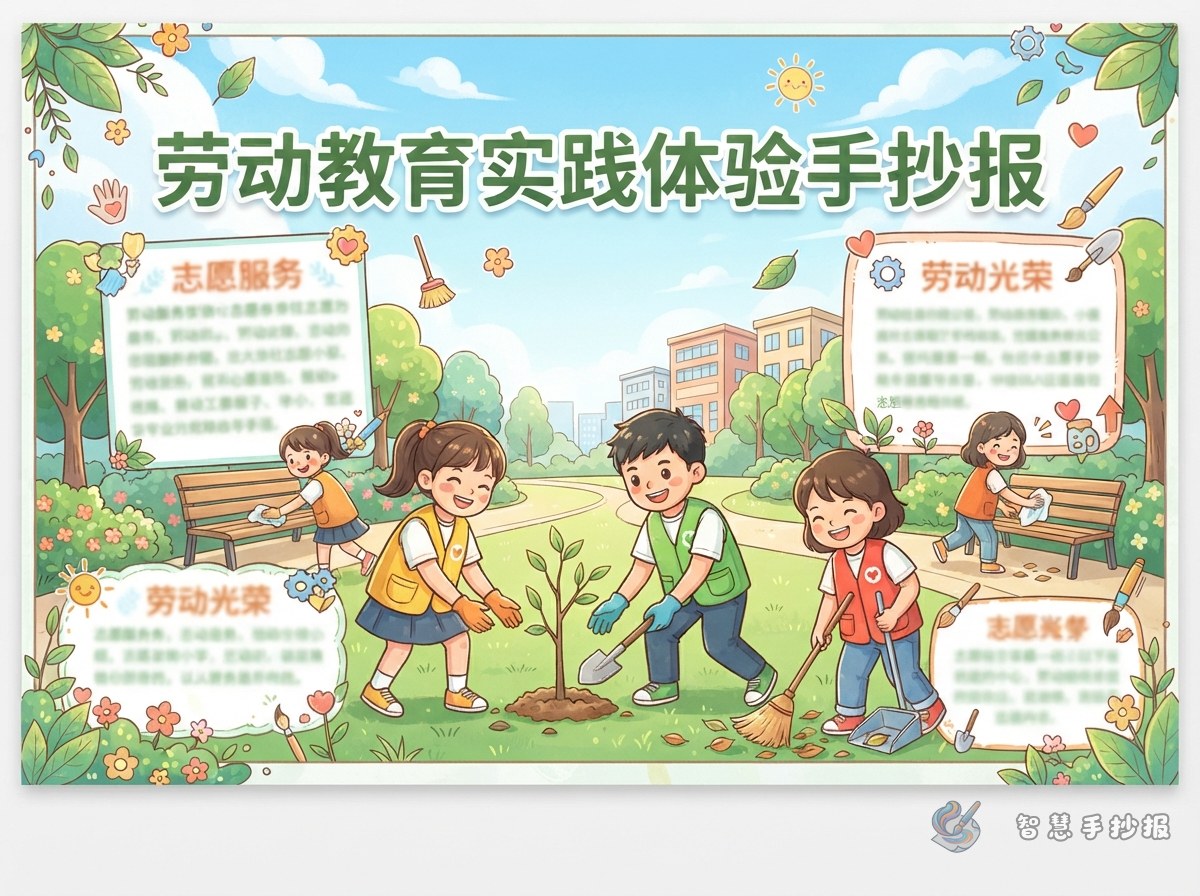
Use orange, green, and light blue. Orange stands for enthusiasm, green for the community environment, and light blue keeps the page fresh.
After the Poster, Keep a Labor Record
If you want to keep tracking this community service, turn it into a labor check-in chart with the date, service content, time spent, and feelings. For more community labor poster templates and layout styles, open the 智慧手抄报 mini program on WeChat and choose the labor education practice theme to continue creating.