Start with a clear theme: focus on life around the water
A wetlands and lakes handwritten newspaper does not need difficult scientific language. For children, the easiest angle is to explain what wetlands are, why lakes are important, and how we can protect water environments. This keeps the project close to the category of rivers, lakes, and water culture while staying simple and attractive.
You can also make the title more lively by adding a short subtitle such as “Protect Our Clean Lake,” “Discover Wetlands,” or “A Wonderful Waterside World.”
Section ideas that are easy to place on the page
Quick wetland facts
- Wetlands are places where water, soil, and living things exist together.
- Common wetlands include marshes, shallow lakeside areas, and grassy water zones.
- Wetlands work like natural sponges by storing water and helping the environment.
Why lakes are important
- Lakes store precious water resources.
- Lakes provide homes for fish, birds, and plants.
- Lakes also make the environment more beautiful and pleasant.
Friends living in wetlands
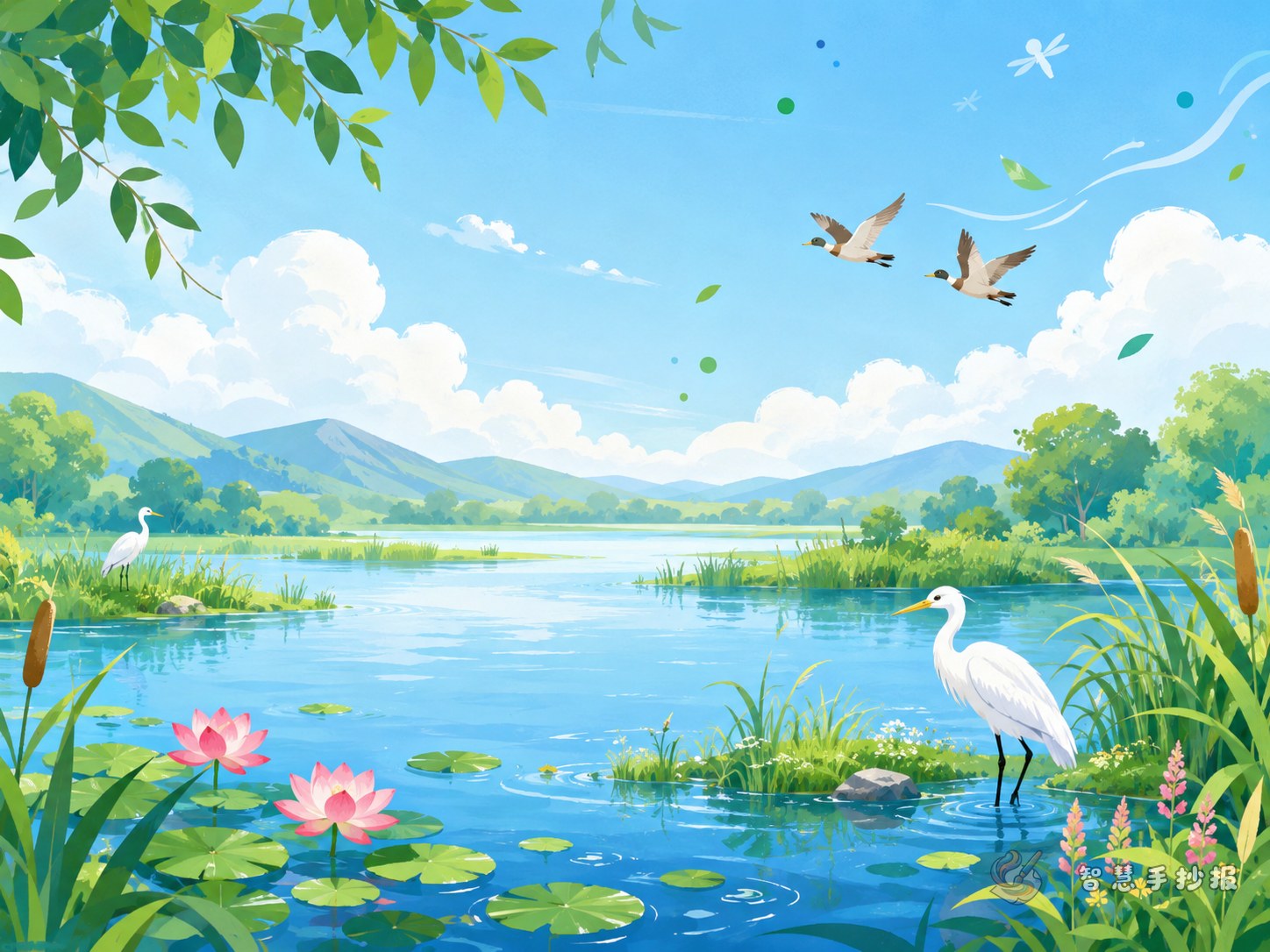
- You can write about lotus flowers, reeds, lilies, and water plants.
- You can also include egrets, ducks, fish, frogs, and dragonflies.
- One short sentence for each plant or animal is enough.
Ways to protect lakes
- Do not throw rubbish into the water.
- Do not step on lakeside plants.
- Save water in daily life.
- Encourage others to care for clean water environments.
Ready-to-use writing materials
Material 1: Wetlands are an important part of nature. They can store water, help keep water clean, and provide living space for many animals. Protecting wetlands means protecting our shared home.
Material 2: A lake is like a bright mirror. It reflects the sky and clouds and supports the trees, flowers, and animals around it. Clean lakes need everyone’s care.
Material 3: Many lovely forms of life live near the water. Reeds move in the wind, birds fly over the lake, and fish swim below the surface. These scenes make wetlands full of life.
Material 4: Protecting lakes starts with small actions. Do not litter, do not pollute water, and do not waste water resources. Let beautiful waters stay with us for a long time.
Try a flowing layout instead of equal boxes
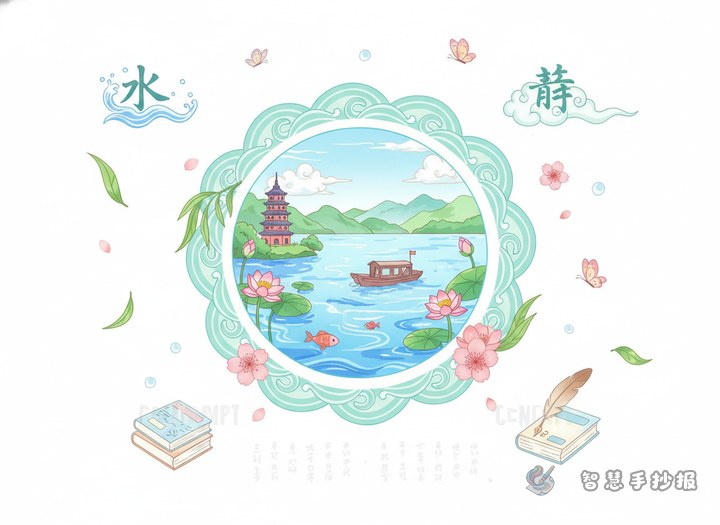
This theme looks great with a nature-inspired layout. Put the main title in the center and arrange four smaller sections around it, spreading outward like ripples. Another option is to place facts on the left, protection ideas on the right, and drawings or a short conclusion at the bottom.
- Write the main title in the center with a soft, rounded style.
- Place “What Is a Wetland?” in the upper left.
- Place “Why Lakes Matter” in the upper right.
- Place “Plants and Animals” in the lower left.
- Place “How to Protect Them” in the lower right.
For borders, use simple waves, drops, lotus leaves, or reeds. The drawings do not need to be complicated as long as the style feels consistent.
Make it feel like a handwritten newspaper, not a long article
The key to a good handwritten newspaper is to keep it short, clear, and easy to copy. Each section only needs two to four sentences. Use small headings, lists, and short paragraphs so readers can quickly find the main points.
If you want to add more detail, you can include sections like “The Lake Near My Home,” “Polite Behavior by the Water,” or “Water-saving slogans.” After you finish your topic and text outline, you can also continue planning your design ideas in the Zhihui Shouchaobao WeChat mini program for a smoother creation process.