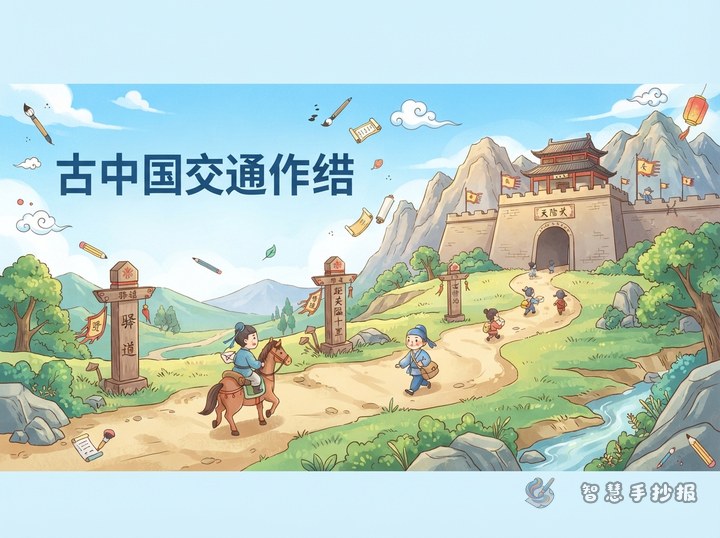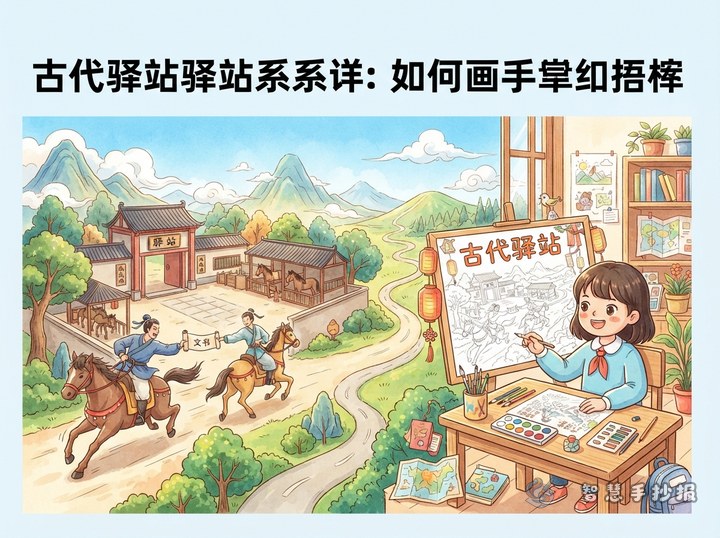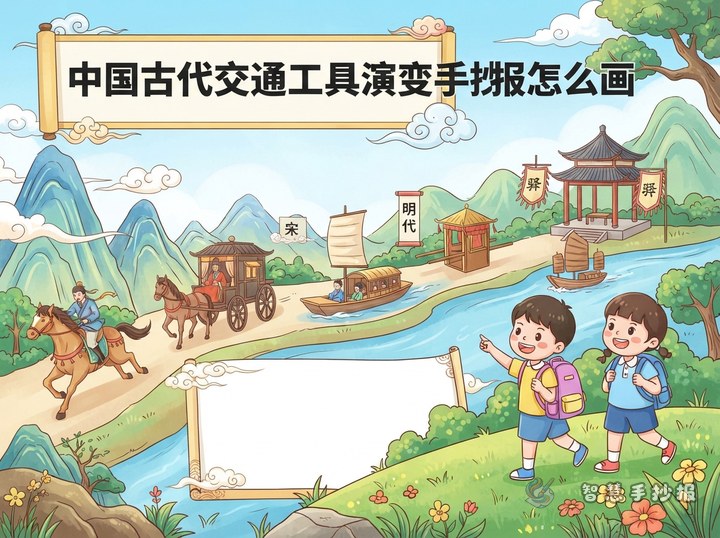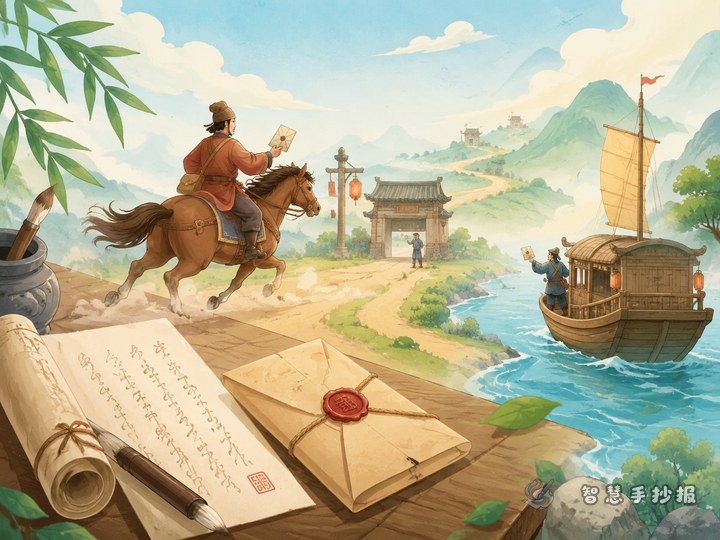
First, the question everyone asks: did ancient travellers really have to show papers?
Most of the time, yes. Mountain passes, river ferries and city gates were busy and carefully controlled. Officials there needed to know who was passing, where they were going and what they were carrying, so a range of travel documents came into use. The names differ, but the purpose is close to a modern ID card combined with a letter of introduction.
A good opening for the page is to pose the question directly: Would people in ancient China be stopped at the gate? Answer it in one or two sentences, and readers will want to keep going.
Three key words that hold the whole page together
Zhuan: the everyday travel document
A zhuan worked like a permit issued by the local government, recording the traveller's name, group size, belongings and destination. It was handed to the gate official for checking.
Guosuo: the formal pass document
A guosuo focused on crossing borders and checkpoints. It listed which passes would be used, the purpose of the journey and how long the traveller expected to be away.
Yiquan: the ticket to a post station
Officials travelling on business carried a yiquan, which allowed them to eat, sleep and change horses at a post station. Stations trusted the document, not the person.
Build the layout along one single journey
Instead of listing the words in a column, draw a route from left to right and hide the information along it:
- Starting section: why people set out, such as study, family visits, letters or goods.
- Middle section: what the gate official checked, including name, group size, belongings and destination.
- Turning point: what happened without a permit, such as being turned back or waiting for a replacement.
- Final section: arriving at the station and using a yiquan for a horse, a meal and a night's rest.
Draw the route as a pale brown winding path, and let the four sections sit on it like four stops. Readers will follow the road to the end.
Short sentences you can copy straight onto the page
- A wooden tablet records a name, a destination and the number of companions.
- The gate opens and closes; what it checks is a document, what it keeps is order.
- At the station you change horses, and pick up the next stretch of road.
- Before leaving, check the papers; before the gate, hand them over.
- The longer the road, the more details the document carries.
Give each line its own row, and add a tiny seal or footprint at the start of the row to keep the page tidy.
Drawing the checkpoint and choosing colours
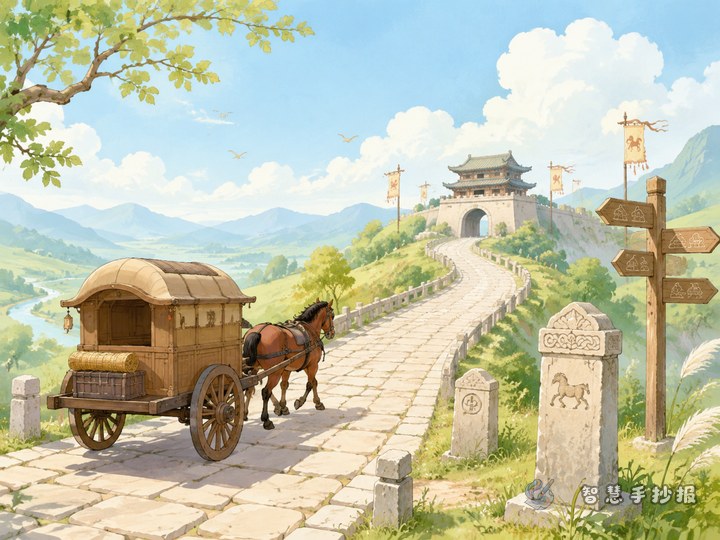
- Draw the road first: a pale brown band running from lower left to upper right, with a slightly changing width so it looks like a dirt track.
- Add the gate: a simplified city gate or wooden fence above the road, outlined in dark grey with just a few door studs.
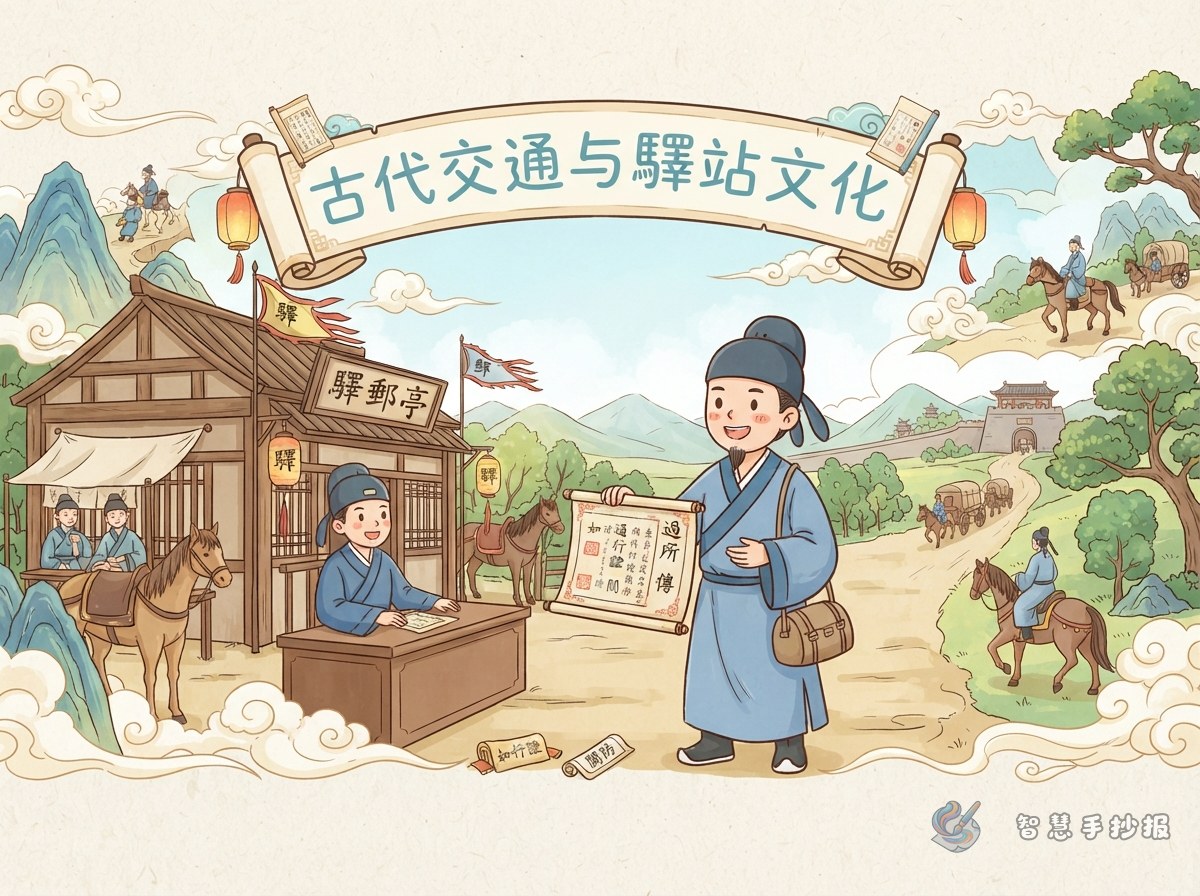
- Place the people: two or three small figures on the left leading horses or pushing a cart, and one figure on the right holding up a tablet, facing them.
- Colour last: earth yellow, pale brown, grey blue and vermilion are enough. Use vermilion for headings, black for body text and grey blue for borders.
Empty space looks better than a crowded page, so avoid too many small decorations around the figures. Lightly rule the writing area in pencil and erase the lines afterwards; the finished page will look much cleaner.
If you want the route to flow more smoothly, sketch it on paper first, then choose a suitable layout in the ZhiHui ShouChaoBao WeChat mini program, adjust the sections and text, print a draft, and finish it by hand with colour.