Make “Finding the Way” the Story of the Page
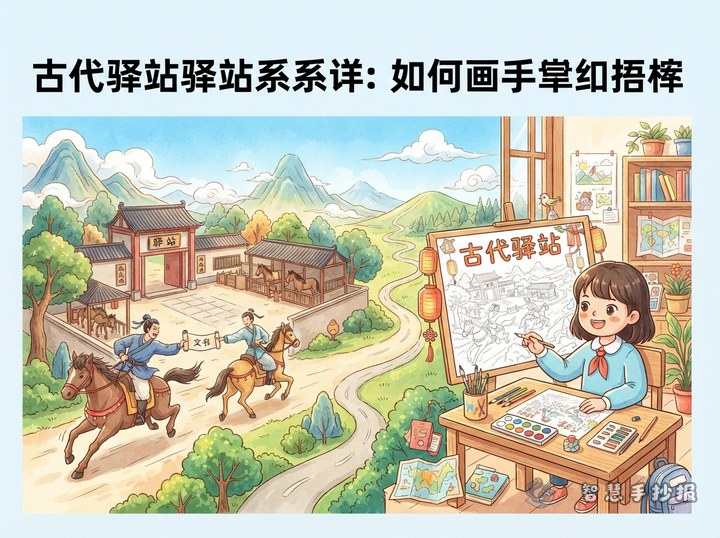
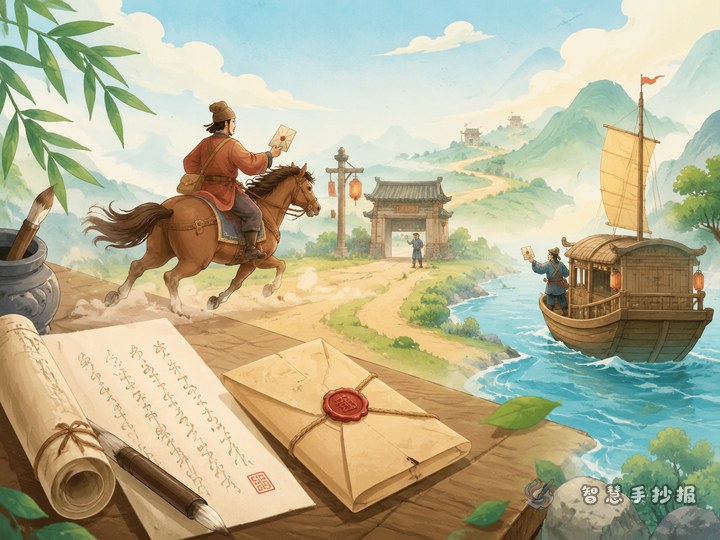
This handwritten newspaper can be built around the idea of following an ancient post road to find the right direction. Ancient roads connected towns, mountain passes, and rivers. Along the way, travelers might encounter bridges, ferries, rest pavilions, and post stations. A pass was usually located near a mountain gap or major route and could serve as an important place for passage management and defense. Putting these locations on one route helps readers understand how people traveled in the past.
Good title choices include “Exploring an Ancient Post Road” and “Ancient Roads Through Mountains and Passes.” A subtitle could be “Read the signs, cross the passes, and discover transportation in ancient China.”
Four Sections for the Key Places Along the Road
1. A Small Guide to Road Signs
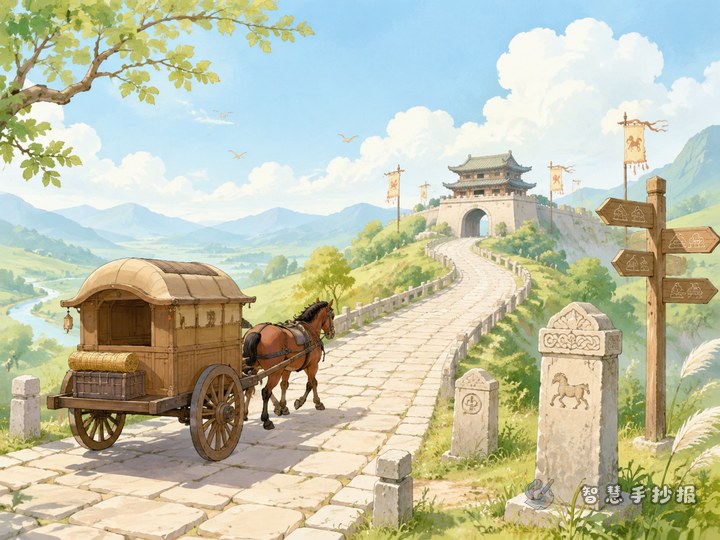
Use a small information card to introduce clues that helped travelers recognize a road, such as signs at crossroads, bridges, ferries, rest pavilions, and natural features. Keep the text short: “Road signs helped travelers find their direction. Bridges and ferries connected roads separated by rivers, while pavilions offered travelers a brief place to stop.”
2. Why Were Passes Important?
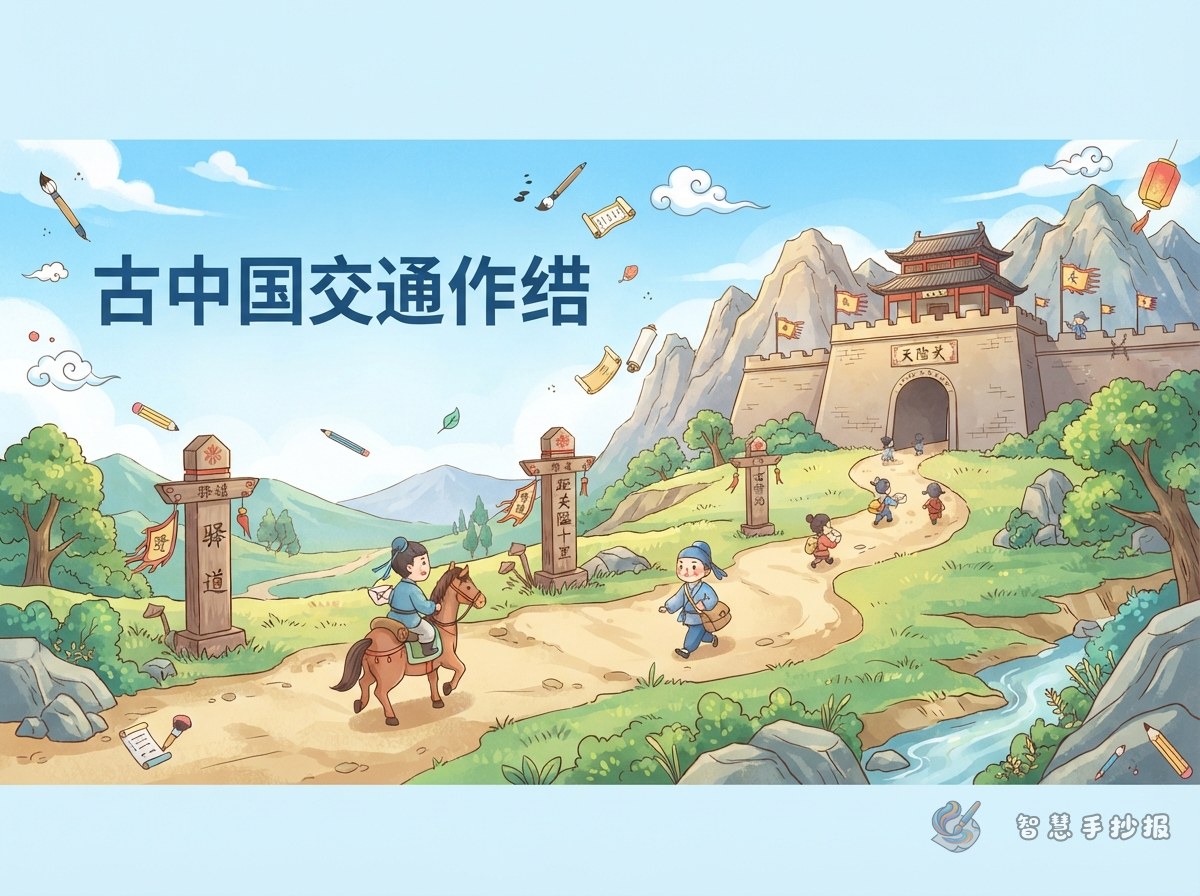
Passes were often located at mountain gaps, valleys, or important routes. Draw a small scene with a gate, mountains, and a road, then add this explanation: “A pass was a key point on a travel route. It also shows how people used the landscape to manage roads and protect important passages.”
3. Where Could One Ancient Road Lead?
Draw a winding line that connects a city gate, bridge, ferry, post station, mountain gap, and pass. Add only one or two sentences beside each place so the page does not become crowded. Simple icons can represent different facilities and make the newspaper look like a clear historical map.
4. A Quick Ancient Transportation Quiz
- Question: Why did ancient roads often pass through mountain gaps? Answer: A mountain gap was often an easier way to cross the mountains and could become an important transportation and defensive location.
- Question: What was the purpose of a ferry crossing? Answer: It helped people and goods cross a river and connected water transportation with roads.
- Question: Why should a handwritten newspaper include a route? Answer: A route connects separate transportation facilities and makes historical knowledge easier to understand.
Ready-to-Use Opening and Closing Text
Opening text: Ancient post roads were important routes connecting towns, mountains, and rivers. Travelers used roads, bridges, ferries, signs, and passes to make long journeys while adapting to different landscapes.
Closing text: An ancient road records more than footsteps. It also reflects how people understood nature, used the land, and improved transportation. By studying these places through a handwritten newspaper, we can better appreciate the culture of ancient transportation.
Suggested slogan: “Follow one ancient road and discover a whole history of transportation.”
Let the Map Become the Center of the Layout
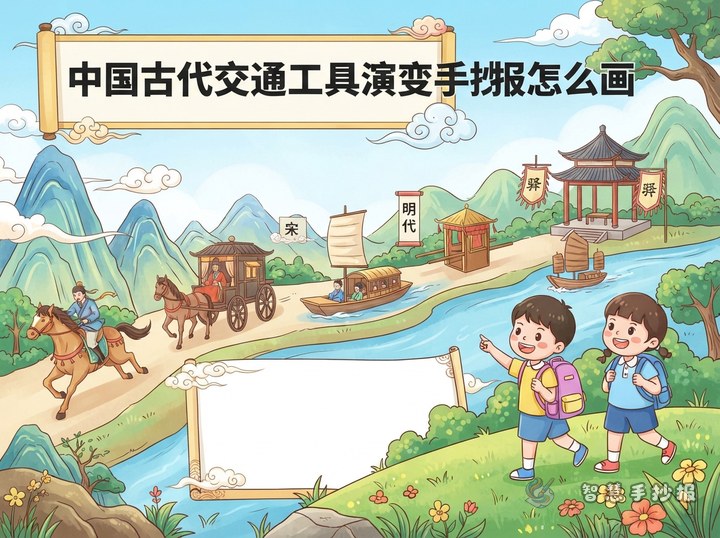
A horizontal page works well for this topic. Put the large title at the top, then draw a winding post road from the lower left toward the upper right. Place a city gate, bridge, ferry, post station, and pass along the route. Add the “Road Sign Guide” on the left, the “Pass Information Card” on the right, and the quiz and closing message at the bottom. This creates a clear reading order.
Use ochre, blue-green, brick red, and ink black to suggest the feeling of an old map and mountain roads. Mountains can be shown with simple angular or curved lines. For buildings, draw only recognizable outlines such as roofs, gates, and flags. Leave enough space around the route text. Sketch the positions in pencil first, trace the main lines in black, and add color and headings at the end.
Five Final Checks
- Does the title clearly show that the topic is ancient transportation?
- Is the route easy to follow, with visible connections between locations?
- Are the explanations for signs, ferries, bridges, and passes clearly different?
- Are the sections short and easy to read rather than copied as long paragraphs?
- Is the color palette limited to three to five colors, with key information standing out?
If you need help arranging the sections and decorations, take these ideas into the智慧手抄报 WeChat Mini Program and continue designing there. You can adjust the size of the text and drawings to fit your paper.