Start with a visible angle of exchange
When students make a Silk Road cultural exchange poster, the topic can easily become too broad. A better way is to focus on objects that traveled. These objects make the idea of exchange easy to see. Along the Silk Road, goods moved from one region to another, but they also carried taste, skills, design, and new ways of life.
This kind of poster works best when each object is introduced with its name, origin, and cultural impact.
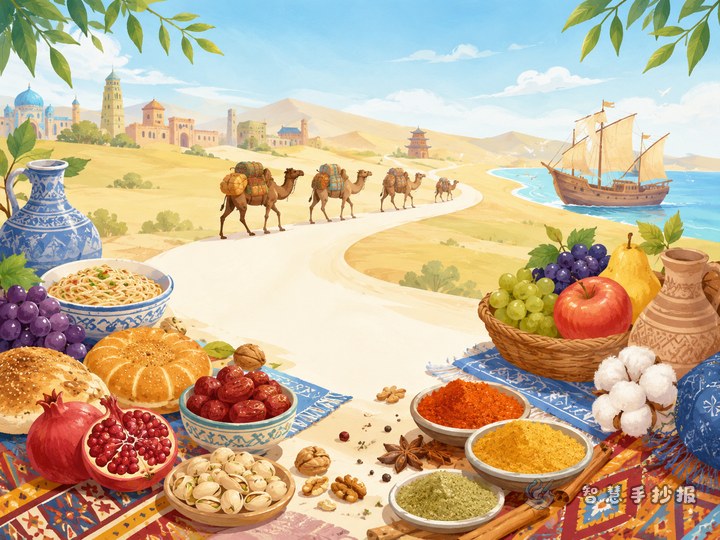
Representative items you can include
- Silk: One of the best-known Silk Road goods, admired for its beauty and fine weaving.
- Porcelain: A good example of craftsmanship, easy to draw as bowls, plates, or vases.
- Tea: More than a drink, it also reflects habits and social customs.
- Spices: Such as pepper or cinnamon, showing how people exchanged flavors and useful materials.
- Grapes: A familiar crop that helps students understand how plants spread across regions.
- Glassware: Useful for showing differences in craft and technology.
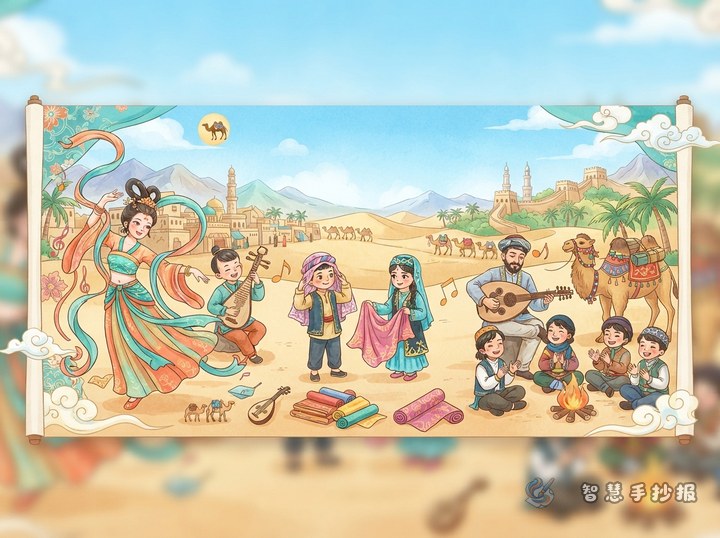
- Musical instruments: Good for explaining how music and art became richer through contact.
Choose 4 to 6 items so the content stays focused and readable.
How to write about each item clearly
Do not stop at a simple sentence like “Silk was famous” or “Grapes came to China.” A stronger method is to explain each item in three steps:
- What the item is and how it was used.
- How it was connected to the Silk Road.
- What kind of exchange or influence it shows.
For example, grapes can be described as a crop introduced from western regions along the Silk Road, later enriching food and farming. Glassware can be used to show that exchange was not only about goods, but also about techniques and aesthetics.
Try a card-style poster layout
This theme works very well with a card-style design instead of long paragraphs. You can build your poster with sections like these:
- Star Item of the Silk Road: one object as the main focus.
- Things Moving East and West: a simple comparison list.
- The Story Behind One Object: a short paragraph on silk or porcelain.
- What Exchange Changed: food, craft, music, or daily life.
- The Item I Most Want to Draw: a personal touch from the student.
If the page is large, place a route line in the center with arrows connecting the objects. If the page is smaller, use a four-box or six-box layout for neat organization.
Drawing ideas and color choices
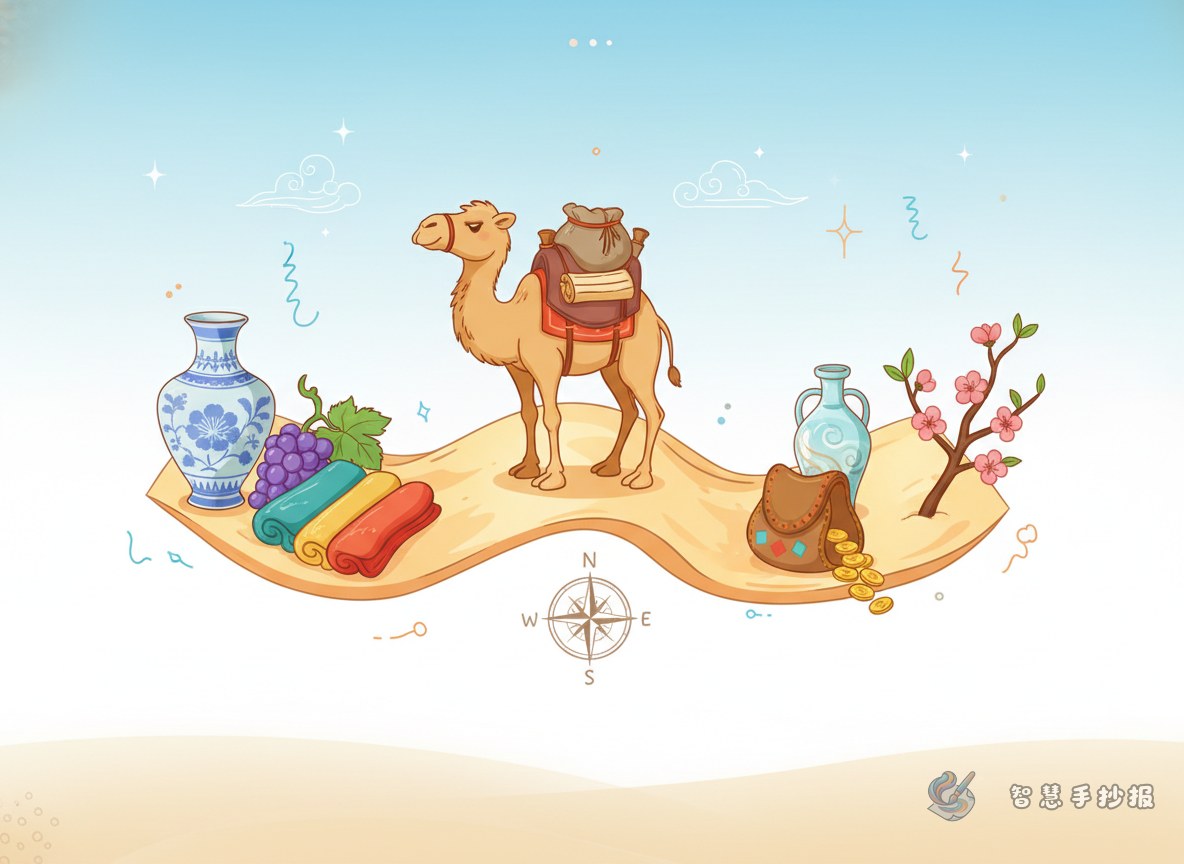
The illustrations do not need to be complicated. Simple images such as flowing silk, camel silhouettes, grape vines, porcelain jars, glass cups, spice bags, and route arrows can quickly express the theme. Decorative borders can use cloud shapes, geometric patterns, or wave lines.
Good color choices include sand yellow, blue, green, and warm red. These colors feel lively and historical at the same time. Keep the title eye-catching, but use a consistent color for the body text so the page stays clean.
A simple but meaningful ending
You can end the poster by saying that Silk Road exchange was not only about selling and buying goods. Through these objects, people learned from one another and shared skills, tastes, and ideas. In this way, everyday items became witnesses of cultural contact.
Once your ideas are ready, you can continue refining the text blocks and layout in the Zhihui Shouchaobao WeChat mini program for a more complete handmade newspaper.