Show cultural exchange through everyday goods
Many students make a Silk Road poster by only writing about routes or dynasties, which can feel dry. A better approach is to focus on food and local specialties. This angle helps readers understand cultural exchange through things people can easily imagine: what people traded, tasted, used, and learned from one another.
A simple core idea works well: the Silk Road connected distant places not only through trade, but also through shared daily life. That makes the poster historical, but still vivid and student-friendly.
Section ideas you can use right away
Section 1: Flavors from the ancient route
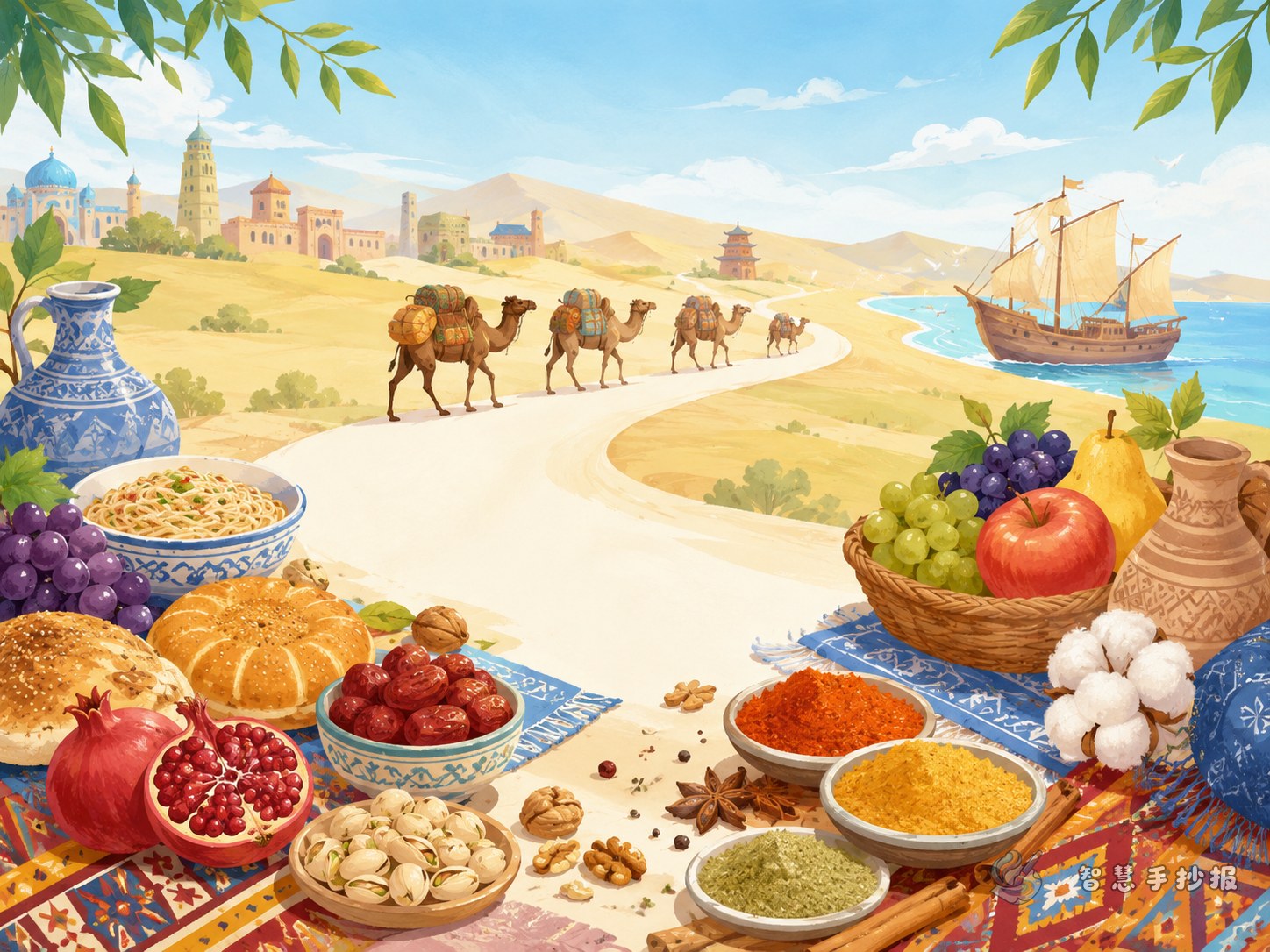
This part can introduce well-known foods or flavor-related items linked to exchange along the route, such as grapes, pomegranates, spices, pepper, or nuts. Each one only needs one or two clear sentences.
- Grapes: a strong visual symbol often linked with western regions.
- Spices: a good way to show long-distance trade and culinary exchange.
- Tea: an important product associated with Chinese trade.
- Silk: not food, but perfect to include in a “specialty goods” section.
Section 2: What the caravans carried
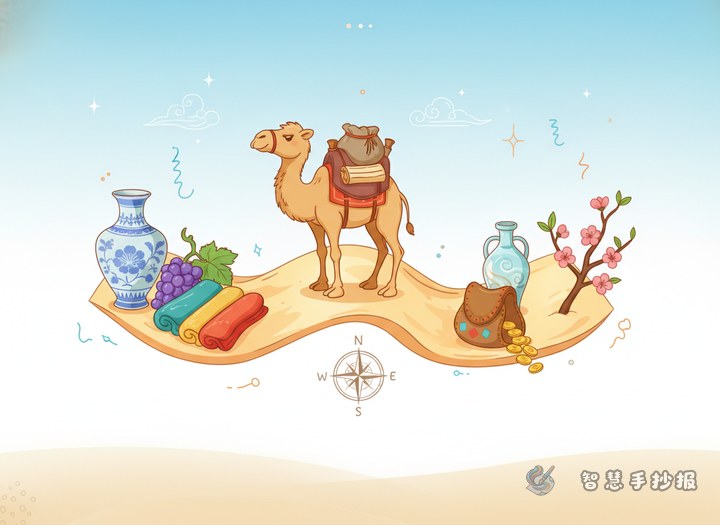
This section can describe caravan life and the goods transported by camel teams, such as silk, spices, jade, pottery, tea, or crafted items. It helps the poster feel active and story-like.
Section 3: One specialty I want to introduce
Choose one item and explain where it came from, what made it special, and why it can represent cultural exchange. This gives your poster a clear focus.
Section 4: Small city cards along the route
You do not need many cities. Pick two or three, such as Chang'an, Dunhuang, or Kashgar, and describe their role in exchange using short, simple lines.
Easy writing material for students
If you are not sure how to write, keep the text short and clear. These sentence patterns work well on a poster.
- The Silk Road was a long bridge connecting people from different regions.
- Merchants carried goods and also shared new ideas and experiences.
- Every food or specialty may hide a story of exchange.
- Cultural exchange is not only a big history topic; it also appears in everyday life.
You can also add a personal reflection, such as: I learned that the Silk Road changed not only trade, but also how people understood one another.
Try a route-style layout instead of equal boxes
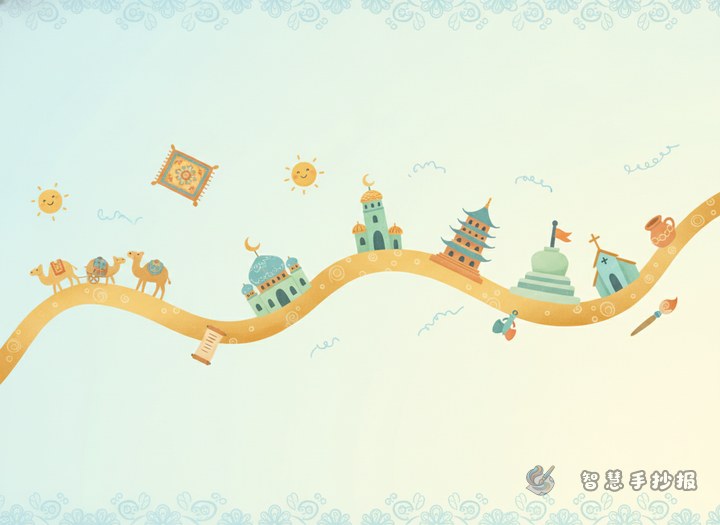
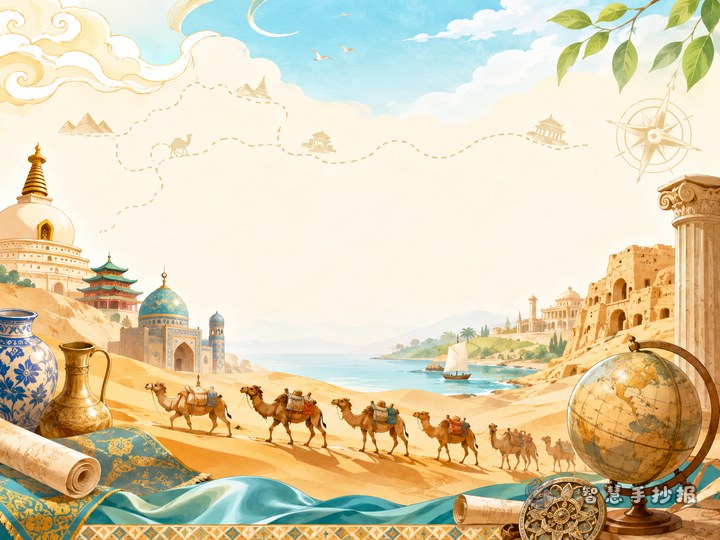
This topic works especially well with a flowing layout. Draw a simple route or curved line in the center, then place content blocks along it as if the reader is traveling across the map. This creates movement and makes the poster feel more creative.
- Put the main title at the top in a scroll, signpost, or gate-style shape.
- Use a central route line to connect each food or specialty section.
- Place short text blocks on both sides so the page does not feel too crowded.
- Add a final reflection box at the bottom to complete the poster.
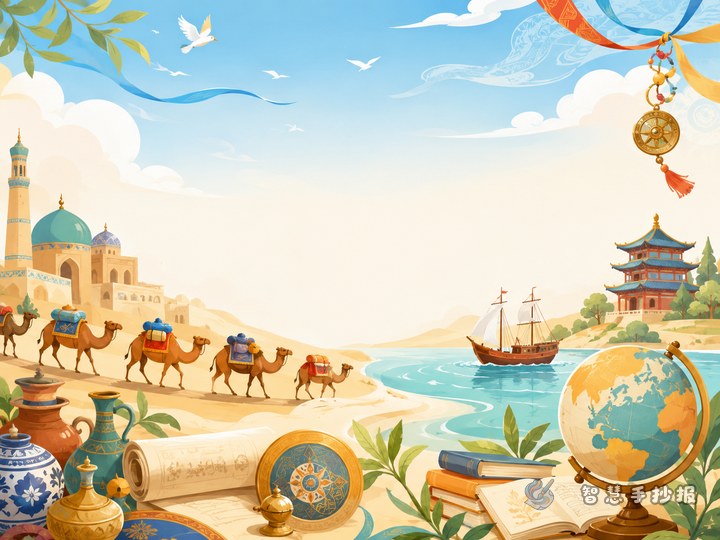
For decoration, use camels, crates, grape vines, clay jars, teapots, and patterned borders. They do not need to be detailed to create a strong theme.
Small details that make the poster stand out
- Choose a lively title such as “Flavors on the Ancient Road” or “Treasures Brought by the Silk Road.”
- Keep each text block to three to five lines so the page stays easy to read.
- Use sandy yellow, brown, muted green, and brick red for a historical feeling.
- Match each paragraph or section with a small icon or drawing.
- Add one sentence of your own opinion to make the work feel thoughtful.
Once your theme, sections, and colors are ready, you can continue arranging the final design in the Smart Handwritten Newspaper WeChat mini program.