Build the poster around a journey of cultural exchange
For this topic, a good poster should not focus only on routes and place names. A better idea is to use the theme “Following messengers along the Silk Road” and show how trade, culture, skills, and friendship moved between different regions. This makes the poster clearer and more vivid for students.
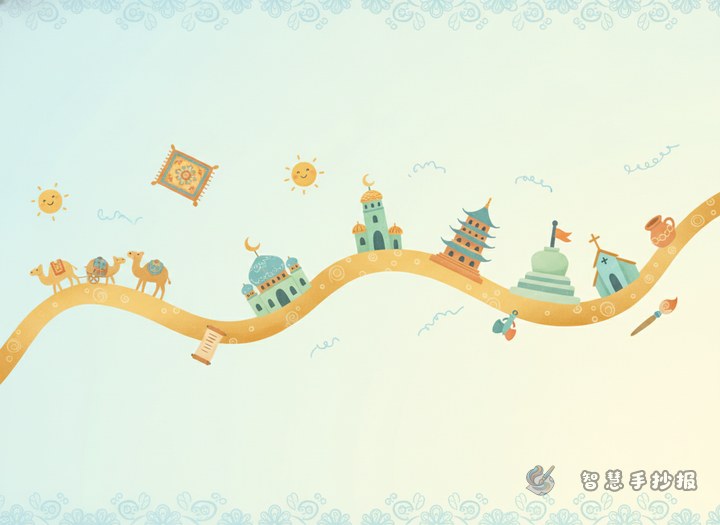
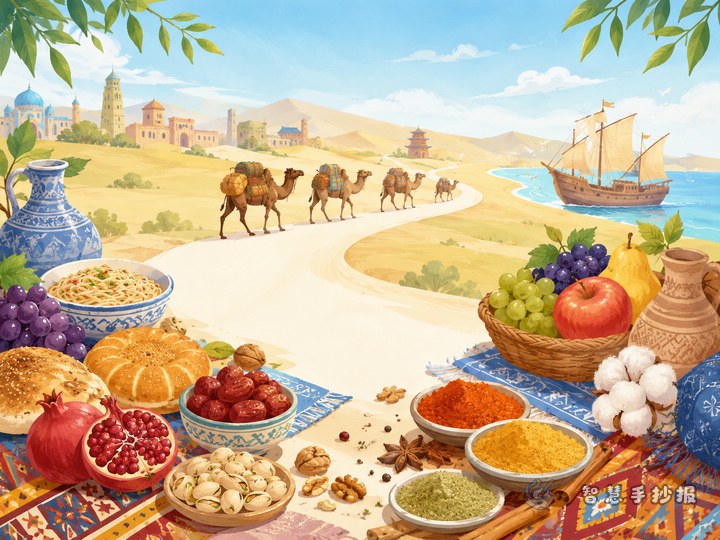
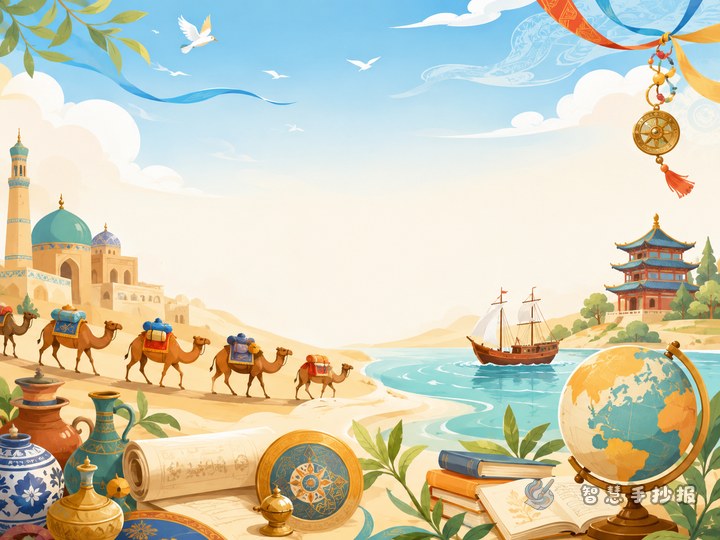
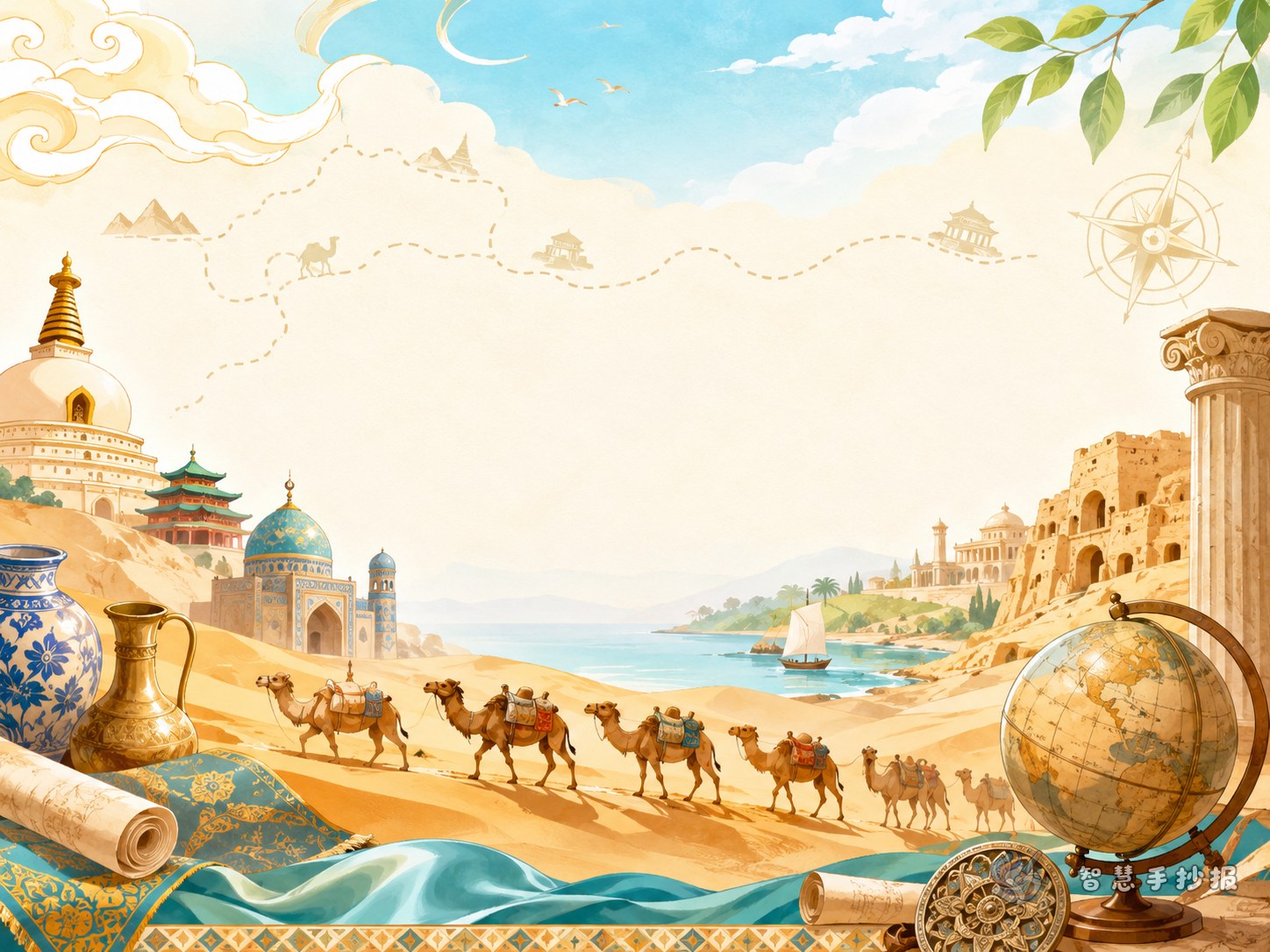
You can place a long winding Silk Road in the center of the page, linking cities, caravans, ships, and people in different clothes. That layout helps the whole poster feel active and connected.
Useful sections for a neat school poster
- What is the Silk Road? — Briefly explain that it was an important ancient route connecting China with many parts of Asia and Europe.
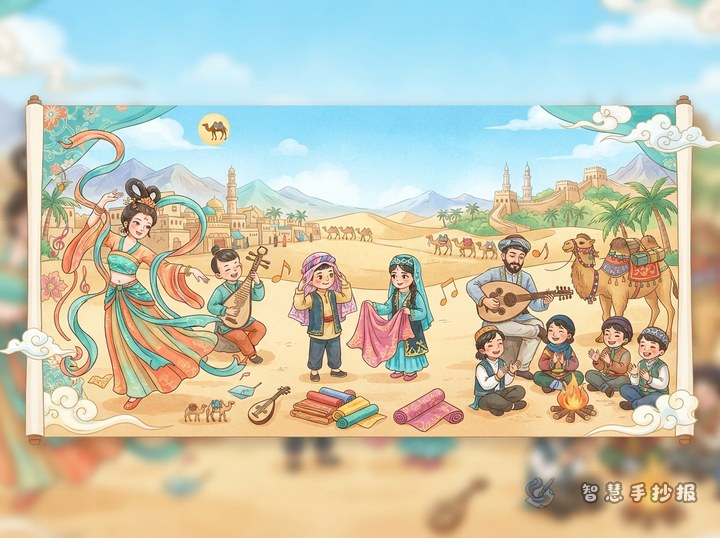
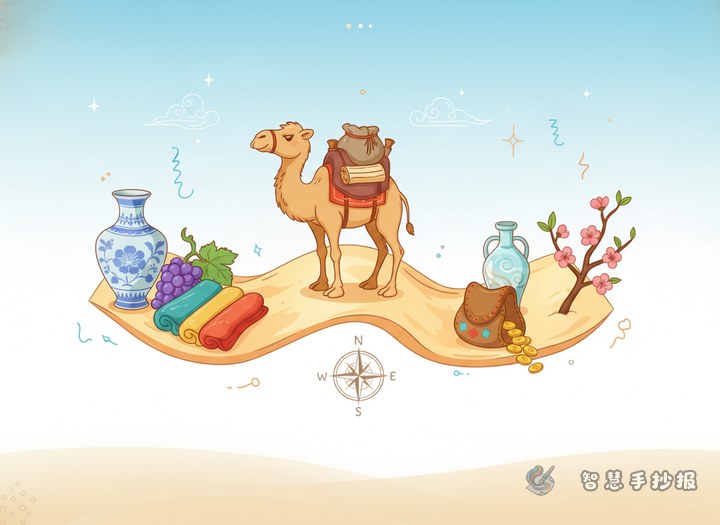
- What traveled along the road? — Write about silk, tea, and porcelain, and also grapes, spices, music, and dance.
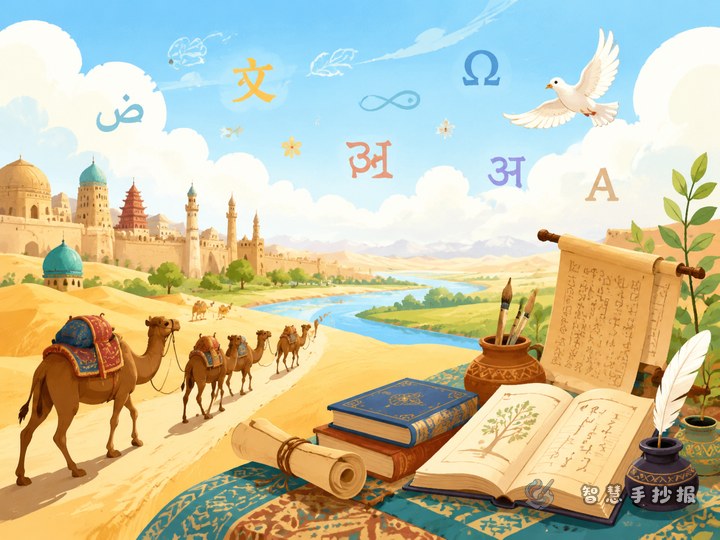
- How did civilizations meet? — Show how language, religion, art, food, and craftsmanship influenced one another.
- What can we learn today? — Highlight peace, openness, cooperation, and mutual learning.
If you have extra space, add a small section called “Silk Road facts” with a mini timeline, famous cities, or simple historical notes.
Ready-to-use writing material
Opening paragraph
The Silk Road was not only a road for goods. It was also a bridge for friendship, culture, and wisdom. People from different regions exchanged what they had and learned from one another, allowing many civilizations to grow through contact.
Main body paragraph
Along the Silk Road, merchants brought products, envoys shared messages, travelers recorded what they saw, and craftsmen learned new skills. Silk, porcelain, and tea spread outward, while grapes, vegetables, musical instruments, and dances entered China. These exchanges made cultures richer and more colorful.
Ending paragraph
When we study the Silk Road today, we are not only looking back at history. We are also learning the value of openness, respect, and cultural exchange. By understanding different cultures, we help build a more peaceful world.
Drawing ideas beyond camels
- Use a scroll-style border to create a historical feeling.
- Add caravans, city gates, ships, grape vines, lotus patterns, or flying apsara-inspired designs.
- Draw small icons of silk, porcelain, tea cups, and instruments as symbols of exchange.
- Choose warm yellow, earthy brown, and blue-green to suggest deserts and oasis towns.
Do not overcrowd the page with decorations. A clean layout with enough reading space is more effective than making everything too full.
Simple tips for students
- Make the title large and clear, especially the words “cultural exchange.”
- Keep each section short, about three to five lines.
- Highlight key phrases such as “mutual learning,” “openness,” and “friendly exchange.”
- If time is limited, divide the page first, write the short text next, and add decorations last.
You can sketch the page layout on scrap paper before making the final version. If you want to continue improving the arrangement, title styles, and section ideas, you can also explore the WeChat mini program by Zhihui Shouchaobao for more poster-making inspiration.