Focus the theme on communication
Many Silk Road posters talk about silk, pottery, or caravans first. A more original angle is language and writing exchange. People from different places had to trade, travel, learn, and share ideas, so they needed ways to understand one another. This makes the poster fit the idea of cultural exchange very well.
You can begin with a short introduction: the Silk Road was not only a trade route, but also a path for communication. As people moved across regions, they encountered new languages, writing traditions, and ways of expression.
Useful sections for the poster
Section 1: How people communicated in ancient times
- Simple spoken words for trade and travel
- Translators helping people understand each other
- Gestures, signs, and symbols during exchange
- Letters and written records for important information
Section 2: Quick facts about writing exchange
- Trade created a need for recording goods and messages
- Different writing habits could influence one another
- Religion, art, and learning also helped writing spread
Section 3: My understanding of cultural connection
This section can be written in simple student language. For example: even when languages are different, people can still build understanding through patience, learning, and respect. That gives the poster both historical value and personal meaning.
Short text materials you can use
- The Silk Road connected not only lands, but also languages and cultures.
- Merchants, travelers, and envoys learned new ways to communicate.
- Language exchange made trade easier and cultural contact deeper.
- Written records helped preserve knowledge and historical memory.
- Respect and understanding are important in every cultural exchange.
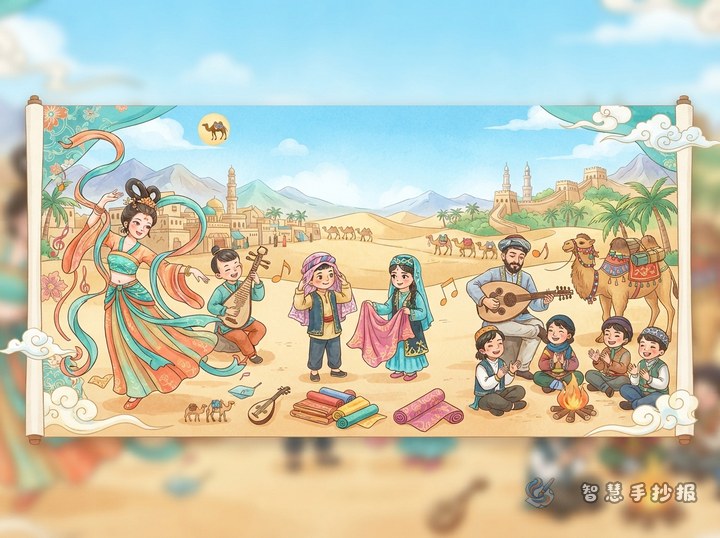
You can also add a small historical scene: when a caravan arrived in a new town, people used simple words, gestures, and translators to complete trade. This shows that communication needed both wisdom and patience.
Try a route-style layout instead of equal boxes
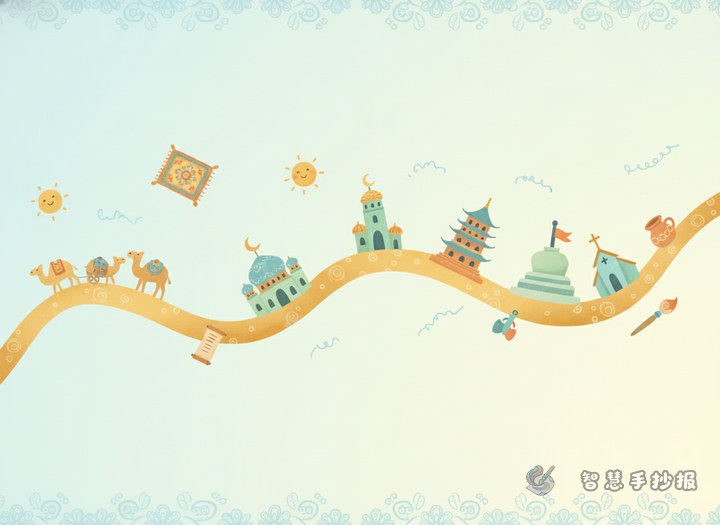
This topic works especially well with a flowing layout. Imagine the whole page as a road. Place the title in the upper left, draw a curved route across the page, and arrange each section along that route. End with a conclusion or reflection in the lower right corner.
- Put the main title inside a scroll shape
- Use small framed boxes for facts and notes
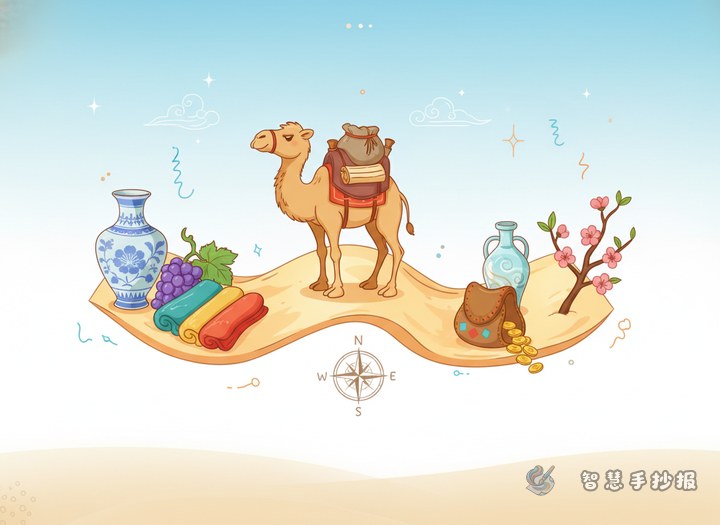
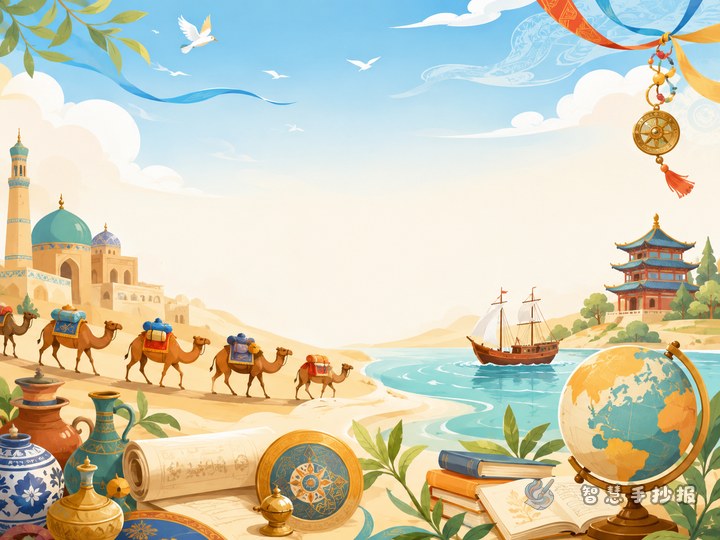
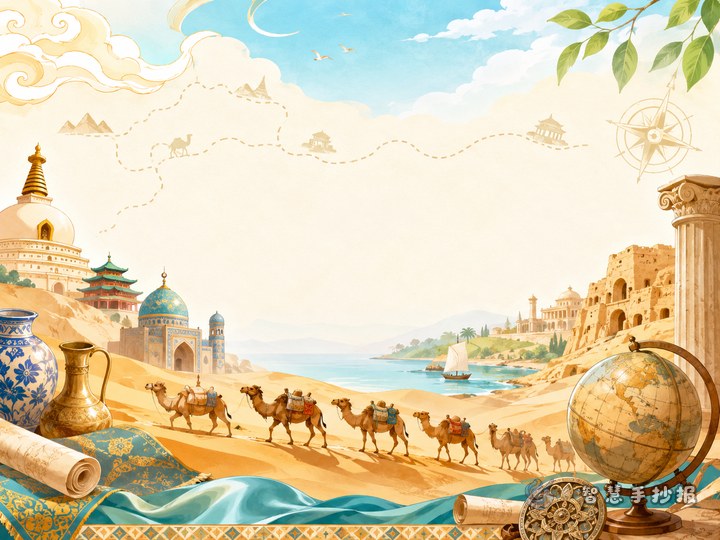
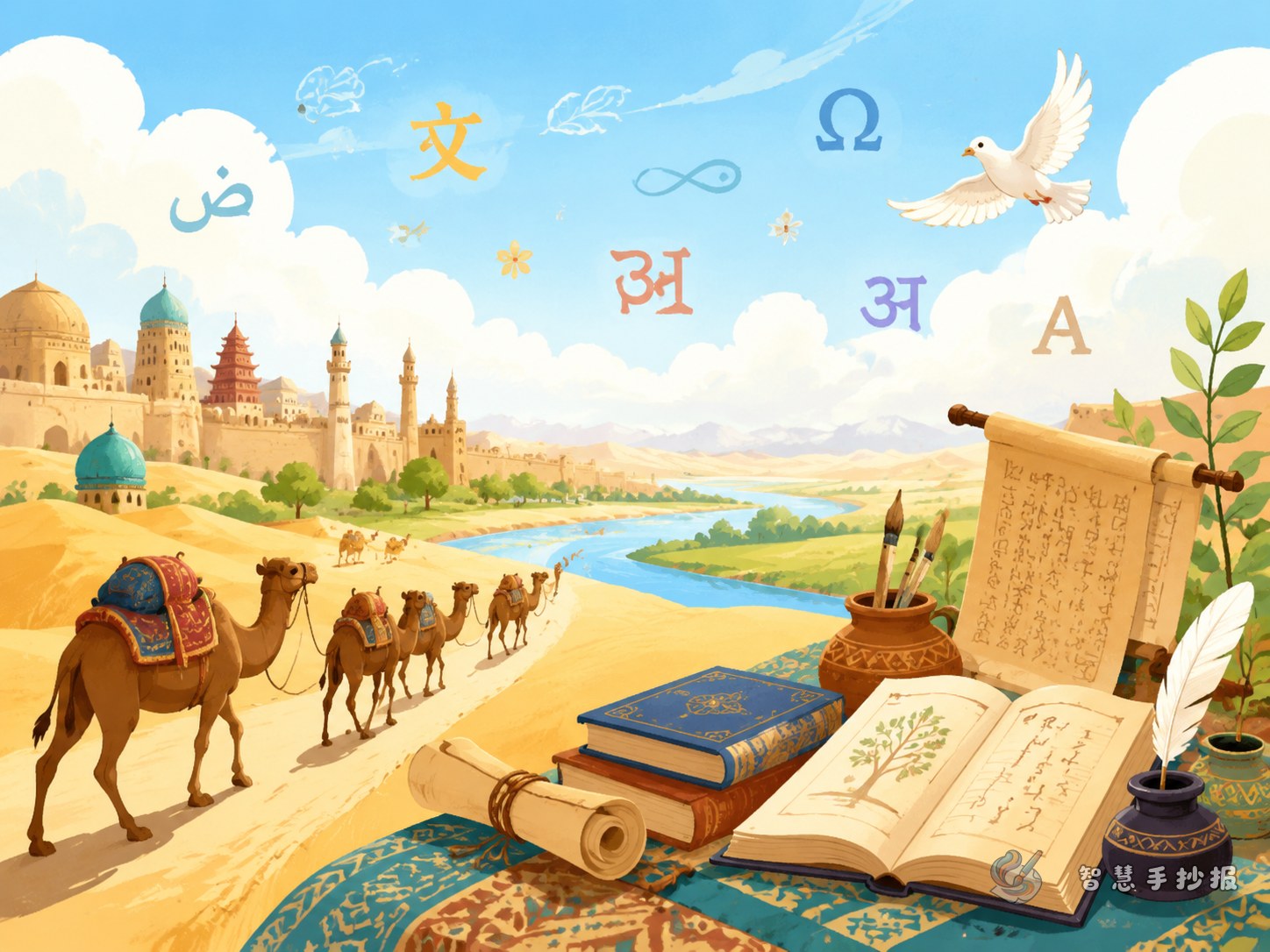
- Add caravans, maps, old cities, and scrolls as decorations
- Keep the main text dark and highlight key words in red or blue
This design feels more lively than a simple four-part grid and matches the idea of movement and exchange.
Keep the writing clear for younger students
Use short sentences and explain one idea at a time. A good method is to explain first and give an example next. For instance, say that people from different regions spoke different languages, then add that translators and written records helped them work together. This makes the content easy to understand.
If you want to make the poster stronger, add a short modern message: learning other languages and respecting different cultures today is also a way of continuing the spirit of open exchange.
Final checklist before finishing
- Does the title clearly mention language and writing exchange?
- Does the poster include communication scenes, writing records, and cultural understanding?
- Does the page design show a Silk Road feeling?
- Are key words highlighted clearly?
- Did you add a short reflection at the end?
If you want to improve the layout and organize your poster more quickly, you can continue creating in the Zhihui Shouchaobao WeChat mini program.