Why "where the name came from" works well for this poster
Posters about the Yellow River and a hometown stream often end up as two separate introductions glued together. Try a different thread: names. Why is the Yellow River called yellow? Why is the river near your home called what it is? Names lead to color, landscape and stories from older people, so one thread gives you plenty to write about and plenty to draw.
This works well for grades three to six, because it mixes facts, observation and a short interview at home.
Three layers for the name "Yellow River"
Start with the color of the water
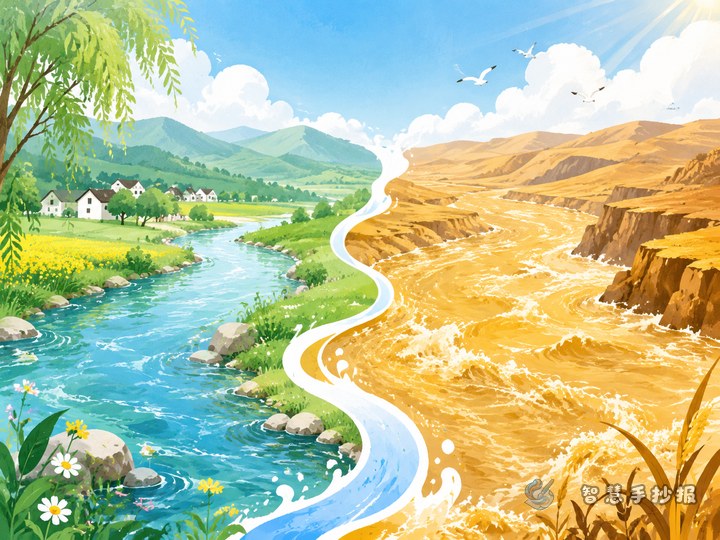
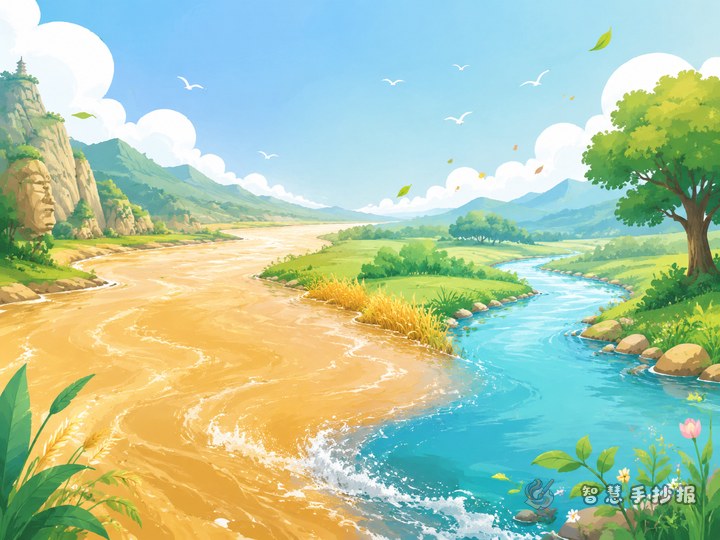
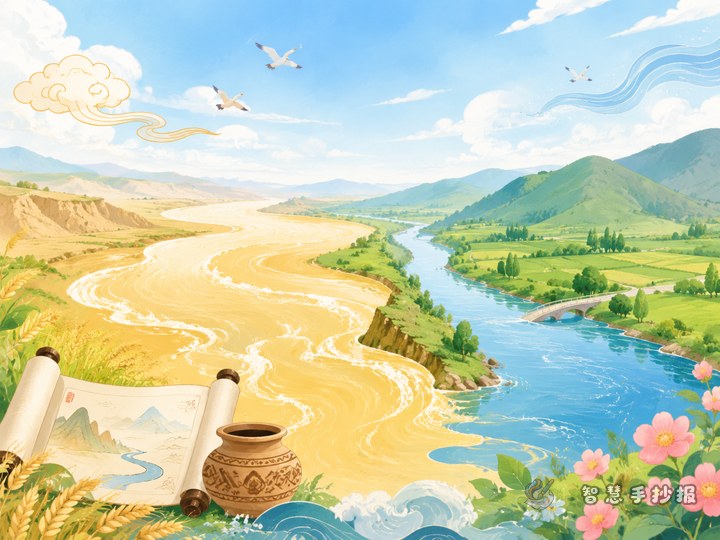
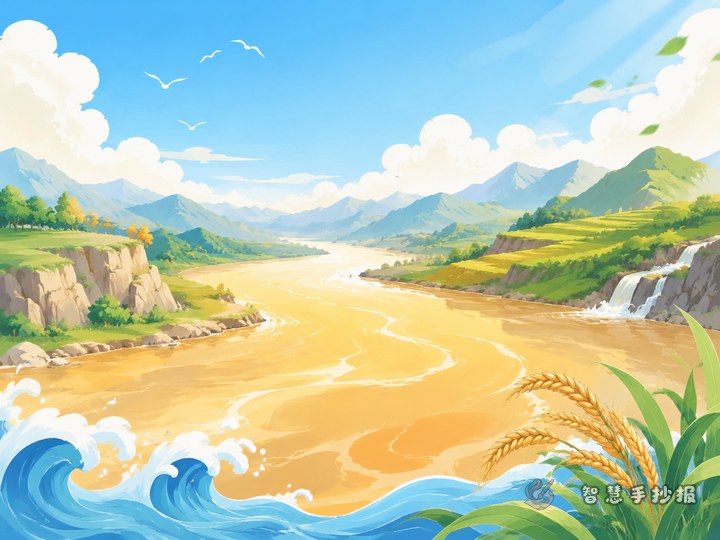
The upper and middle reaches of the Yellow River cross the Loess Plateau, and the water carries a great deal of silt, so it looks muddy yellow. People long ago used the word "yellow" for that color. Write one clear sentence at the top of the first column: "It is called the Yellow River because its water looks yellow."
Then note what it used to be called
In older texts it was often written simply as "the River" or "the Great River." Put a small box beside the text: "First it was the River; later it became the Yellow River."
Finish with a line of your own
- The Yellow River's color comes from the silt it carries along the way.
- The Yellow River's name comes from the stories it leaves behind.
- The same river can be called something different in every place it passes.
Short lines like these work best at the bottom of a column, written larger than the paragraph above.
Researching your hometown river's name
Four places to look
- Ask older relatives what they call the river and whether the name has changed.
- Check local gazetteers or place-name books in a library or school reading corner.
- Look at bridge names, village names and old stone markers near the water.
- Read the official river information sign, which usually gives the full name and the start and end points.
Four things to put on the page
- What the name literally means, including any character linked to water or terrain.
- How the name fits the landscape: which hill it comes down from, which villages it passes.
- What older people say, written as "the older people in our village say..." if it is only a spoken story.
- Your own observations: water color, flow speed, plants on the bank, small fish.
One reminder: do not force in dates or historical references you cannot check. Writing "it is said" or "older people tell us" is honest and reads naturally on a school poster.
Columns and layout: two rivers side by side
Column titles you can use directly
- The name of the Yellow River
- The name of my hometown river
- Watching the water color
- A small fact about river names
- What I found out (bottom right corner)
How to arrange the page
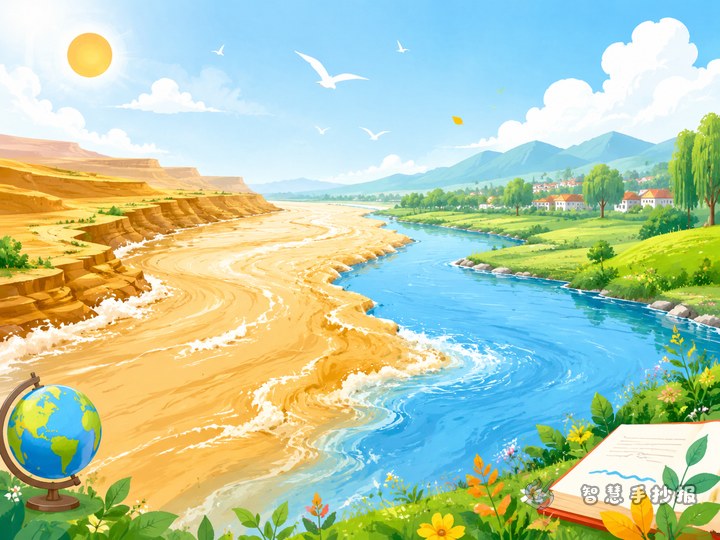
- Draw one wide curve from the top left to the bottom right and treat it as the main channel.
- Use the left half for the Yellow River and the right half for your hometown river, with the same order of headings on both sides.
- Split the colors as well: earthy yellow and ochre on one side, blue-green on the other.
- Frame the main title with waves or water drops, and write the river names one size larger.
- Leave a small box at the bottom right for one closing sentence of your own.
Small checks before you start copying
- Rule light pencil lines first and count the lines for each column, keeping most columns to six or eight lines.
- Write the full river name the first time, use the short form afterwards, and stay consistent.
- If you add pinyin under a river name, check it once more before finishing.
- Copy the text before drawing borders and pictures, so the writing still fits.
A little planning goes a long way. If you want ready-made layouts to build on, open the Smart Handwritten Newspaper WeChat mini program, pick a river or Yellow River theme, and fill in the names, water-color notes and observations you collected here.