Begin with a Spot-the-Insect Question
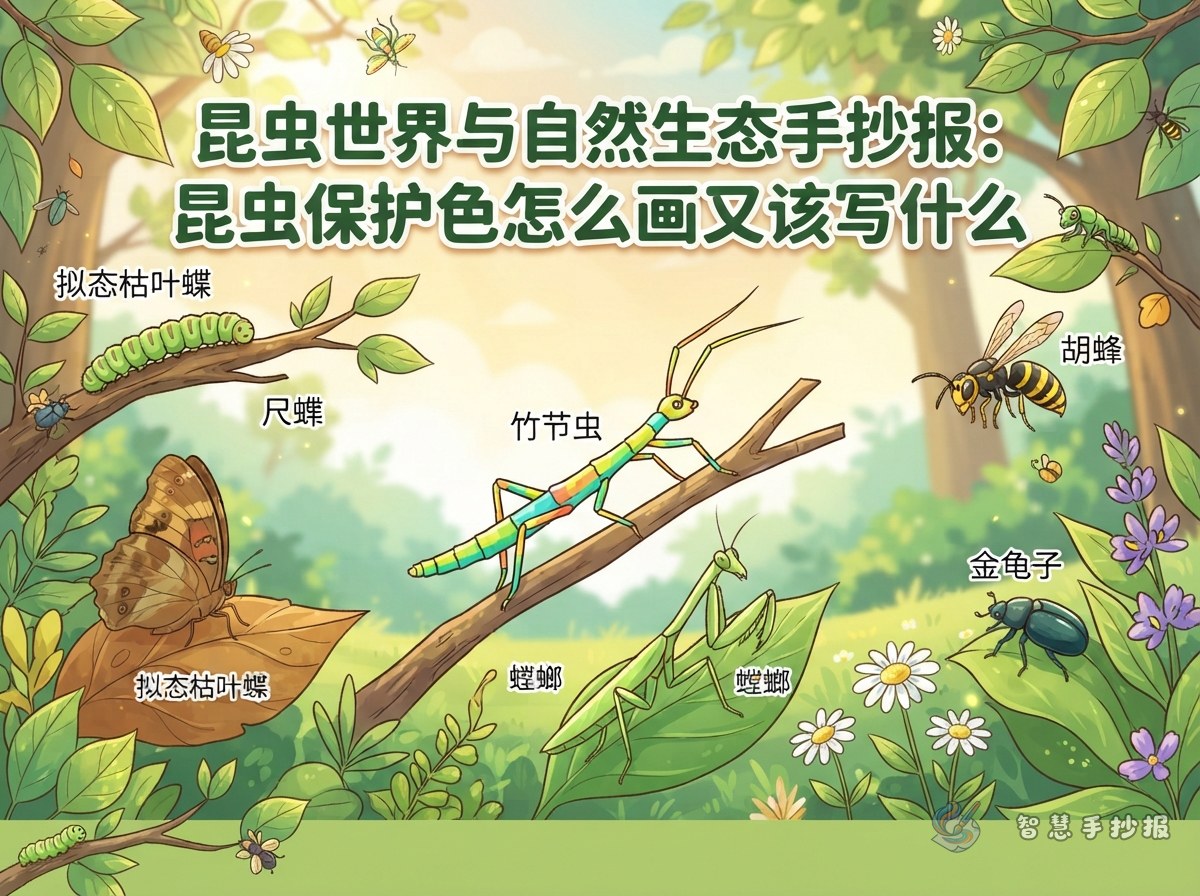
A headline such as “Where Is the Insect Hiding?” can immediately invite readers to look closely. Use stick insects, dead leaf butterflies, mantises, and inchworms to introduce camouflage. Explain briefly that some insects have colors, patterns, or body shapes that blend into their surroundings, helping them avoid predators or approach prey.
Create Camouflage Profile Cards
- Stick insect: Its slender body and twig-like color make it difficult to notice when it stays still.
- Dead leaf butterfly: With its wings closed, it resembles a dry leaf, complete with vein-like markings.
- Mantis: Green or brown coloring helps it blend among leaves, grass, and branches.
- Inchworm: Its posture can look like a tiny twig, making it less visible to birds.
Avoid saying that an insect simply chooses to change color whenever its background changes. A clearer explanation is that, through long-term adaptation, these species developed colors, markings, and forms suited to their usual habitats.
Compare Camouflage, Warning Colors, and Mimicry
Camouflage helps an animal blend into its background. Warning colors are often bright and noticeable, signaling possible danger. Mimicry means resembling another organism or object. Three small cards labeled “blend in,” “warn others,” and “look like something else” can make the differences easy to remember.
Turn the Page into a Nature Search
- Draw a small habitat of leaves, twigs, grass, and fallen foliage in the center.
- Hide three or four insects in the scene and connect them to fact boxes with dotted lines.
- Use green, brown, and orange for headings, while keeping text boxes pale and easy to read.
- Add a “How many insects can you find?” challenge in one corner, with answers placed nearby.
Finish with Responsible Nature Observation
End with a reminder that camouflage is one way insects adapt to nature. Observe insects from a respectful distance, avoid unnecessary collecting, and do not disturb grass, leaf litter, or dead wood because these places may be their homes.
After planning the sections, scan to open the 智慧手抄报 WeChat Mini Program and continue arranging the title, facts, and page layout for your grade level.