Decide What the Page Is Really About
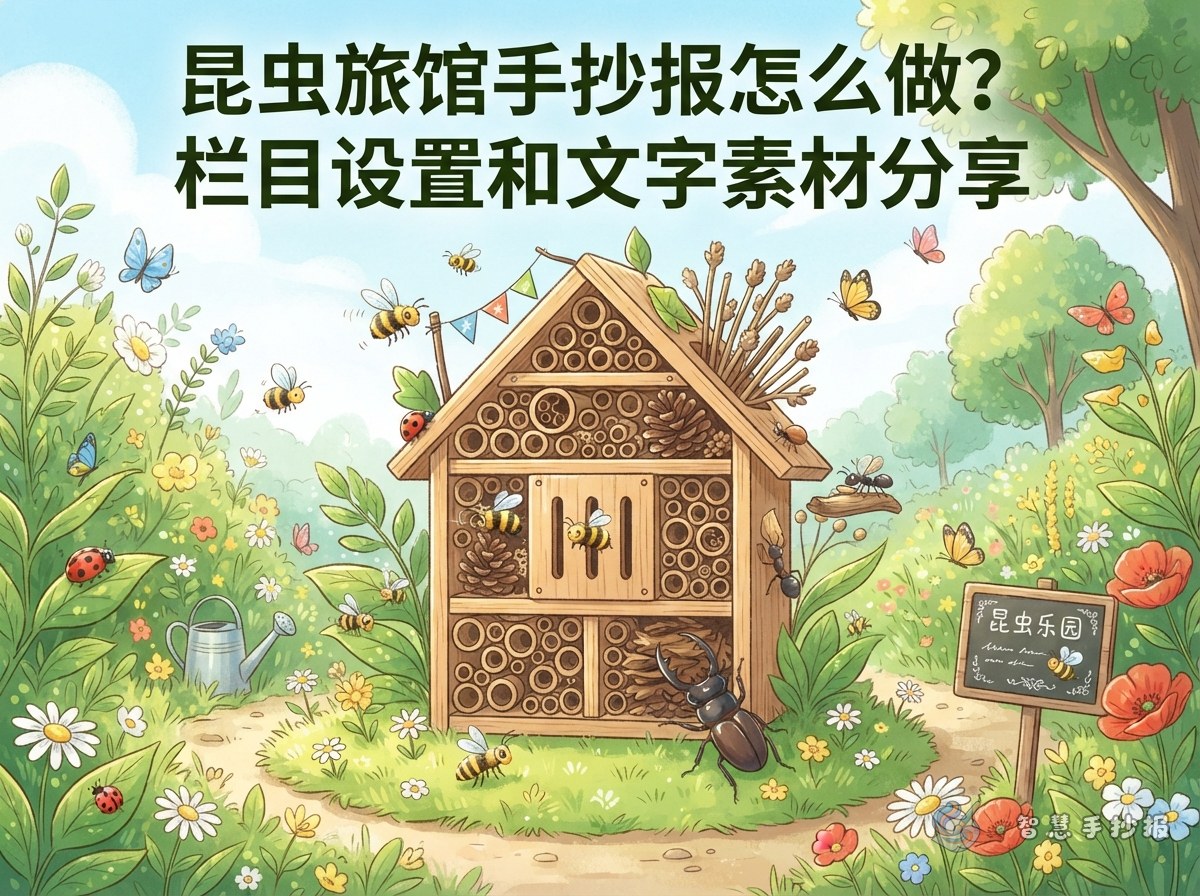
Many students fill an insect poster with butterflies, bees and ants one after another, and the page becomes crowded without a clear point. An insect hotel is different. It tells one specific story: people build a small shelter from wood, bamboo tubes and dry grass so insects have somewhere to lay eggs, spend the winter and escape the rain. Keep that sentence in mind and the whole page stays on topic.
Before you start, ask three questions: why do insects need a home, who moves in, and what can I do to help? Turn the answers into columns and your content plans itself.
Masthead, Columns and Page Structure
Masthead ideas
Write Insect Hotel as the main title, or add a subtitle such as A Home for Insects or The Little Hotel in Our Schoolyard. Use rounded cartoon lettering, then draw a layered wooden box beside it with a ladybird on the roof. The theme reads instantly.
Four main columns
- Who checks in: solitary bees, ladybirds, lacewings, earwigs, spiders and beetles, with a note on which layer each one prefers.
- Material checklist: drilled wood, bamboo tubes, pine cones, bark, dry leaves, straw and bricks, and what each material suits.
- Cutaway drawing: draw a vertical cross-section and label every layer. This is the part readers look at first.
- One thing I can do: leave a pile of twigs in a corner, use fewer pesticides, keep some fallen leaves.
Sentences You Can Copy Straight Onto the Page
Keep the writing short. Bullet points, small cards and numbered lines suit primary school students best.
- An insect hotel is not a toy. It is a temporary home for insects.
- Bamboo tubes help solitary bees lay eggs, dead wood shelters beetles, and pine cones and dry grass keep ladybirds warm in winter.
- One small hotel can bring more kinds of insects into a garden.
- The more insects there are, the more smoothly pollination and leaf decomposition happen.
- Use fewer pesticides and leave insects a way home.
Add one more fact: an insect hotel is usually placed where it is sheltered from wind and rain but still catches a little sun, so a spot facing south or south-east works well.
Layout and Illustration: Make the Hotel Visible
Portrait or landscape both work. Divide the page into three zones: masthead area at the top, cutaway drawing in the middle, text columns at the bottom. Use brown, dark green and grass green as the main colours, with orange and yellow as accents, so the page feels like wood without turning dark.
- Border: leaves, vines and small dots look more natural than straight lines.
- Illustrations: a small wooden box, bundles of bamboo tubes, mushrooms, grass, insect silhouettes, a magnifying glass.
- Text boxes: wooden signs, leaf shapes or hexagonal honeycomb panels make short lines look better.
- White space: leave some breathing room around the cutaway drawing.
Extend It With a Real Insect Hotel
If you have time, add a small how-to note in one corner: find a cardboard box or wooden crate, fill the layers with bamboo tubes, dead wood, pine cones and dry grass, fix it in a sheltered spot, then record which insects arrive. The poster then carries a little field observation, not just drawings.
When you want a ready layout, open the Wisdom Handwritten Newspaper mini program on WeChat, choose a nature-themed template, replace the text and shift the illustrations. Before finishing, check that the masthead stands out, the columns are clear, there are no spelling mistakes, and the main palette stays within four colours.