Build a Reusable Layout Skeleton First
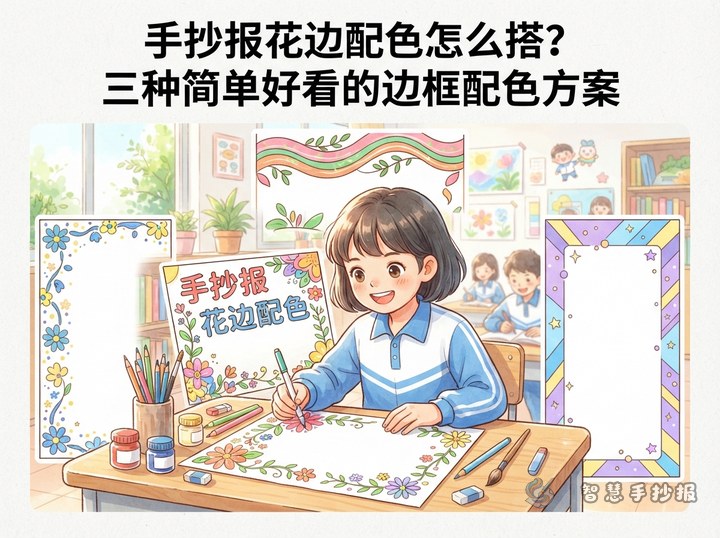
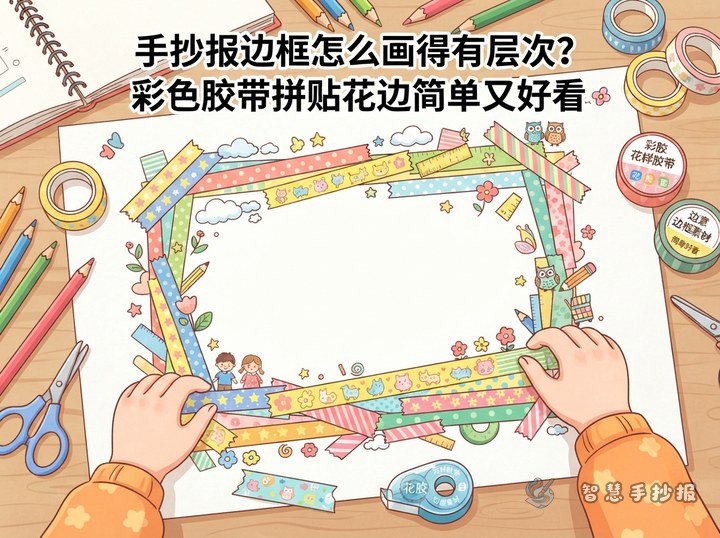
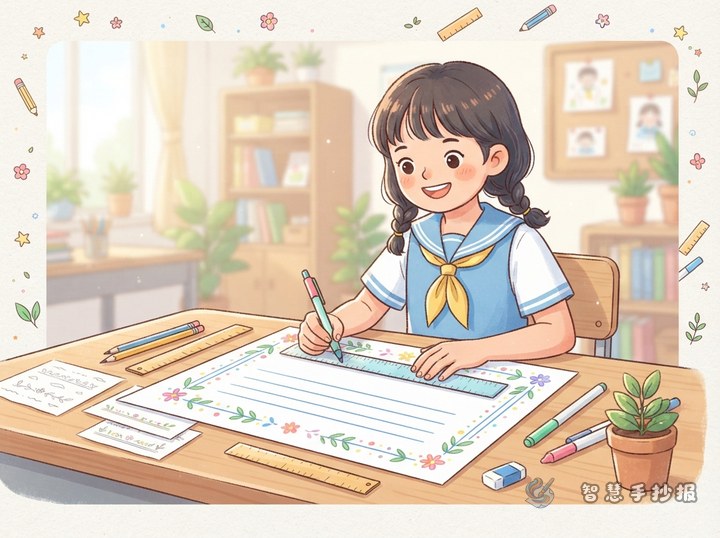
The best all-purpose border is not one that fills every inch of the page. Start with a stable structure that can be reused for different handwritten poster topics. Leave about one centimeter inside the paper edge, lightly sketch the outer frame, and then reserve spaces for the title box, section dividers, and small decorations. When the topic changes from reading to environmental protection, you only need to adjust the colors and a few border details.
Give the frame, dividers, and title box different jobs
- Outer frame: Use a thin line to define the page and keep it light enough that it does not compete with the writing.
- Title box: Try a horizontal strip, a rounded card, or a small banner across the top to make the main title stand out.
- Section dividers: They do not have to run across the entire page. Use two or three shorter divisions to keep the layout relaxed.
- Local decoration: Place it near the title, at the end of a divider, or in selected corners instead of decorating every side.
Three Easy Border Combinations That Work Almost Anywhere
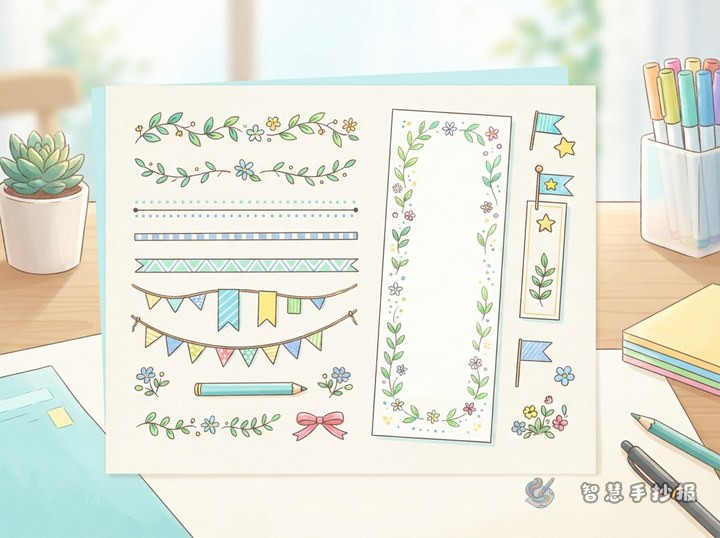
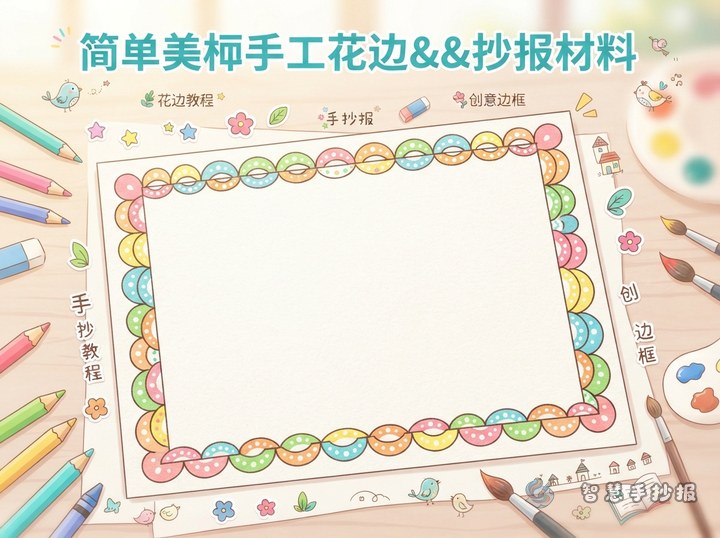
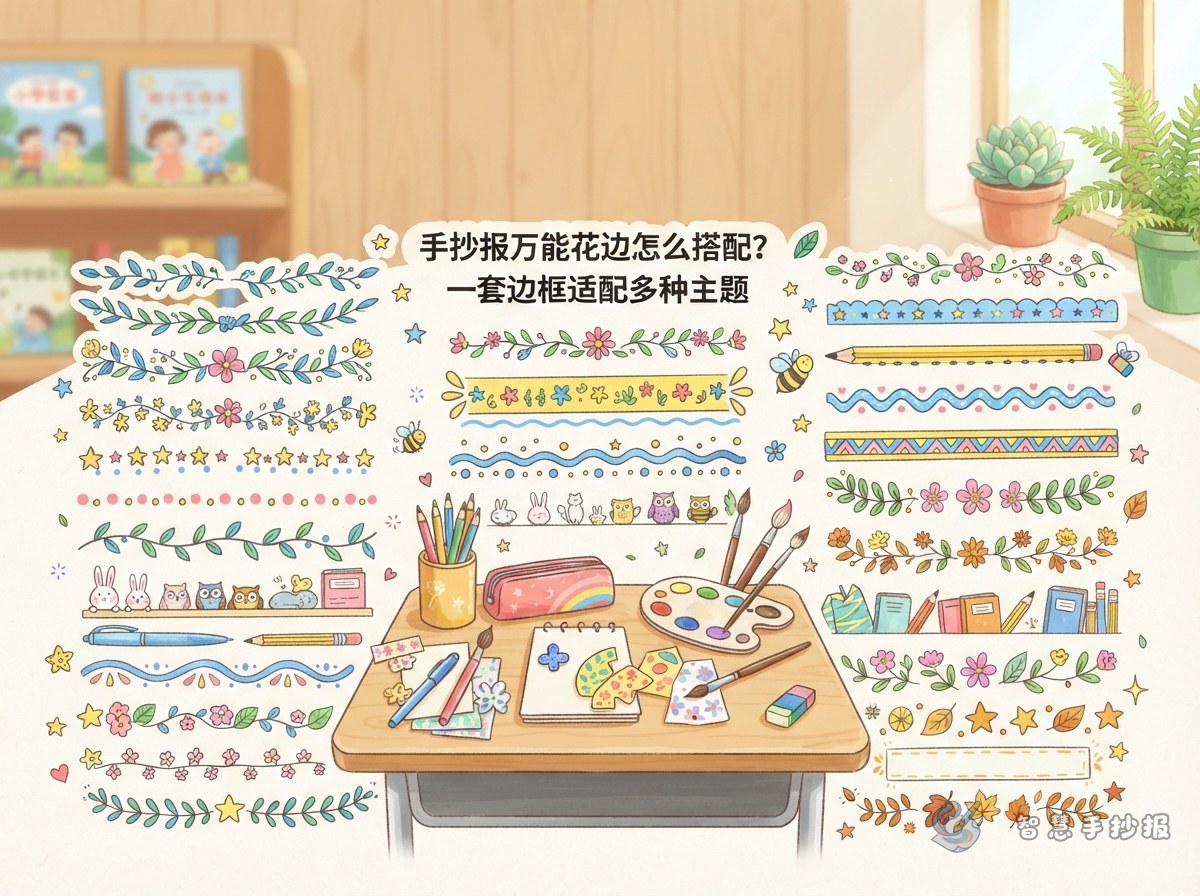
You only need a pencil, ruler, black outline pen, and colored pencils. Build the shape with one basic line style, then choose two simple forms such as short curves, diamonds, triangular flags, or rounded squares. The repeated shapes do not need to be perfectly identical.
Clean and spacious
Use a pale thin line for the outer frame and add a row of evenly spaced small shapes below the title. Decorate only the upper parts of the side edges. This style suits reading, study plans, and science posters because it leaves plenty of room for text.
Playful sections
Break the frame into several short sections and leave small gaps between them. Add a tiny flag or rounded detail at the end of each section. Make the top a little richer and keep the bottom simple. This works well for Children’s Day, hobbies, and school-life topics.
Title as the visual focus
Keep the outer frame very light and place the strongest decoration around the title box and main illustration. Add two short lines beside the title and use small marks to finish the section dividers. This is helpful when the poster has little text and needs a clear central focus.
Change the Colors to Match the Topic
For a versatile set of border materials, use no more than two or three colors. Black or dark gray can define the outlines, one theme color can highlight the title and border details, and a lighter color can fill small shapes. Avoid giving every decoration a different color.
- Reading and study: Pair blue with orange and add sections for a book recommendation, a favorite sentence, and a personal reading goal.
- Environmental protection: Pair green with yellow and include water conservation, waste sorting, and small actions children can take.
- Festivals: Pair red with gold or warm yellow and write about traditions, greetings, and a personal holiday plan.
- Safety: Pair blue with yellow and divide the content into school safety, traffic safety, and the right response to common problems.
Place the Decorations Where They Improve the Layout
On a vertical page, put the title near the top and use short matching border sections along the sides. On a horizontal page, place the title in the center or upper-left area and let the strongest decorations run along the top and bottom. When there is a lot of writing, keep all four edges light. When there are few illustrations, move more decoration toward the title and section dividers.
Sketch with a pencil before using a thick pen. Pause after each small section and check the spacing. It is better to use fewer decorations than to fill every empty area. Leave visible breathing room between the title, illustration, border, and text so the words remain easy to read.
Ready-to-Use Sections and Short Lines
When the content is not decided yet, begin with a short theme line and add three small sections. For a reading poster, try the line “Make reading a small daily habit” with sections for a book recommendation, a memorable sentence, and what I learned. For an environmental poster, use “Protect the Earth through small actions” with sections for facts, personal actions, and a green pledge.
For a festival poster, write “Learn the culture and share good wishes” and add the festival story, traditions, and greeting cards. For a safety poster, use “Remember simple safety rules and enjoy every school day” with sections for warnings, correct actions, and a safety rhyme. Put short lines in the title box or small labels, and save longer text for the main columns.
A Five-Step Check from Sketch to Finished Poster
- Choose the page direction and title position, then lightly draw the outer frame.
- Divide the page into two or three sections according to the amount of text and reserve space for illustrations.
- Choose one border combination and decide on the theme colors.
- Write the title and main text first, then complete the border details and color.
- Check that the border does not overpower the title, the writing is not crowded, and the palette has no more than three colors.
To try different themes quickly, you can open the Zhihui Handwritten Poster WeChat mini program, choose a suitable layout idea, and adjust the sections and border positions to fit your paper. A small number of decorations, matching colors, and clear spacing are usually enough to create a simple and attractive handwritten poster.