Start with the right focus: not just dragonflies, but the wetland they live in
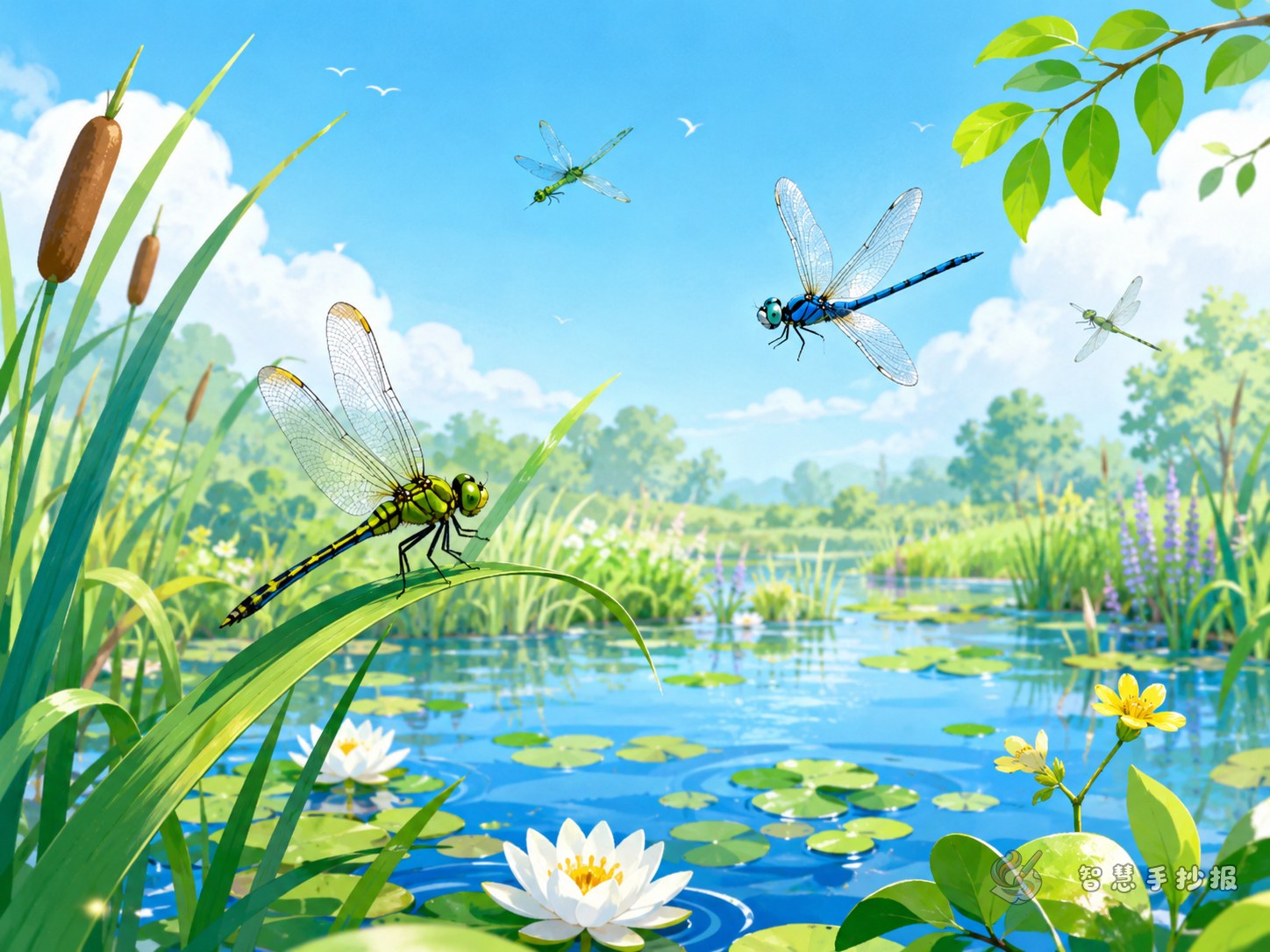
A strong “Dragonflies and Wetland Ecology” poster should show the connection between the insect and its habitat. Instead of only drawing a dragonfly, build the page around ponds, reeds, shallow water, leaves, and tiny insects. This helps readers understand where dragonflies live and why wetlands matter.
You can choose a title like “Dragonflies Over the Wetland,” “A Tiny Guardian of the Pond,” or “Life Above the Water.” These titles feel lively and work well for student projects.
What to write on the poster
What is a wetland
A wetland is a place where land and water meet, such as ponds, marshes, river edges, and reed areas. Wetlands have plenty of water, plants, and small animals, so they are important homes for many living things.
Dragonfly features
Dragonflies have large eyes, long bodies, and two pairs of clear wings. They fly quickly and can change direction easily. They often rest on grass or branches while watching their surroundings.
The life cycle of a dragonfly
When dragonflies are young, they live in water as nymphs. As they grow, they climb out of the water and transform into flying adults. This shows how closely dragonflies depend on clean water environments.
Dragonflies and ecological balance
Dragonflies eat mosquitoes and other small insects, helping keep nature in balance. When dragonflies are often seen in an area, it can mean the environment is suitable for many forms of life.
A creative layout idea: build the page from water to sky
This topic works especially well with a layered design. Draw water and aquatic plants at the bottom, place nymphs, ripples, and reeds in the middle, and show adult dragonflies flying above. This creates a natural visual path from underwater life to the open air.
- Top area: main title, flying dragonflies, short slogan
- Middle area: body features, ecological role, fun facts
- Bottom area: wetland explanation, nymph stage, water plants
- Corner decorations: reeds, lotus leaves, drops of water, stones
If the paper is large, you can also draw a winding stream across the page and place the text sections along it for a more dynamic look.
Short text materials you can use
- Dragonflies skimming over the water are lively signs of nature.
- Clear water and rich plants support many small lives.
- Protecting wetlands means protecting insects, birds, and our shared home.
- From a water nymph to a skilled flyer, a dragonfly’s life is full of change.
- We can protect nature by not littering and by caring for plants near water.
These short lines are useful for side notes, captions, or blank spaces on the page. They are simple, readable, and suitable for children.
How to make the poster look neat and lively
Use blue, green, and light teal as the main colors, with small touches of yellow or orange. Keep the title rounded and cheerful. Important words like “wetland,” “nymph,” and “ecological balance” can be emphasized in bold writing. Do not overcrowd the page. Leave some open space for a clean and fresh feel.
If you want to keep improving the layout, change the title, or add more sections, you can continue creating in the Zhihui Shouchao Bao WeChat mini program.