Start with a clear idea: tell the story of a butterfly’s life
If you want an insect-themed handwritten newspaper that is both attractive and easy to understand, the life cycle of a butterfly is a great choice. It has clear stages, colorful visuals, and simple science content for children. A title like “The Life of a Butterfly” or “How a Butterfly Changes” works well.
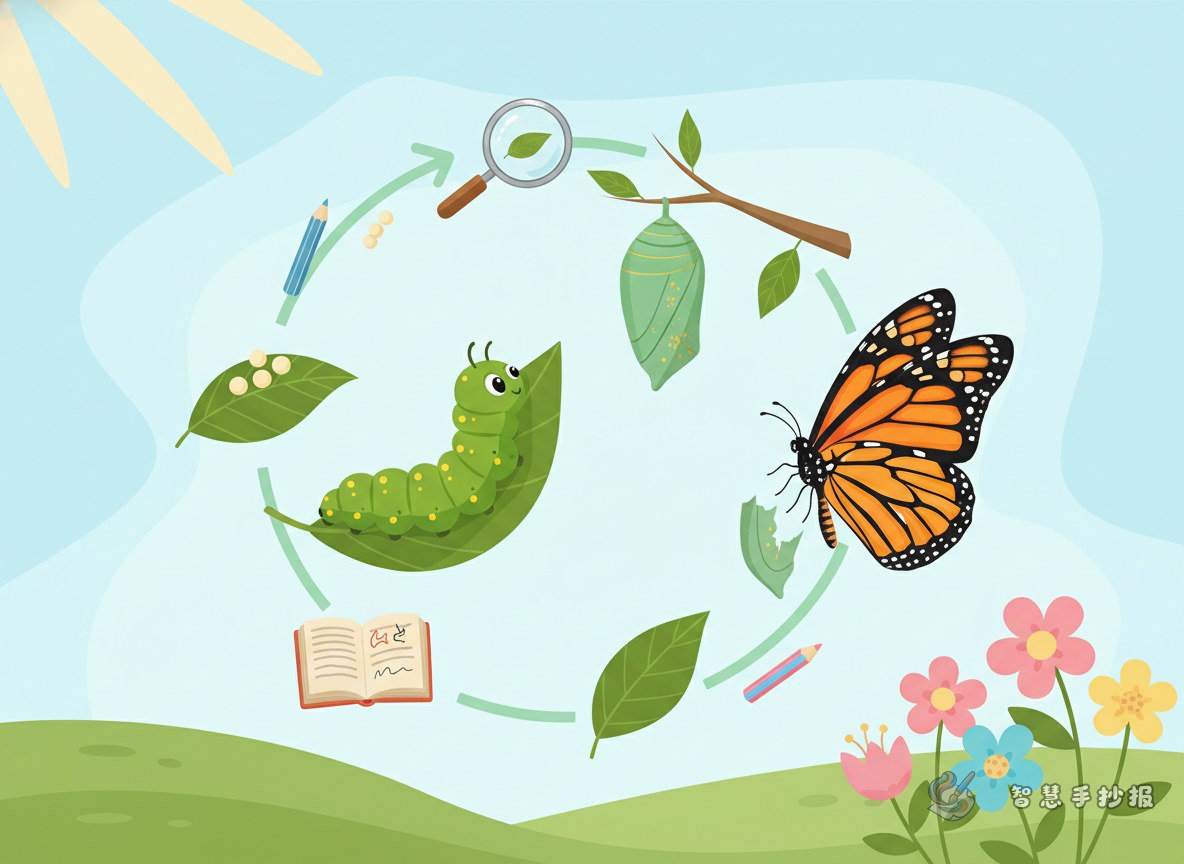
The main idea is simple: explain the four stages from egg to caterpillar, chrysalis, and adult butterfly, then connect that process to flowers, plants, and the natural environment. This makes the page fit both the insect world and nature ecology theme.
Useful sections for the page
Section 1: The four life stages
- Egg: A butterfly lays eggs on plants that the young caterpillars can eat.
- Larva: The larva, or caterpillar, spends most of its time eating and growing.
- Pupa: Inside the chrysalis, the body changes in amazing ways.
- Adult: The butterfly emerges, opens its wings, drinks nectar, and begins adult life.
Section 2: Quick butterfly facts
- Butterflies use their antennae to sense the world around them.
- Their wings are covered with tiny scales, which create beautiful colors.
- Different butterflies prefer different flowers and habitats.
Section 3: Nature care tips
- Protect flowers and plants, and do not catch insects carelessly.
- Grasslands, gardens, and woods are important homes for butterflies.
- When observing insects, stay gentle and avoid damaging nature.
Short text materials you can use
Keep the writing short and clear so the page looks neat.
Text 1: A butterfly goes through four stages: egg, larva, pupa, and adult. This kind of change is called complete metamorphosis. Each stage has a different shape and job.
Text 2: Butterflies are often seen in sunny places with many flowers. While drinking nectar, they can also help plants by moving pollen from flower to flower.
Text 3: Watching butterflies helps us learn from nature. If we protect plants and habitats, more insects can live safely in the wild.
How to arrange the layout
This topic works best as a life cycle path layout. Place the four stages from left to right or top to bottom, and connect them with arrows. Put the main title at the top, then build the page around the changing stages.
You can decorate the corners with leaves, flowers, grass, magnifying glasses, or small insects. Do not fill every space. Leave enough room for writing. Soft green, yellow, sky blue, and orange can make the page feel bright and natural.
Easy ways to make it look better
- Create a title frame shaped like butterfly wings.
- Use different colors for each life stage heading.
- Keep each paragraph to just a few lines for a cleaner page.
- End with a short message about protecting nature.
If you already have your topic and sections in mind, you can continue organizing your ideas in the Zhihui Shouchaobao WeChat mini program and turn them into a more complete handwritten newspaper design.