Why the four seasons make the topic easier to organize
When students create a campus flowers and trees observation handout, one common problem is not knowing how to sort the material. A spring-summer-autumn-winter structure solves that quickly. Plants on campus change in visible ways through the year, so the content naturally falls into clear sections.
This approach works well because it keeps the writing orderly and also helps with page design. Each season can have its own color, subtitle, and small illustrations, making the whole handout look balanced and lively.
What to write in each season
Spring notes
- Which trees are growing fresh leaves
- Which flowers bloom first and what colors appear
- The shapes of buds, petals, and new leaves
- Your feelings when seeing the campus wake up in spring
Summer notes
- Whether the tree shade becomes thicker
- Which flower beds look the most vibrant
- What plants best represent summer on campus
- Any scents, bright colors, or insects you notice
Autumn notes
- Which leaves turn yellow, red, or fall to the ground
- Whether there are fruits, seeds, or fading flowers
- Changes in leaf shape, color, and amount
- The overall feeling of the campus in autumn
Winter notes
- The difference between deciduous and evergreen trees
- How trunks and branches stand out more clearly
- Which plants still stay green in cold weather
- How lower temperatures affect plant appearance
Useful sections to place on the handout
Besides the four seasonal blocks, you can add a few supporting sections to make the handout richer.
- Plant mini profiles: name, location, and seasonal features.
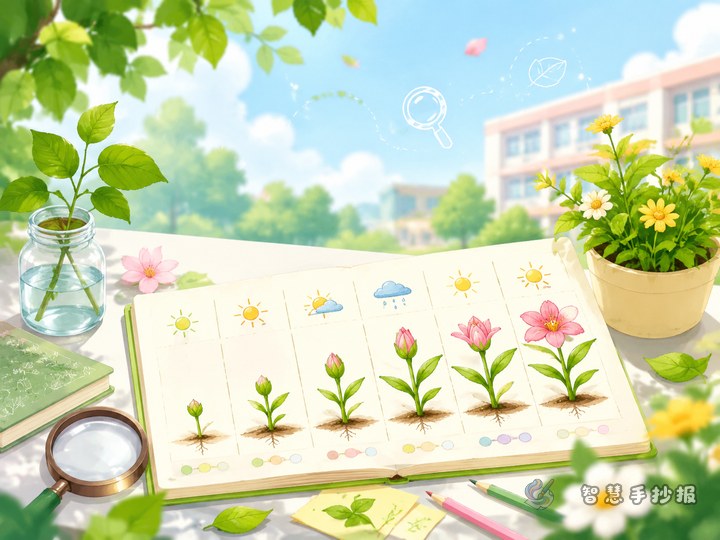
- My observation log: date, weather, and what changed.
- Comparison corner: compare the same tree in different seasons.
- Campus nature spots: list the best places to observe plants.
- One-sentence reflections: short thoughts about the beauty of school plants.
Simple writing materials you can use directly
The best handout sentences are specific and easy to understand. Focus on what you saw, what changed, what it looked like, and how it made you feel.
- In spring, fresh green leaves appeared on the branches like soft new clothes.
- In summer, the tree crown grew wider and gave cool shade.
- In autumn, falling leaves looked like colorful little boats drifting down.
- In winter, even without many leaves, the branches still stood strong.
You can also add a short concluding sentence such as: Campus plants help us notice the rhythm of the seasons and make everyday school life more alive.
Layout ideas: let the colors follow the seasons
A seasonal theme works especially well with a divided layout. You can split the page into four parts or place a large title in the middle and arrange seasonal sections around it. Choose colors that match each season: light green and pink for spring, deeper green and yellow for summer, orange and brown for autumn, and blue-green tones for winter.
Add small decorations such as leaves, petals, grass, or fruits, but do not overcrowd the page. Leave enough blank space for the text so the handout stays neat and readable.
Final checklist before finishing
- Does the content truly focus on seasonal changes in campus plants?
- Have you included flowers, trees, or both?
- Are the observations specific instead of only saying “pretty” or “nice”?
- Are the colors and subtitles consistent?
- Did you include your own discoveries and feelings?
If you already have your topic and text ready, you can continue arranging the page neatly in the Zhihui Shouchaobao WeChat mini program.