Turn Rainy-Day Changes into the Highlight
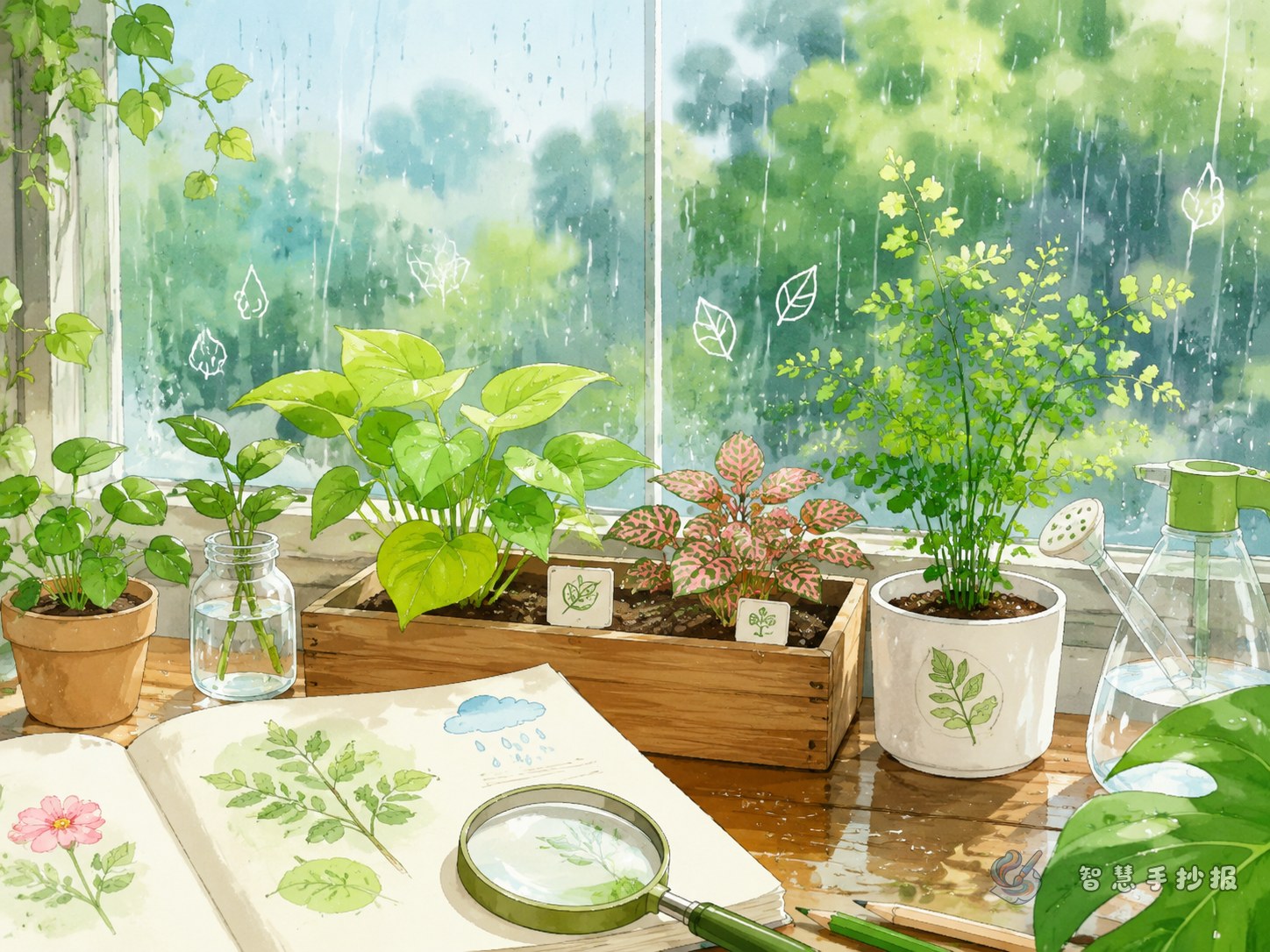
A campus plant corner looks especially interesting on a rainy day, so it is a great theme for a handwritten newspaper. Instead of listing too much general knowledge, students should focus on how the weather changes the plants. They can observe leaves, soil, pots, stems, and the surrounding environment to make the content feel real.
- Are there water drops on the leaves?
- Do the leaves look brighter or greener?
- Is the soil loose or wet?
- Is there water around the flowerpot edge?
- Does the plant stand upright or droop a little?
With these details, the poster will feel much more vivid than simply saying the plant grew taller.
Section Ideas You Can Use Directly
This poster can be designed as a special rainy-day observation page rather than a regular weekly diary. Four sections are enough to keep it clear and attractive.
Section 1: Today’s Weather Card
Write the date, weather, place, and plant name, such as “Wednesday, light rain, school corridor plant corner, observing pothos.” This makes the work look like a real observation record.
Section 2: Plant Changes in the Rain
Use short and clear sentences, for example: “The leaves look shiny, as if they have been washed.” “The soil is darker than usual and feels damp.” Concrete details work very well in a handwritten newspaper.
Section 3: Problems I Noticed
Students can write things like “One pot has too much water,” “A leaf bent after the rain,” or “Plants near the window get more rain.” This section shows careful observation.
Section 4: My Care Suggestions
- Pour away extra water if the pot is too full
- Move the pot to a ventilated place after the rain
- Check whether leaves turn yellow or break
- Do not water again too often on a rainy day
These sections make the poster both thoughtful and practical.
Ready-to-Use Writing Material
If students do not know how to begin, they can organize ideas through three simple directions: what I saw, what I touched, and what I thought.
- What I saw: Raindrops rested on the leaves, and the leaf surface looked freshly cleaned.
- What I touched: The soil felt wetter than usual, and the pot edge felt cool.
- What I thought: Plants cannot speak, but they quietly change when the weather changes.
A nice ending sentence could be: “A light rain made not only the campus fresher, but also the plant corner look as if it had put on a new green coat.”
Try a Raindrop-Themed Layout
For the design, students can connect sections with soft curved lines so the page feels like flowing rainwater. This gives the handwritten newspaper a natural and creative look.
- Use green and light blue for the main title
- Shape small sections like raindrops, clouds, or flowerpots
- Add tiny leaves, rain dots, or rainbow lines in the corners
- Leave enough blank space so the page does not look crowded
Younger students can use fewer words and more drawings, while older students can add a small “observation conclusion” box.
How to Make It Feel Like a Real Observation Diary
The biggest difference between an ordinary poster and a strong observation diary is authenticity. Students can add a simple time order, such as “when I first arrived,” “ten minutes later,” and “after the rain stopped.” Even a short observation will feel more real this way.
They can also include a personal judgment like, “I think this pot should not be watered again today because the soil is already very wet.” After drafting the content, students can continue polishing the layout and section arrangement in the Zhihui Shouchaobao WeChat mini program to create a cleaner final page.