Why a One-Week Record Works Well
A one-week record gives the handwritten newspaper a clear time line and makes the observation feel authentic. Instead of listing many unrelated plants, students can follow one tree, one flower, or one campus green corner and notice small daily changes.
This approach is especially useful for primary school projects because the writing is easier to organize. It also helps the final page look focused rather than crowded.
What You Can Observe Each Day
You do not need complicated science terms. Daily notes can be simple and specific.
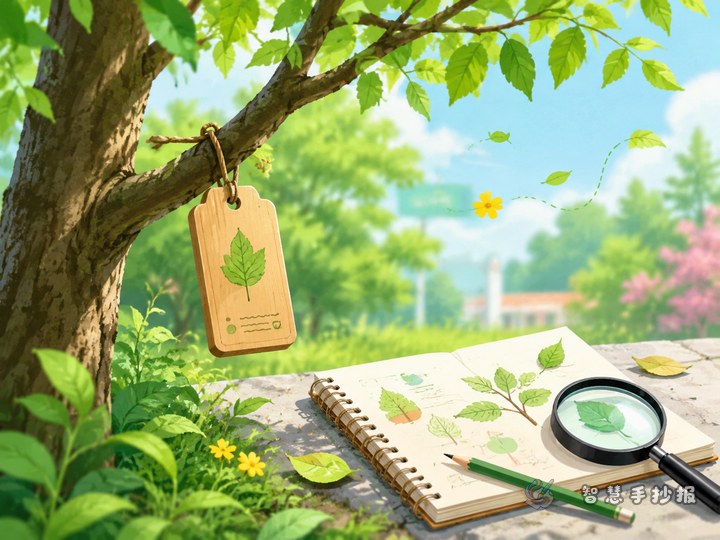
- Leaf color: lighter, darker, shinier, or slightly yellow
- Flower state: bud, half-open, fully open, or fading
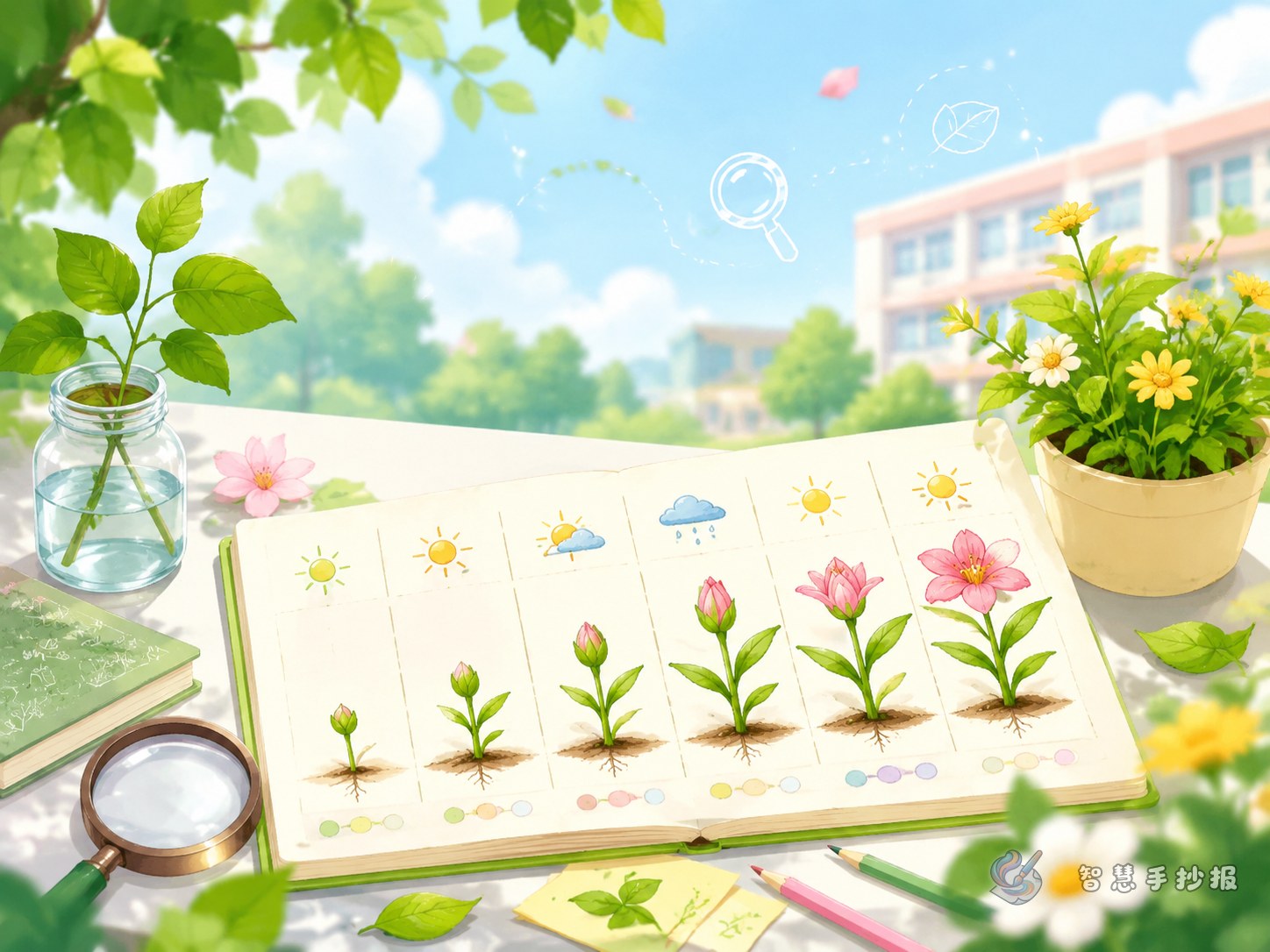
- Weather effect: sunny, cloudy, windy, or after rain
- Ground changes: fallen leaves, petals, or wet soil
- Scent and feeling: light fragrance, fresh air, or cool shade
Short and real details often make the page stronger than long general descriptions.
Useful Sections for the Newspaper
Seven-Day Observation Strip
Write Day 1 to Day 7 in order. Each day can have one or two sentences. Keep the wording brief and concrete.
My Observation Focus
Explain what you chose to observe and why, such as a camphor tree near the playground or a flower bed beside the teaching building.
Small Changes I Noticed
Summarize the most interesting differences during the week. For example, after rain the leaves looked cleaner, or by the end of the week more buds appeared.
My Final Thought
Add a short reflection about caring for campus plants, observing patiently, or discovering beauty in everyday school life.
Sample Sentences Students Can Use
- On the first day, I found the leaves were dark green and looked smooth in the sunlight.
- On the third day, after light rain, the flower petals seemed brighter than before.
- On the fifth day, I noticed two small buds that had not opened yet.
- At the end of the week, the tree looked almost the same from far away, but many tiny details had changed.
These kinds of sentences are easy to rewrite into a personal observation record.
Layout Ideas That Look Neat
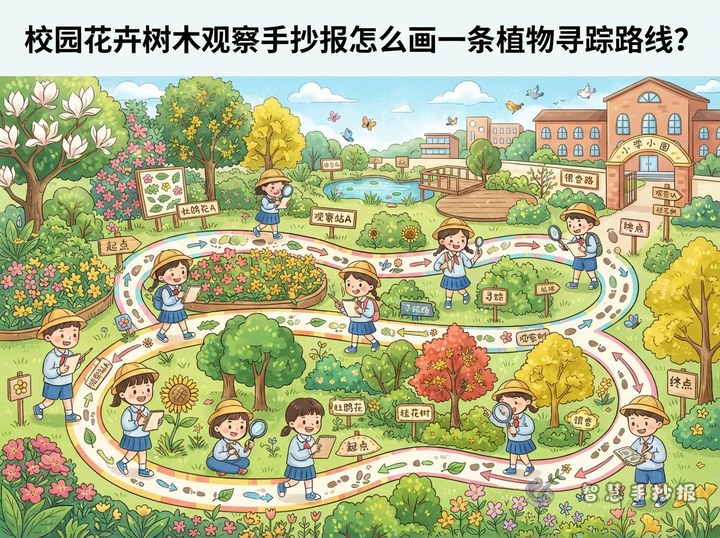
A time-based page design is the best match for this theme. You can place the title at the top, daily records in the center, and a conclusion block on one side or at the bottom.
- Use a horizontal or vertical timeline for seven days
- Highlight weather words with slightly bolder writing
- Leave blank space between each day so the page does not feel crowded
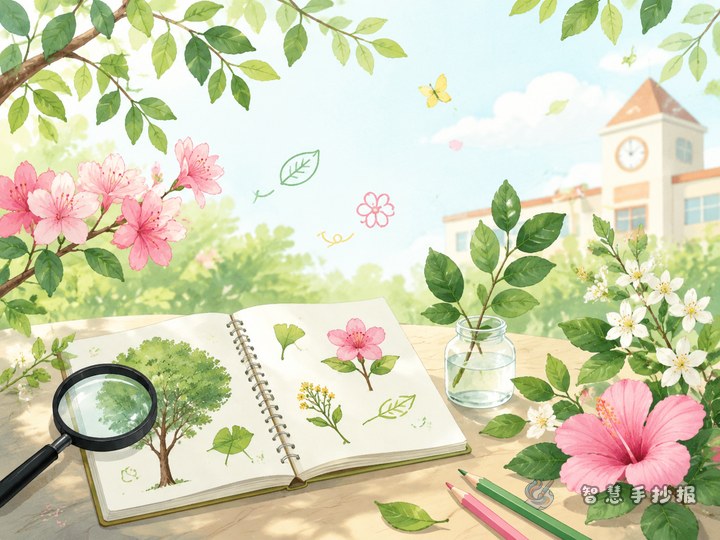
- Keep decorative elements simple, such as leaves, petals, or small grass borders
If you want to continue arranging your page more efficiently, you can also refine the title, sections, and style in the Smart Handwritten Newspaper WeChat mini program.