Choose one clear theme before writing
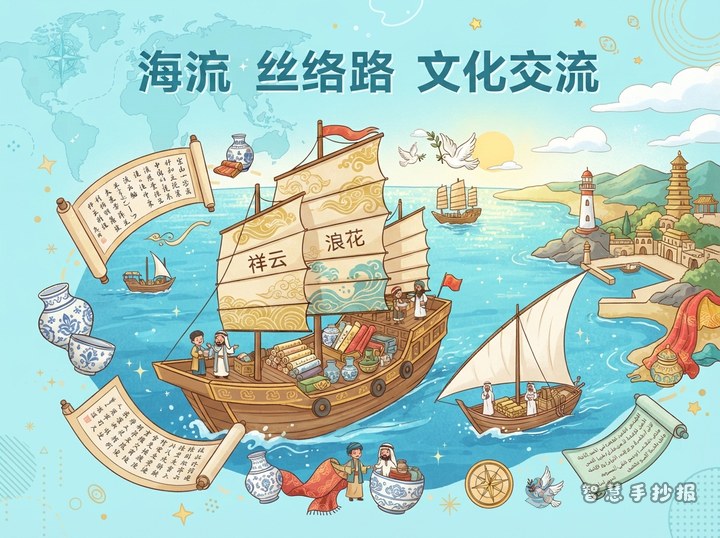
A navigation culture handwritten newspaper becomes much better when it follows one main idea instead of collecting random facts. A useful theme is how people traveled on the sea and how navigation helped different places connect. With that focus, every section feels related and the whole page looks more organized.
Your title can sound lively and student-friendly, such as “How Did Ancient Sailors Find Their Way?” or “Secrets of an Old Sailing Ship.” A title like this makes the page more interesting than a plain list of history terms.
Easy sections students can actually use
Section 1: What ancient ships looked like
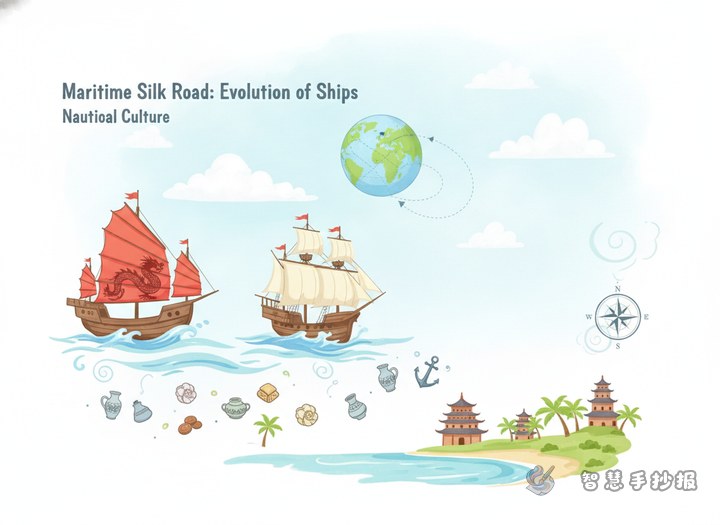
Introduce wooden ships, sailing ships, or multi-mast ships in a simple way. The key points are that sails used wind power, the ship body had to stay stable, and the ship carried cargo and fresh water.
- Ancient sea-going ships were often made of wood.
- Sails helped ships move with the wind.
- Larger ships could carry more goods on long journeys.
Section 2: How sailors found direction
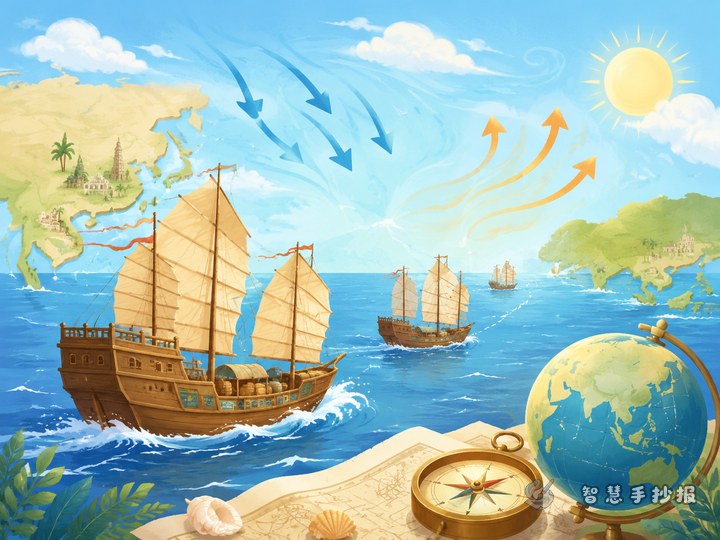
This part is usually one of the most interesting sections. Students can write about the sun, stars, coastlines, and the compass in simple language.
- The sun helped people judge direction in daytime.
- Stars were useful for navigation at night.
- A compass made it easier to keep the right course.
- Experienced sailors also watched the wind and ocean currents.
Section 3: Jobs on a ship
Instead of writing only about the captain, it is better to show that many people worked together on a voyage. This makes the page richer and more vivid.
- Some sailors watched the sea ahead for safety.
- Some controlled the direction and speed of the ship.
- Others managed food, water, and cargo.
- Everyone had to work together in rough weather.
Section 4: What sea exchange brought to people
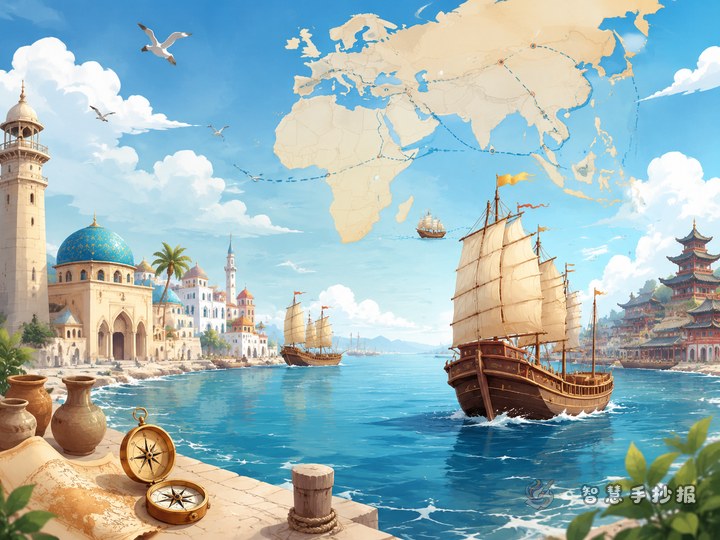
This is a good place to connect the topic with the Maritime Silk Road. Students can mention trade, cultural sharing, and friendly contact between regions in a simple and positive way.
- Ports helped different areas exchange goods.
- Sea travel allowed people to learn about distant places.
- Navigation encouraged the spread of skills, customs, and ideas.
Layout ideas that match the sea theme
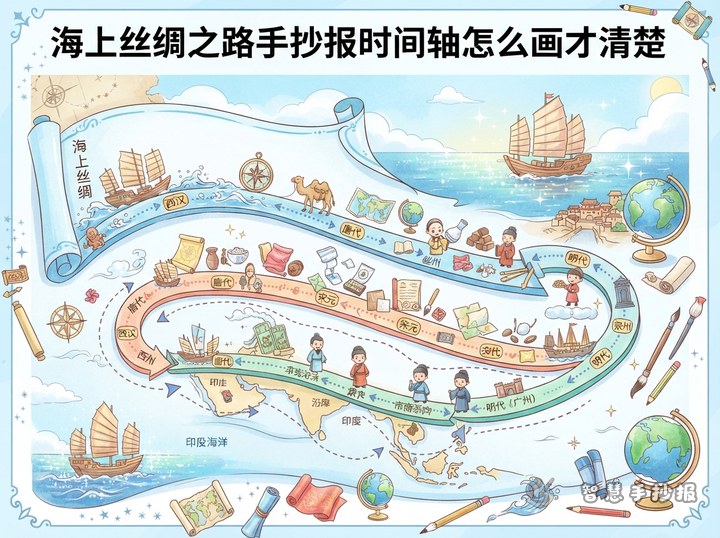
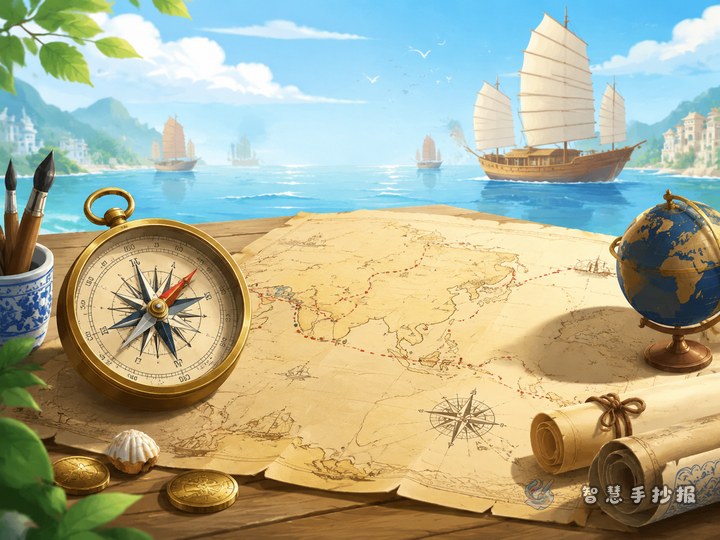
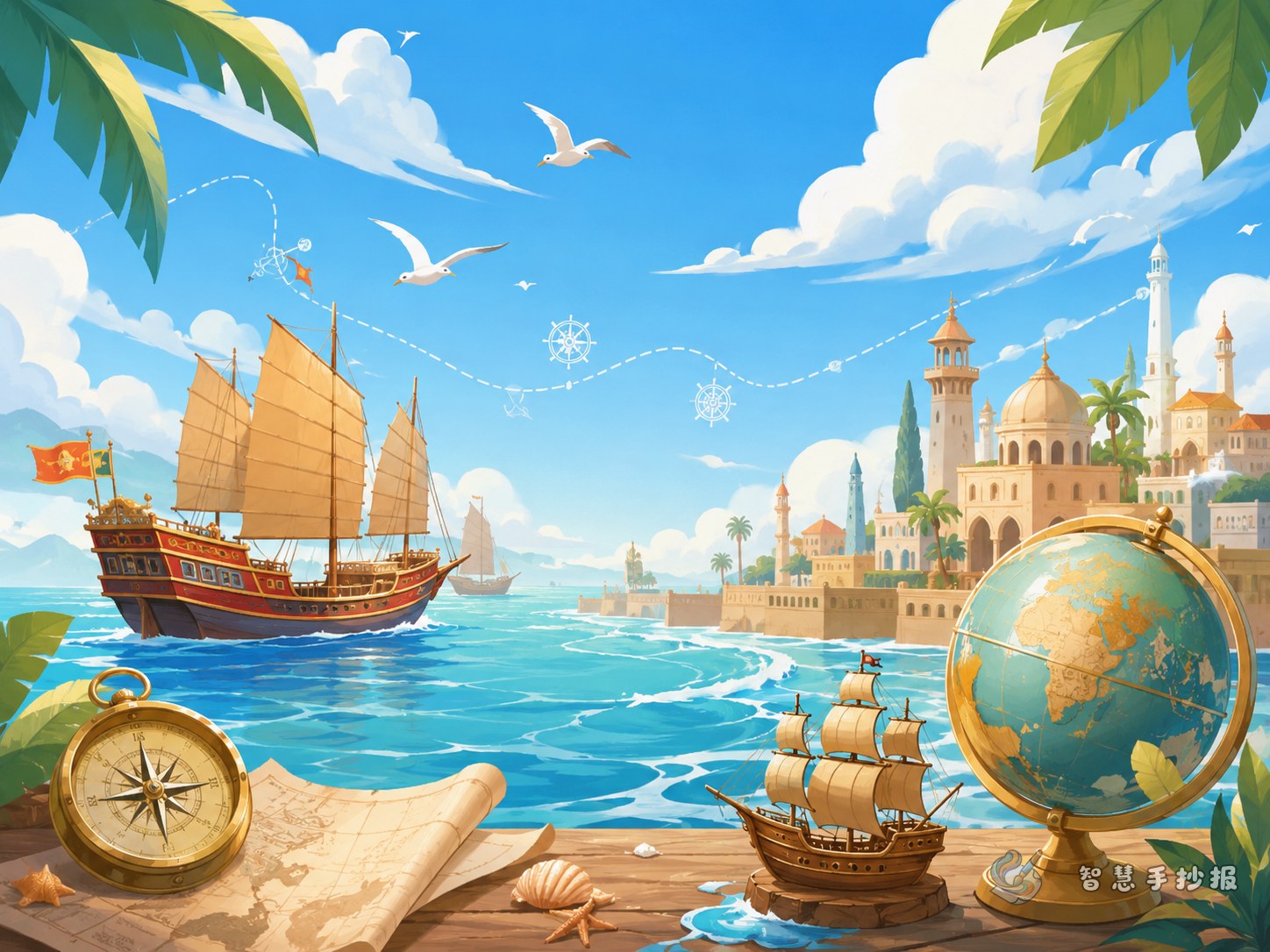
This topic works especially well with a route-style or map-style design. Put the main title in the center, draw a sailing ship nearby, and link each section with curved lines like sea routes. This gives the page movement and makes it easier to read.
- Use blue, light blue, and beige as main colors.
- Add borders with waves, ropes, shells, or compass symbols.
- Make subheadings look like flags, wooden boards, or ship wheels.
- Highlight key words such as “compass,” “ship,” “port,” and “route.”
Short lines for blank spaces
If the page still has empty areas, add a few short theme lines. They decorate the page and strengthen the message without taking much space.
- Navigation makes distant places feel closer.
- One sea route can connect many ports.
- With sails raised, cultures can meet.
- Sea exchange brings understanding and friendship.
These lines fit well in corners, beside drawings, or between sections.
How to finish the page faster and better
If there is limited time, the easiest structure is one main title, four content sections, and a few sea-themed decorations. Write the text first and decorate later so the layout stays balanced. Parents and teachers can help organize the sections, while students copy the text and color the page themselves.
If you already have the topic but want a better layout and more polished content, you can continue creating in the Zhihui Shouchao Bao WeChat mini program.