Why vitamins and minerals are a smart poster topic
Most nutrition posters focus on big foods like rice, eggs, and milk. Vitamins and minerals are needed in tiny amounts, but they help turn food into energy, build bones, carry oxygen, and protect the body. A poster on this topic shows why eating a variety of foods matters, and it gives you plenty of colorful fruits and vegetables to draw.
This issue can be titled 'Tiny Nutrition Helpers' and works well for grades 3 to 6. Keep the layout simple: explain what each nutrient does and where to find it.
What vitamins and minerals do in the body
Vitamins: small helpers that keep the body running
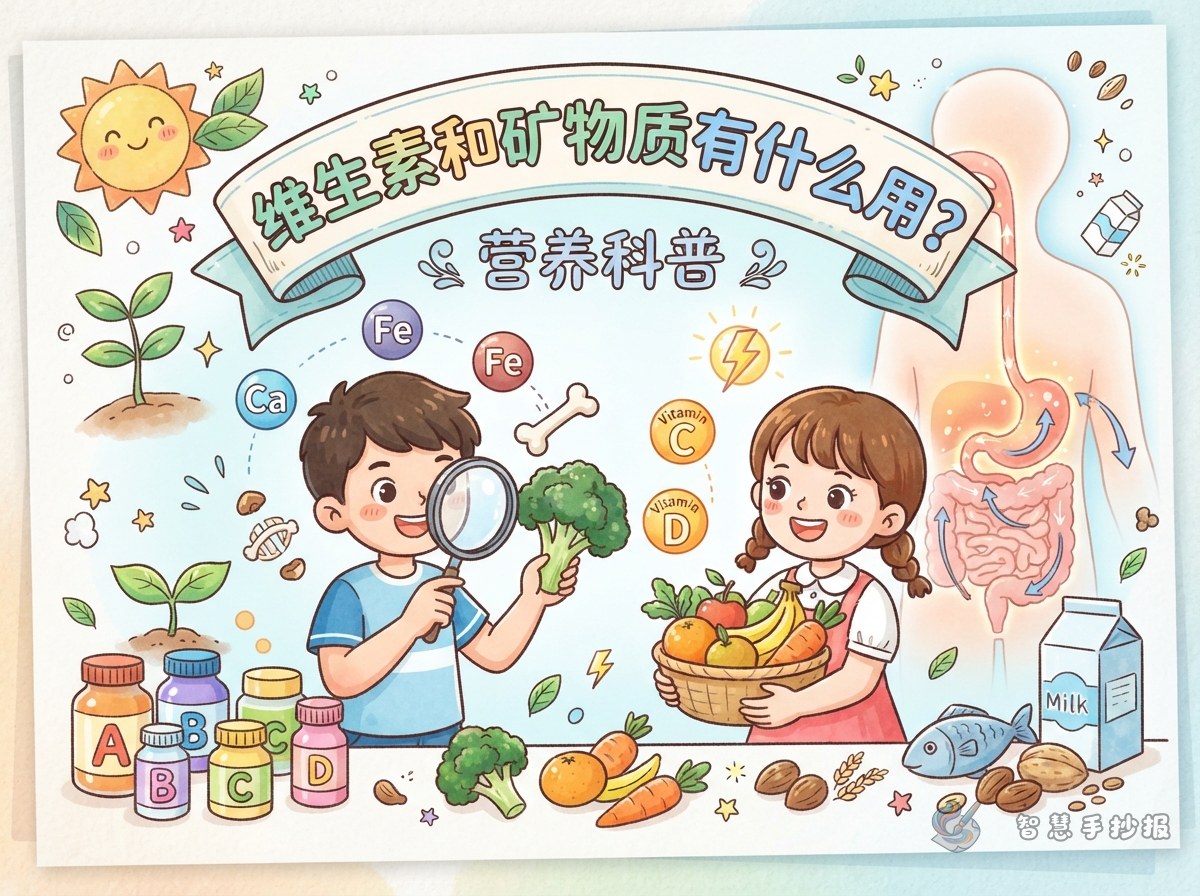
Vitamins do not give us energy, but they help many reactions happen. Vitamin A supports vision, B vitamins help turn food into energy, vitamin C helps wounds heal and helps the body absorb iron, and vitamin D helps calcium build strong bones. A short line for your poster: 'Small amounts, big jobs.'
Minerals: partners for bones, blood, and nerves
Calcium and phosphorus are building blocks for bones and teeth. Iron helps hemoglobin carry oxygen. Zinc supports growth and taste. Iodine helps the thyroid work properly. You can draw a 'nutrient subway line' and send each mineral to a different part of the body.
Content ideas you can put on the poster
Use a simple pattern: one picture, one list, and one short sentence. This keeps the poster easy to read.
- Vitamin A: carrots, pumpkin, spinach; helps vision and skin.
- B vitamins: whole grains, beans, lean meat; help the body use energy.
- Vitamin C: oranges, kiwi, bell peppers; helps iron absorption and wound healing.
- Vitamin D: sunlight, egg yolk, dairy; helps calcium get into bones.
- Calcium: milk, tofu, small dried fish; builds bones and teeth.
- Iron: red meat, liver, black fungus; helps prevent iron-deficiency anemia.
- Zinc: shellfish, nuts, lean meat; supports growth and taste.
If you still have space, add this reminder: 'No single food has everything. Eating a mix is the smart choice.'
Three layout plans for a school poster
Rainbow food plate
Draw a large circle in the center. Divide it into red, orange, yellow, green, purple, and white sections. Place a food in each section and use arrows to point out the vitamin or mineral it contains. This works well for younger students because it is bright and simple.
Magnifying glass explorer
Draw a magnifying glass on the left side and place one food inside, such as an orange or a carton of milk. On the right, use a text box to explain what it contains and how it helps the body. Repeat three or four times for an exploring feel.
Body map
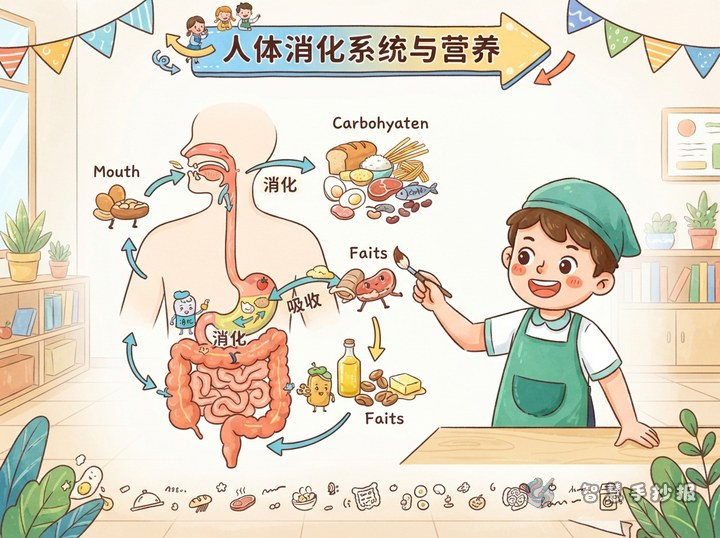
Draw a simple human outline in the middle. Use lines to connect vitamins and minerals to the right body parts: eyes, bones, blood, skin, and nerves. This layout is more detailed and suits older students.
Titles, drawings, and decorations
- Main title: try 'Tiny Nutrition Helpers', 'Vitamin and Mineral Team', or 'The Nutrients You Cannot See'. Use large letters and a rounded border.
- Small drawings: carrots, oranges, milk cartons, small fish, the sun, bones, blood drops, and wheat stalks are easy to draw.
- Colors: use orange, yellow, green, and light blue, like fruits and vegetables. Avoid making the whole page too dark.
- Borders: vegetable vines, colored dots, or small leaves look livelier than straight lines.
Write short sentences such as 'Iron is the delivery worker in your blood' or 'Calcium is the brick for your bones'. They are easier to remember and better for a poster's reading distance.
Steps and a final check
- Choose your main title and sketch the layout on scratch paper.
- Divide the page into a 'jobs' area, a 'food sources' area, and a 'reminder' area. Leave lines or boxes for writing.
- Start with light pencil lines. Draw large color blocks and main pictures first, then write the title and text.
- Use black or dark blue for the body text. Highlight key sentences in red or with a thicker pen.
- Before you finish, check that the title stands out, food names are correct, and the balanced-eating reminder is included.
If you want a faster start, open WeChat and look for the '智慧手抄报' mini program. Choose a nutrition science template, swap the text and pictures, and copy the layout onto paper.