Turn the Schoolyard into an Observation Spot
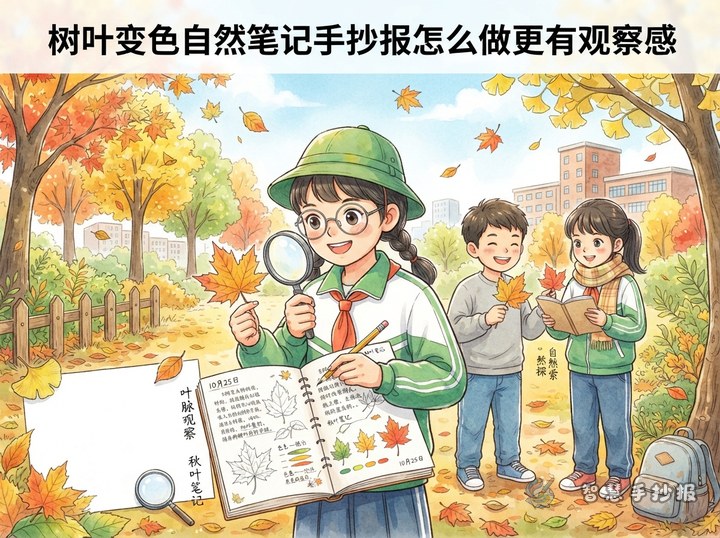
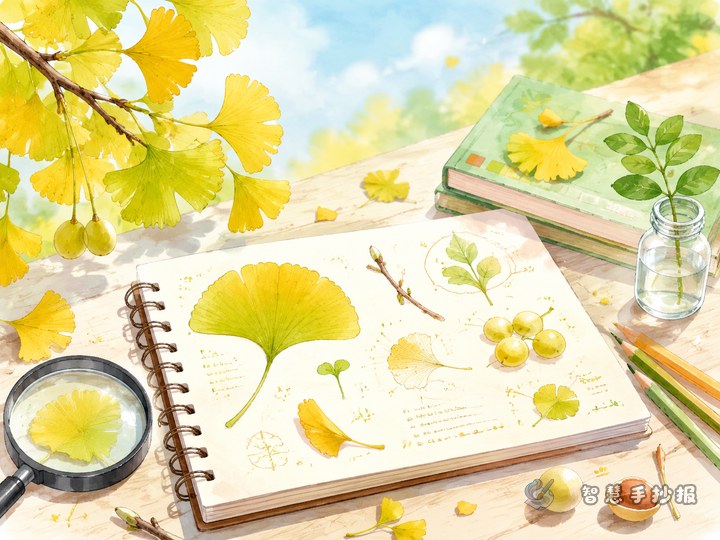
A good theme for this project is “Leaves Come in Different Shapes.” Look around pathways, flower beds, and playground trees on the way to or from school. Pick three to five leaves with different forms. You do not need to know every tree name; recording what you see is already a real nature-journal activity.
- Observation date: for example, Wednesday after school.
- Location: for example, under a tree near the playground.
- What you noticed: whether the leaf is pointed, round, or shaped like a hand.
- Kind reminder: collect fallen leaves only and do not break branches.
Describe Four Easy Leaf Types
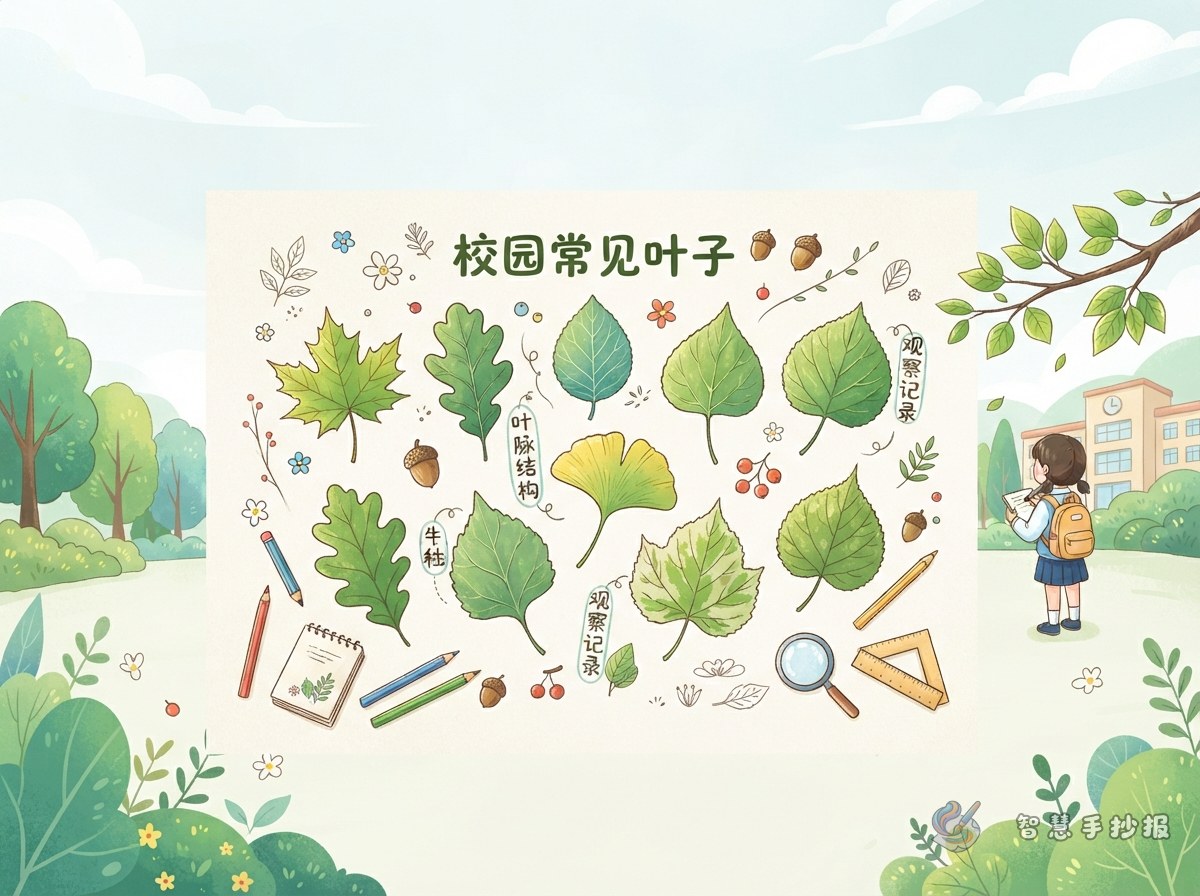
Keep the writing short by making each leaf into a small observation card. Place a drawing beside the note and add one or two details.
- Long, narrow leaves: They are slim and pointed at both ends, like a little boat.
- Oval leaves: They are wider in the middle and often narrower at one end.
- Hand-shaped leaves: They have several clear points and look like an open hand.
- Needle-shaped leaves: They are thin and long, like tiny needles, and can often be found near pine trees.
You can also add an “edge check” section. Some leaf edges are smooth, while others have tiny teeth. Details like this make the project feel more authentic.
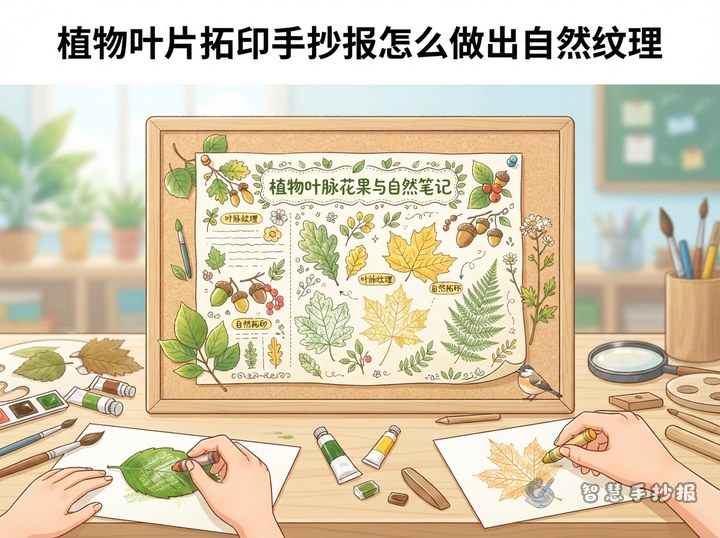
Build the Page Around One Big Leaf
Draw the largest leaf in the center and place the main title inside it. Arrange smaller leaves around it, each linked to a short section. Put “My Observation Notes” on one side, “Leaf Shape Match-Up” on the other, and a plant-care message along the bottom.
- Use light green, grass green, and earthy yellow as the main colors.
- Draw veins with thin lines spreading from the center vein.
- Make text boxes look like small labels, dew drops, or garden signs.
- Keep each text block to three or four lines so the drawings have room.
A Closing Paragraph to Use
“I discovered that leaves around school have many different shapes. Some look like hands, some look like little boats, and some are as thin as needles. When we look carefully, every leaf holds a small secret from nature. Let us care for plants and record the beauty we notice.”
Check Before You Finish
Make sure the title is clear, every leaf has a feature note, and your observation includes a time and place. Add a final reminder such as “Observe gently and protect plants.” To arrange titles, borders, and sections more easily, continue creating your project in the WeChat mini program, Wisdom Handwritten Newspaper.