Why a dandelion deserves a whole page
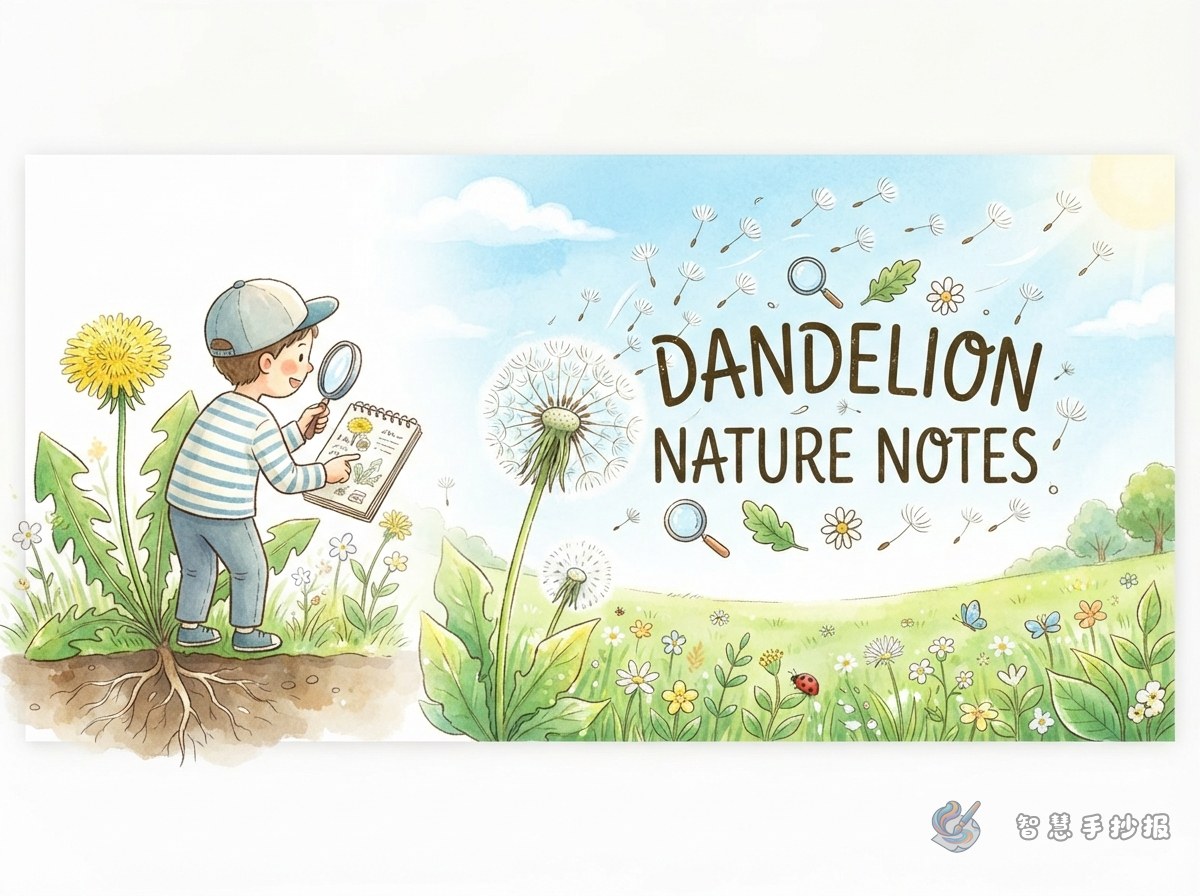
Dandelions grow in school grounds, small gardens and along pavements, so a single plant gives you leaves, veins, flowers, stems, seeds and drifting fluff in one place. That matches the idea of a leaf-flower-fruit study without any long trip.
The plant even changes within one day: the flower opens in the morning and closes towards the evening. Look twice, once early and once late, and you already have honest notes to write down.
Plan four observation boxes before you write
Lightly divide the sheet into four areas in pencil, then give each one a clear job.
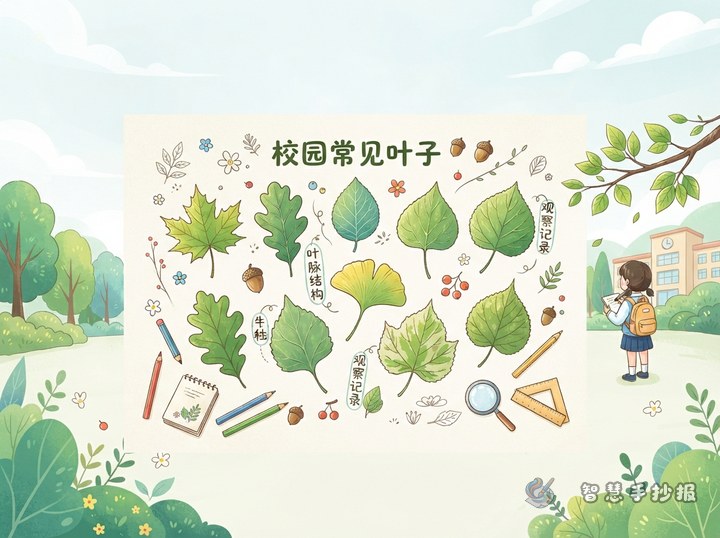
- Leaf vein file: draw one leaf with its toothed edge, a strong middle vein and thinner side veins spreading outwards. Add the line: leaves lie flat on the ground and the veins branch like a small tree.
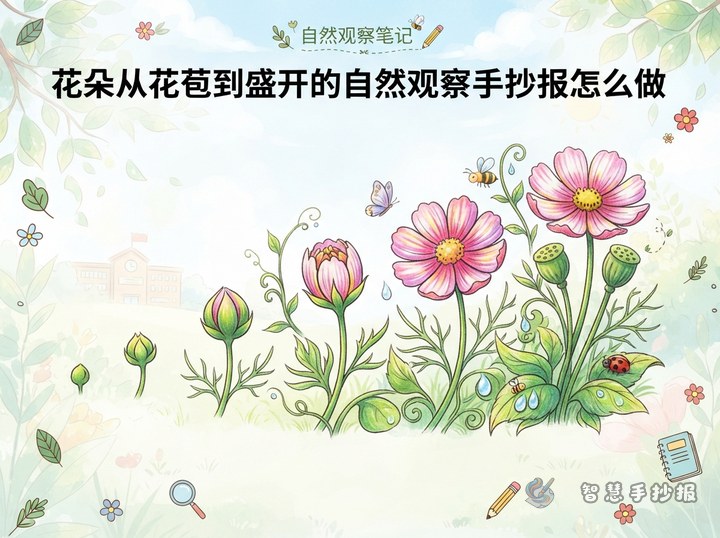
- Flower record: draw an open flower and a closed bud side by side, and write: open in the morning, closed in the evening.
- Seeds and wind: sketch the white seed head and label it: each seed carries a tiny parachute and travels by wind.
- My observation diary: leave three or four lines for the date, the weather and one change you saw.
Keep the boxes different sizes
The leaf and the seed head are your main pictures, so give them larger squares. Put the flower and the diary in slimmer rectangles beside them. When the shapes differ, the page reads like a field record instead of four even cards.
Short sentences you can copy onto the page
Nature journals work best with short lines, one discovery at a time. Change these to match what you really saw.
- The edge of the leaf is toothed and soft to touch.
- The flower stem is hollow and gives white sap when broken.
- One flower is made of many thin petals around a centre.
- When the seeds ripen they become a white ball that blows apart.
- The same plant can hold a bud, an open flower and a seed head.
- It was windy today, so the seed head is smaller than yesterday.
Drawing the leaf veins and the fluffy seed head
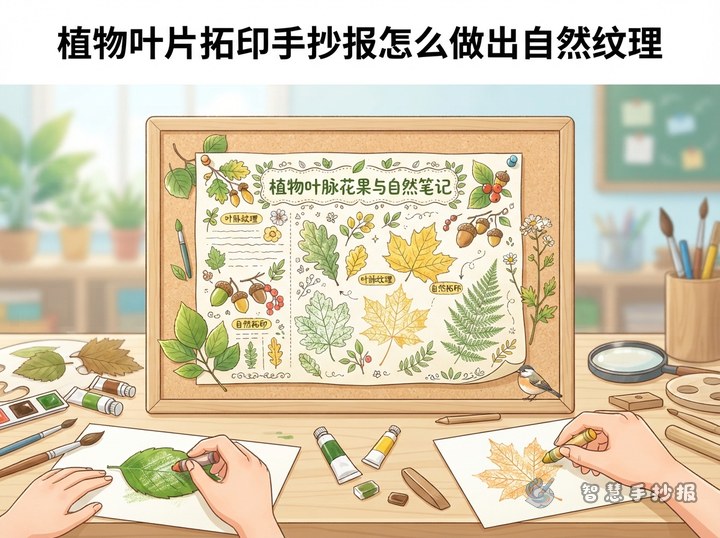
Sketch the leaf outline lightly in pencil or pale green. Draw one main vein from the stalk to the tip, then add shorter side veins left and right, thinner as they reach the tip. Perfect symmetry is not needed, and slight differences look more natural.
For the seed head, do not draw every single seed. Draw a pale circle, then add about a dozen fine lines spreading outwards from the edge, with a small dot at the end of each as a seed. Leave some space inside the circle so the head looks light.
Colours, borders and a final check
Build the page from pale green, soft yellow and white, with a darker green or brown for headings and borders. You can finish the bottom edge of the sheet as a grass line so the four boxes seem to sit in a meadow.
Before you start writing, check three things: does the title say dandelion nature journal, is every box filled with real content, and does the diary include a date and the weather? Once those are done, the poster is complete. If the layout still feels uncertain, open the WeChat mini program Smart Handwritten Newspaper, choose a plant template and drop your own observations into it.