
Build the page around a help-seeking route
Make the main idea a clear sequence: notice that something feels wrong, move to a safer place, tell a trusted adult, and keep seeking help. A route with four arrows helps readers see that they do not have to handle a frightening, confusing, or uncomfortable situation alone.
Four steps to show what to do next
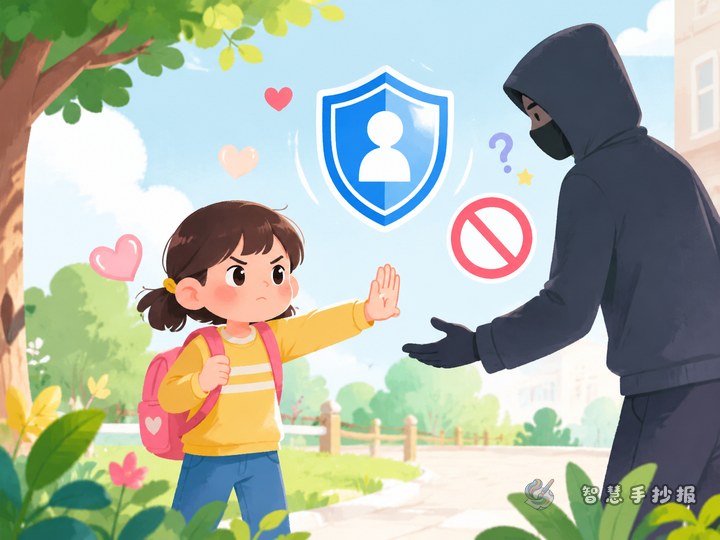
- Move away: Go where other adults, teachers, or staff members are present if you can. If you cannot leave, call out loudly for help.
- Find a trusted adult: Tell a parent, teacher, school nurse, or another adult who will listen. You can say, “I need help.”
- Tell what happened: Share what you remember about what happened, where, and when. It is okay not to remember everything; do not guess or fill in details.
- Keep asking for help: If the first adult does not understand or act, tell another trusted adult until someone takes your concern seriously.
Add a reminder beside the route: “If something uncomfortable happens, it is not your fault. You deserve to be heard and helped.”
Use speech bubbles for words children can borrow
Add a note titled “Things I can say,” with phrases such as “I don't feel safe. Please stay with me,” “This made me uncomfortable, and I want to tell you,” and “Please listen to the whole story.” A small “Adults I can talk to” section can help students name familiar parents, teachers, or other trusted school staff. Do not ask readers to share personal experiences, and avoid blame, threats, or language that suggests a child is responsible.
Make the route easy to follow
Connect the four steps with a vertical path or a loop of arrows. Simple icons, such as a doorway, speech bubble, listening ear, and helping hand, can mark each action. Place the title at the top and the route in the center, leaving the edges for sample phrases and a short reminder. Use clear colors such as blue, green, and orange, and leave enough space between lines.
Check the message before displaying it
- Does the page clearly say that a child can seek help from a trusted adult?
- Does it avoid blaming the child, demanding secrecy, or promising a particular outcome?
- Are the steps brief and easy to read from the displayed poster?
Use the Zhihui Shouchaobao WeChat mini program to organize the title, sections, and a layout sketch before completing the poster by hand.