What Makes a Winter Solstice Handwritten Newspaper Different
Among the twenty-four solar terms, the winter solstice stands out. It usually falls between December 21 and 23 and marks the shortest day and the longest night in the northern hemisphere. After that day, daylight slowly grows again, which is why old sayings describe it as the moment yang energy returns. That gives a winter solstice poster two natural tracks: solar term customs on one side, and winter weather on the other.
Three Solid Blocks of Content That Fill the Page
The shortest day and the longest night
Draw a horizontal timeline and compare a summer day with a winter solstice day using colour blocks of different lengths. Add a caption such as: On the winter solstice, the day is shortest and the shadow is longest.
The three pentads
Traditional records describe three pentads: earthworms curl up in the soil, deer begin to shed their antlers, and spring water starts to move underground. Make three small boxes, one for each pentad, with a simple drawing beside each one.
The counting-nine song
The winter solstice marks the start of counting the nines. Every nine days makes one nine, and nine nines add up to eighty-one days.
- First and second nine: too cold to reach out a hand.
- Third and fourth nine: walk on the ice.
- Fifth and sixth nine: willows along the river come into view.
- Seventh nine: the river thaws; eighth nine: wild geese return.
- Ninth nine plus nine more: oxen plough the fields again.
Northern and Southern Customs Side by Side
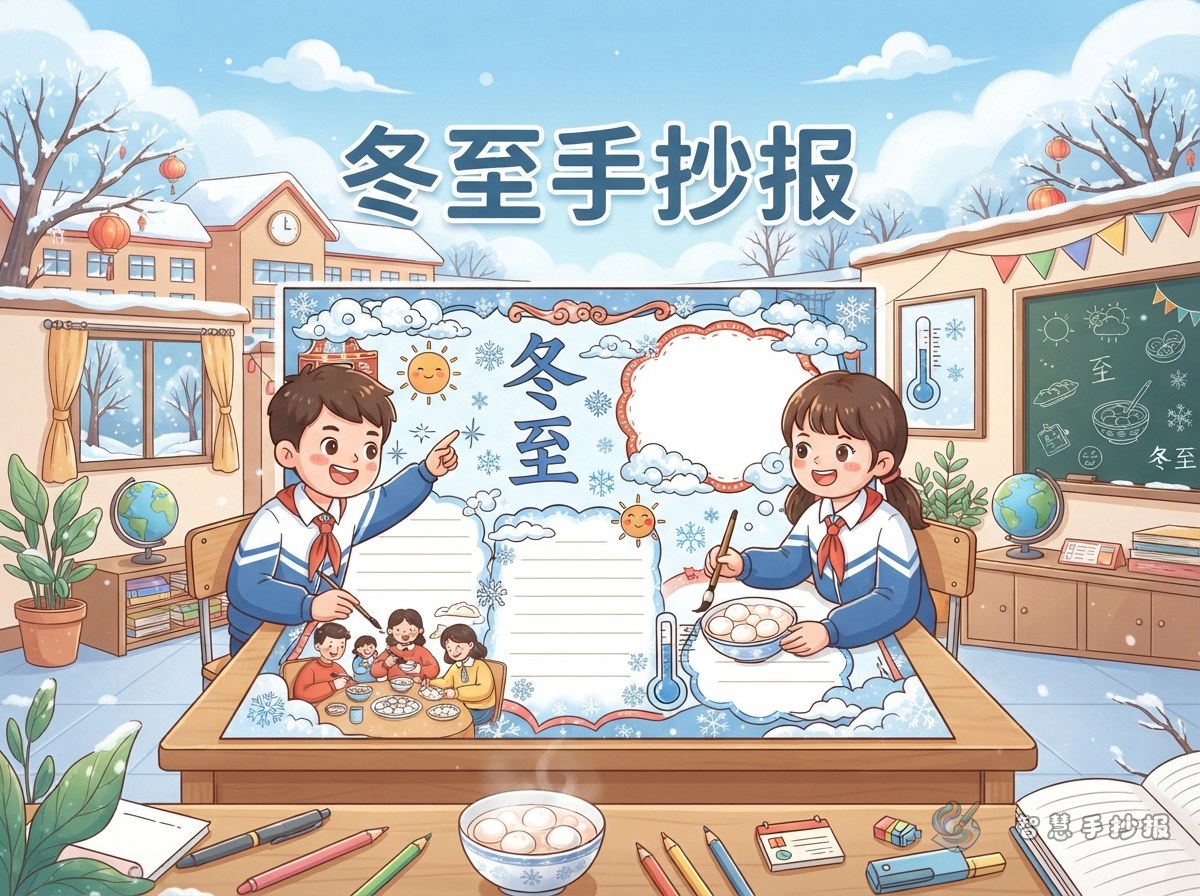
Two facing columns work best for customs, because the contrast is easy to see at a glance.
- North: people eat dumplings; an old saying jokes that skipping them on this day will freeze your ears.
- South: people eat tangyuan, sweet glutinous rice balls, as a symbol of family reunion.
- Shared customs: honouring ancestors and colouring a cold-dispelling chart.
The cold-dispelling chart is a wonderful page element: draw one plum branch with nine blossoms, colour one petal a day, and by the time all eighty-one petals are filled, spring has arrived.
A Simple Layout Plan and Colour Scheme
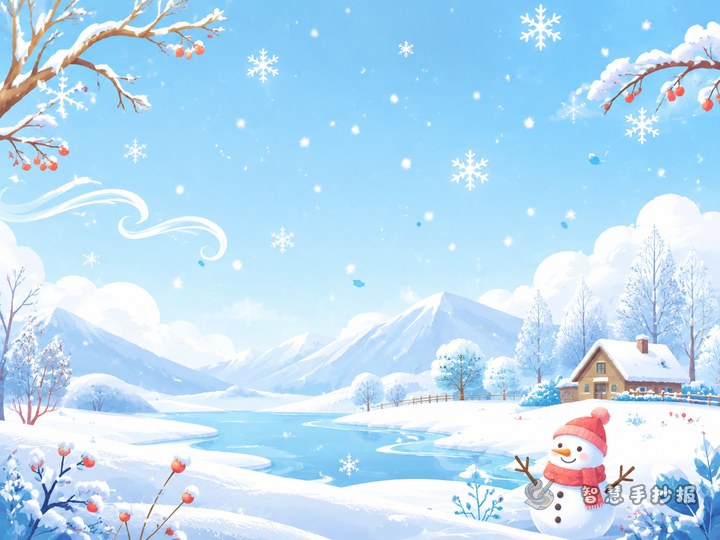
- Put the big title in the top left corner or centred at the top, with snowflakes, plum blossoms or a steaming bowl beside it.
- Use the middle of the page for a solar term fact box listing the date, the sun's position and the day length.
- Save a tall column on the right for customs, a wide strip at the lower left for the counting-nine song, and one small box at the lower right for weather news.
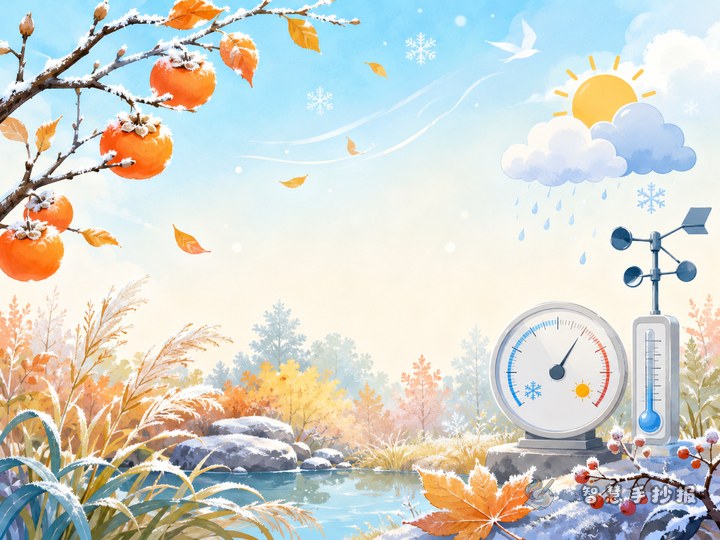
- Draw a border along the bottom with scarves, mittens, a thermometer and a snowman to make the cold visible.
For colour, keep the main palette in blue, white and light grey, then add a touch of red or orange on the dumplings and tangyuan. The warm-cold contrast makes the whole page pop.
Adding a Cold-Weather Science Box
After the winter solstice comes the coldest stretch of the year, so this box is a natural place for simple weather science.
- Why is the solstice not the coldest day? The ground is still releasing stored heat, and temperatures usually bottom out a few weeks later.
- When the temperature drops, wear a hat, scarf and gloves, and keep ears, hands and feet warm.
- If you heat a room in winter, air it out for a few minutes every day.
- Frost and fog often form on cold mornings, so watch for slippery roads on the way to school.
Copy-Ready Lines and Section Titles
- The winter solstice is as important as the New Year, a small reunion for every family.
- Daylight is short, the night is long; dumplings steamed, the family gathers round.
- Section title ideas: Solar Term File, Three Pentads, Counting the Nines, Dumplings and Tangyuan, Weather Watch.
Once the sections are planned and drawing space is left open, most of the work is done. If you would rather start from a ready-made layout and simply swap the borders and lettering, open the Smart Handwritten Newspaper mini program in WeChat and keep building from there.