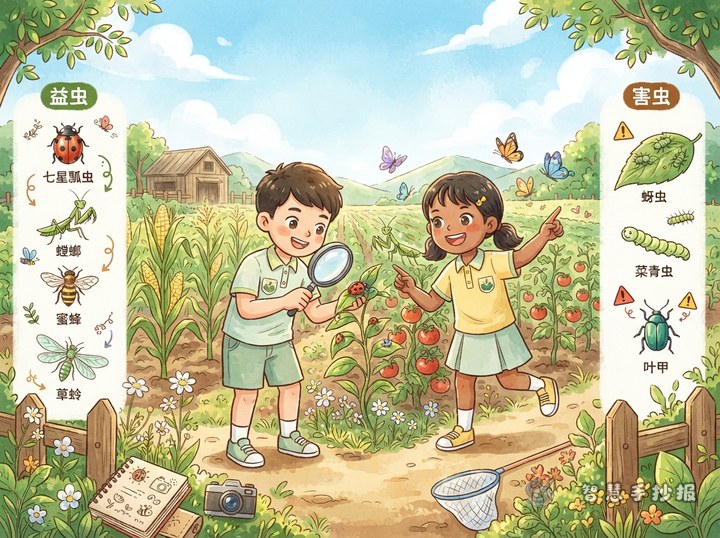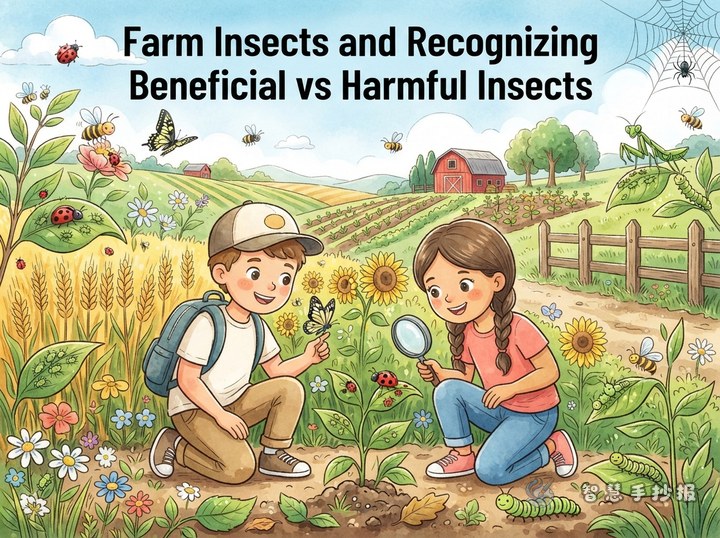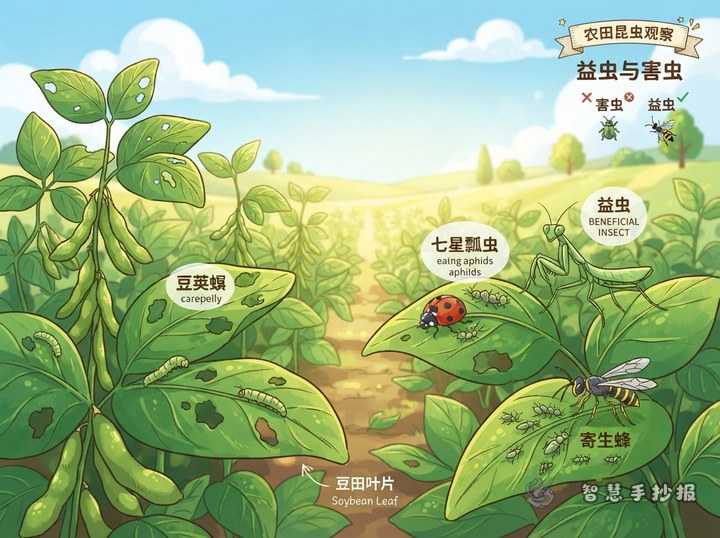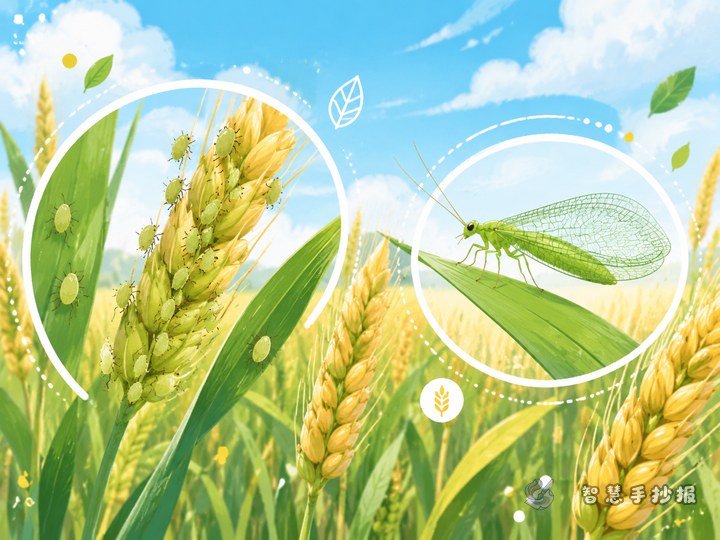
Start With One Simple Idea
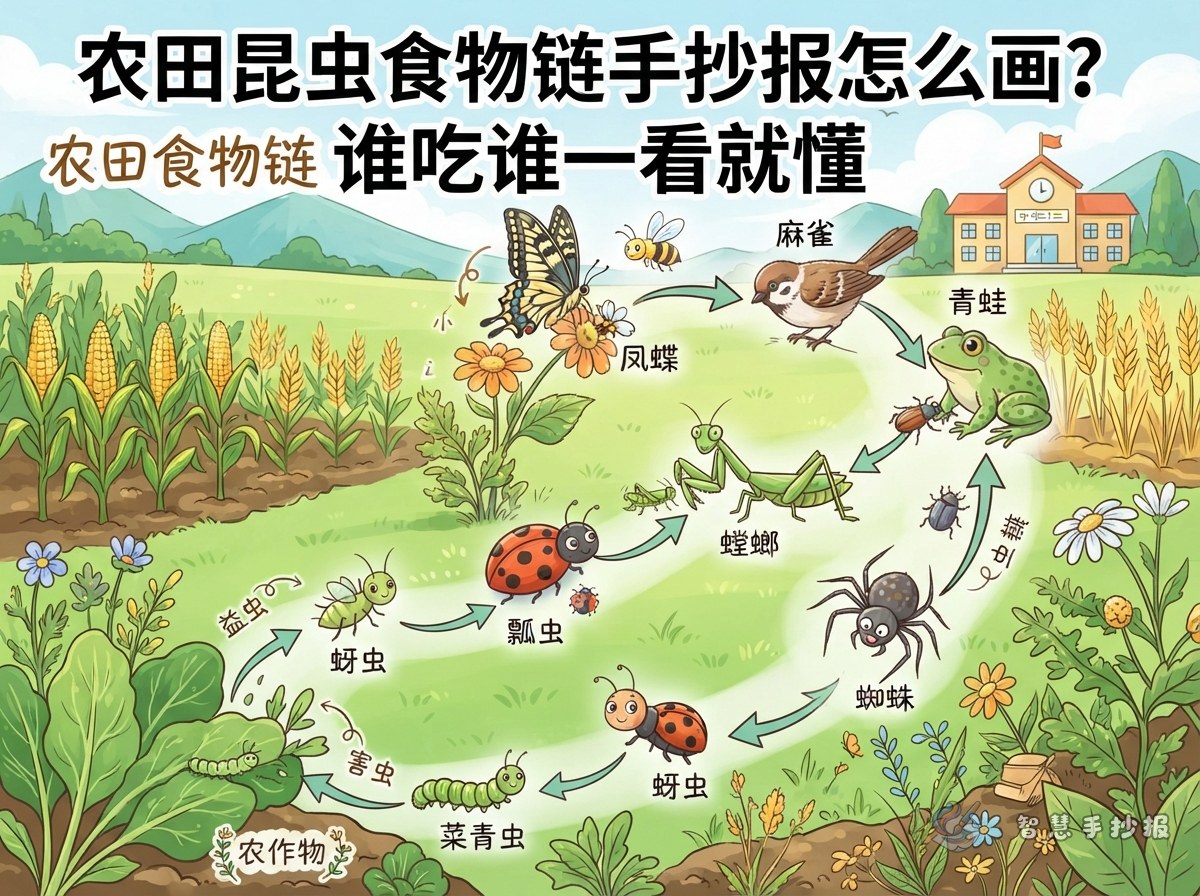
Instead of listing helpful insects on the left and pests on the right, try drawing a food chain. Crops sit at the bottom, pests eat the crops, and helpful insects eat the pests. A few arrows turn a plain list into a picture that explains itself.
The main line of your poster can be: crop → pest → helpful insect → larger predator.
Four Farmland Food Chains You Can Draw
Pick three or four, then choose one to draw large as the centerpiece.
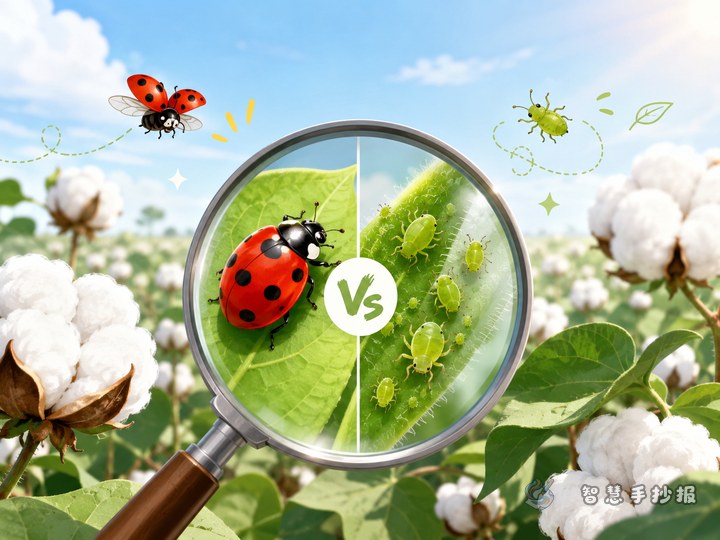
- Wheat field: wheat → aphids → ladybugs and lacewings
- Rice field: rice → planthoppers and stem borers → spiders, frogs, parasitic wasps
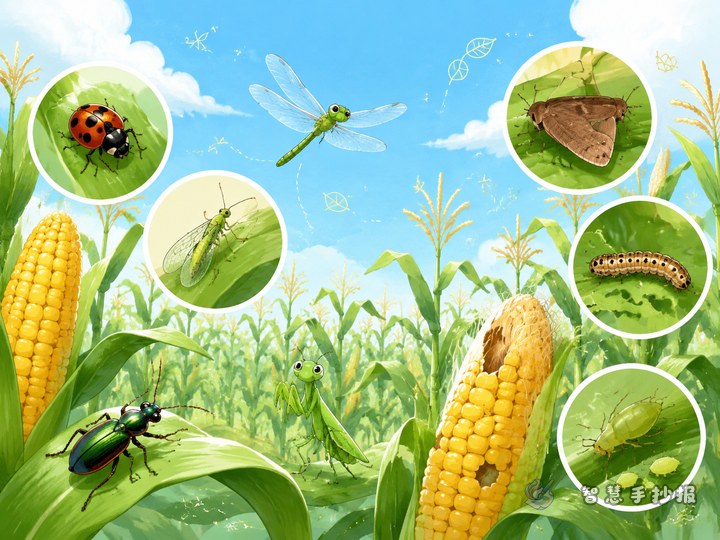
- Corn field: corn → corn borers and aphids → trichogramma wasps, ladybugs, praying mantises
- Vegetable plot: leafy greens → cabbage worms and aphids → mantises, spiders, hoverfly larvae
Remember the arrow rule: the arrow points from the food to the eater. Add a small box in a corner of your poster that explains this, so readers do not get confused.
Marking Helpful Insects and Pests Clearly
- Draw crops in green as simple wheat heads, rice stalks, or leaves.
- Use orange for pests and give them a wavy outline.
- Use blue or purple for helpful insects and add a tiny magnifying glass.
- Put frogs, spiders, and birds in gray, and note in the legend that they are not insects but still helpers.
Leave a legend at the bottom of the drawing so the colors are easy to read.
Three Layout Options: Steps, Pyramid, or Circle
Step layout
Draw the chain as stairs going up, changing color at each level. Put it on the left and keep a text column on the right.
Pyramid layout
Wide at the bottom, pointed at the top. Crops fill the base, pests sit in the middle, and helpful insects crown the top.
Circle layout
Arrange crops, pests, and helpers in a ring with arrows pointing clockwise, and put the title in the middle.
Choose one main layout only; mixing all three makes the page look crowded.
Text Snippets and Handy Tips
- Pests eat crops and helpful insects eat pests, so every field hosts a quiet contest.
- Ladybugs, lacewings, hoverflies, parasitic wasps, mantises, and spiders are common helpers on farmland.
- Protecting helpful insects means leaving them safe places to live and grow.
- When you identify an insect, first notice where it is and what it is doing, then look at its shape.
Keep your title large, write three or four lines per paragraph, and use a ruler for box borders. If you want to save time, plan the layout first, open the 智慧手抄报 WeChat mini program to pick a template and fill in the text, then finish it by hand.