Become a Field Insect Detective
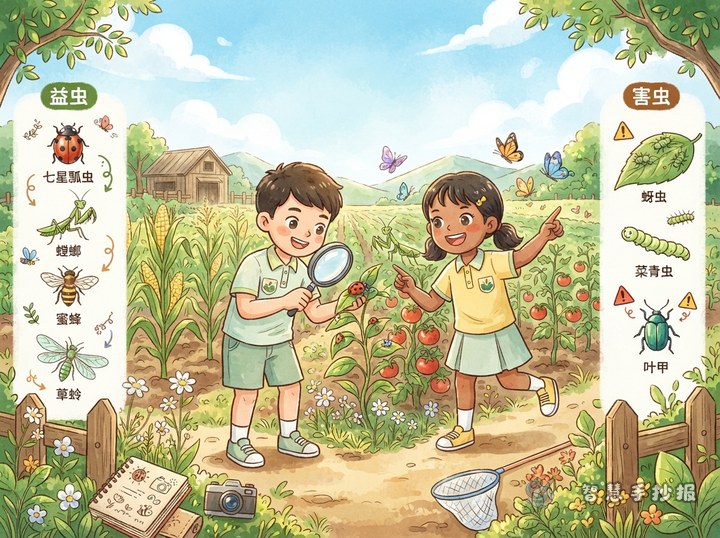
This handwritten newspaper can be built around the clues insects leave behind. Instead of labeling every insect as helpful or harmful at once, observe what is happening on the leaves, stems, flowers, and soil. Draw a field in the center, then connect it to magnifying glasses, footprints, and arrows to create a lively detective theme.
A useful observation order: first note where the insect appears, then examine its shape and behavior, and finally consider how the crop may be affected. This makes the page more thoughtful than a simple list of insect names.
Reading Clues on Leaves
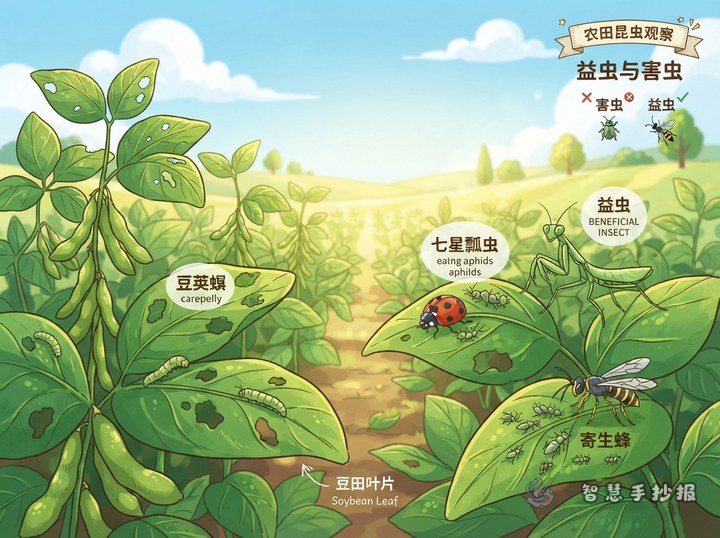
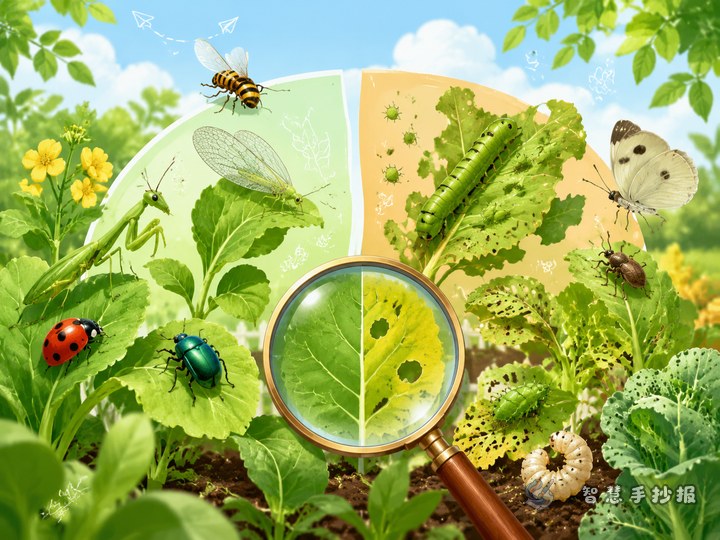
- Small holes or missing edges: these may be caused by insects that chew plants. Look for the insect itself, droppings, or a hiding place.
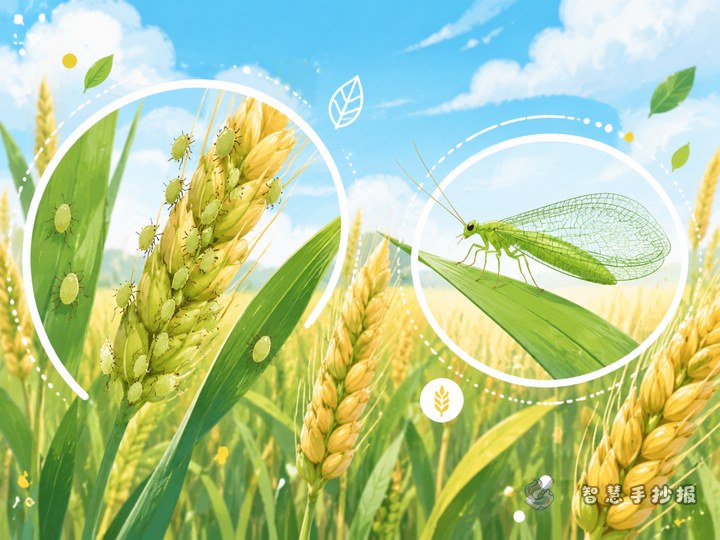
- Curling or yellowing leaves: aphids and other sap-feeding insects may be found on the underside, although drought and plant diseases can cause similar signs.
- Sticky surfaces or tiny dark spots: these can be clues that lead you to aphids or other small insects.
- Fine threads between leaves: check carefully for caterpillars or other small creatures hiding inside.
Draw four small icons for this section and label them with hole, curled leaf, sticky surface, and fine threads. Add the reminder: observe first, decide later.
Insect Character Cards
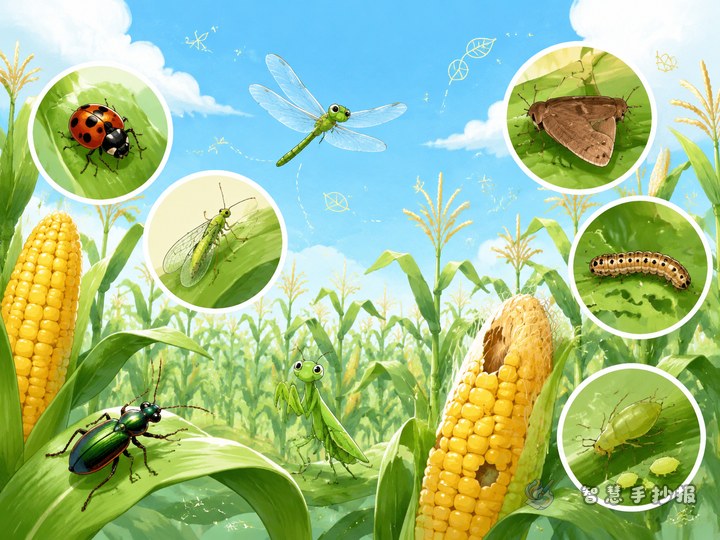
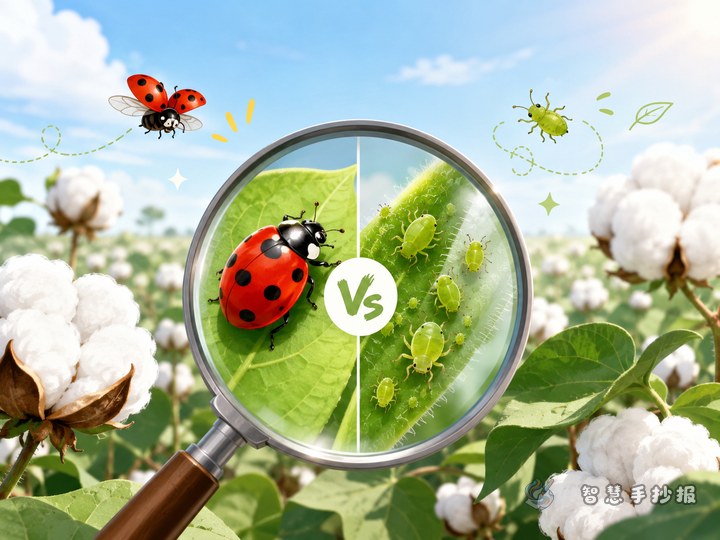
Design the main knowledge section as a set of insect character cards. Each card can include three points: appearance clues, common behavior, and influence on the field. Ladybugs are often shown as round red beetles, and some ladybugs feed on aphids. Lacewing adults have delicate transparent wings, while their larvae can also prey on small pests. Bees and butterflies visit flowers and help with pollination.
For the pest cards, you may choose aphids, cabbage worms, or leaf beetles. Remind readers that an insect can look different at different stages of life. Identification should combine the insect's appearance with leaf damage, population, and location. Never treat every small insect as harmful, and do not touch unfamiliar insects.
A Simple Rule for Telling Roles Apart
Check the shape, watch the behavior; check the leaves, consider the number; identify first, protect wisely. An insect's role cannot be decided by color alone. Some insects feed on plants, some prey on other insects, and some help pollinate flowers. Draw a small balance scale: one side can say chewing crops and causing damage, while the other says eating pests and helping pollination. This shows why careful observation matters.
Turn the Information into a Clear Layout
- Place the title Field Insect Detective at the top, decorated with a magnifying glass, leaves, and small insects.
- Use the left side for a leaf clue diagram showing holes, curling, sticky surfaces, and fine threads.
- Place two or three enlarged insect character cards in the center.
- Use the right side for the observation rule and a safe-observation reminder.
- End with the sentence: Know insects, protect helpful life, and keep fields full of vitality.
Try leaf green, soil brown, and flower yellow as the main colors. Use brighter colors for helpful insects and orange borders for pest clues, without making any insect look frightening. After drafting the words and sketches, you can continue arranging the sections and layout in the WeChat Mini Program 智慧手抄报 to make the page cleaner.