Build the poster around a traveling-continent question
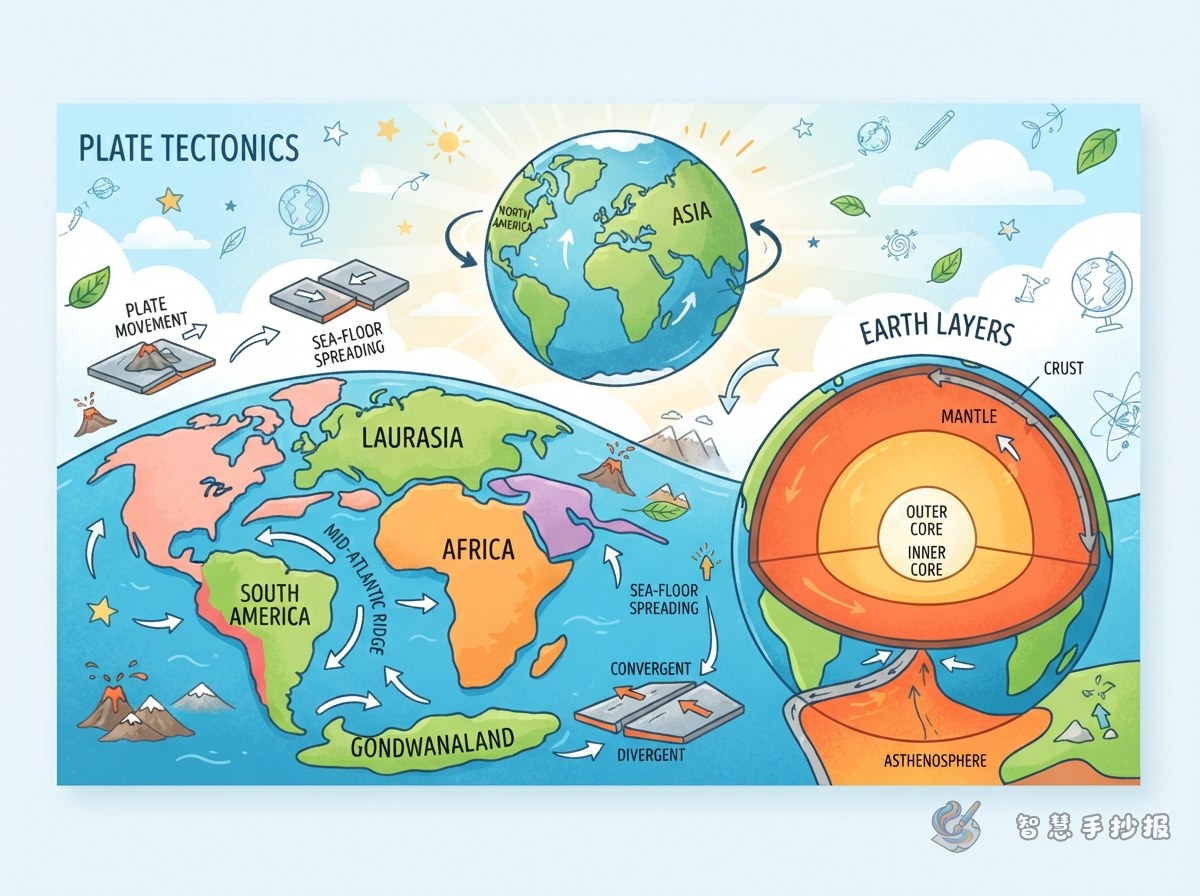
This newspaper can begin with Wegener's idea of continental drift and ask, Can continents travel? Use the subtitle “From an ancient supercontinent to moving plates.” The question gives the page a clear focus and makes a globe-and-puzzle illustration easy to create.
Turn four clues into evidence cards
Draw South America and Africa as matching puzzle pieces in the center. Place four small “evidence cards” around them, keeping each explanation to two or three short sentences.
- Matching coastlines: Parts of the Atlantic coasts look as though they could fit together.
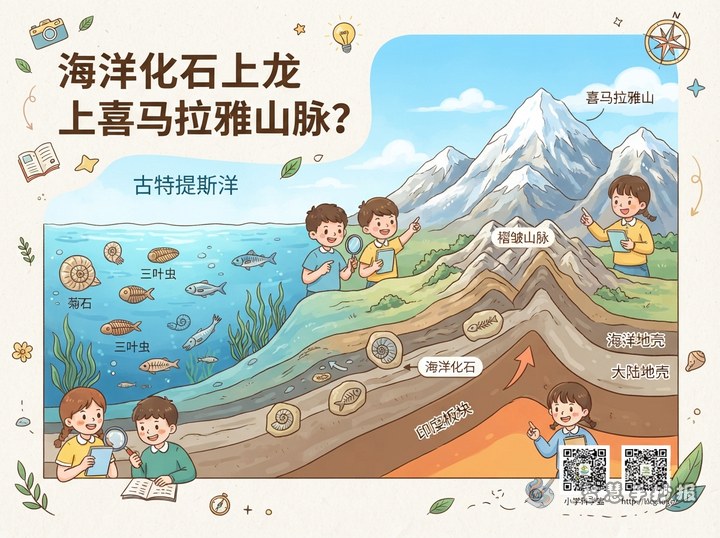
- Fossil clues: The same ancient plant and animal fossils have been found on continents now far apart.
- Similar rocks: Some rock layers on opposite sides of the ocean match in age and structure.
- Climate records: Glacial traces in places that are warm today suggest that continents were once in different locations.
Explain drift with moving plates
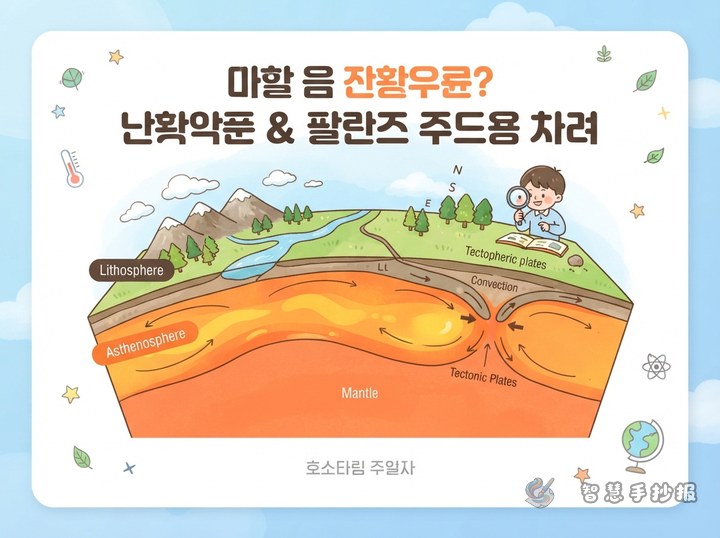
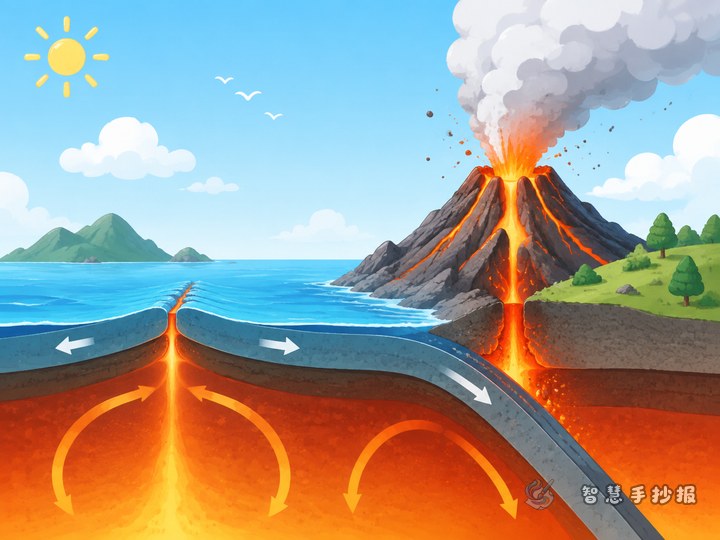
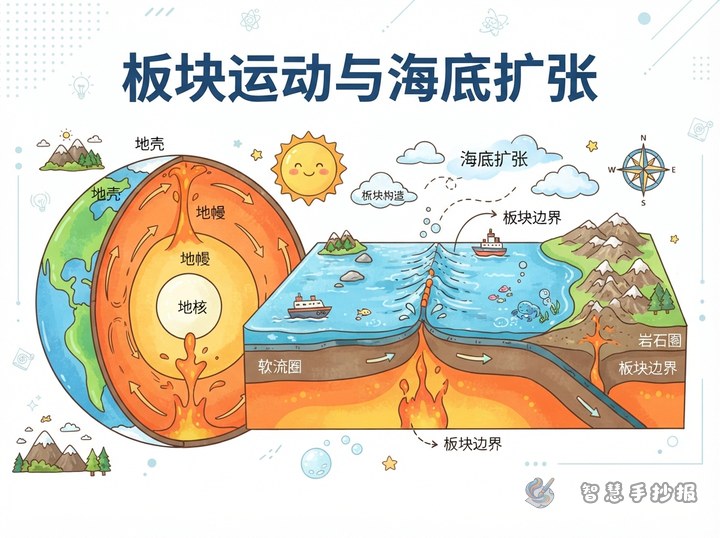
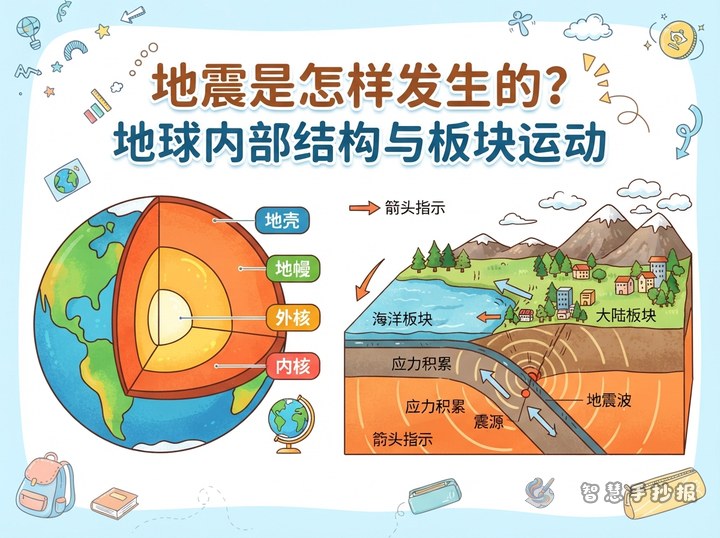
Continental drift first suggested that continents can move. Plate tectonics gives the modern explanation: Earth’s outer layer is divided into plates, and continents and ocean floors move with those plates. Slowly moving, hot material in the mantle is one condition related to plate motion.
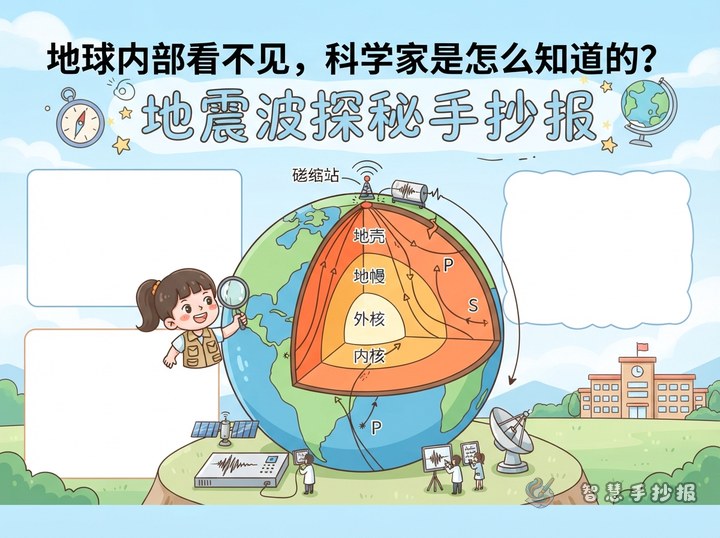
Add a simple cross-section on one side labeled “crust and plates,” “mantle,” and “core.” Curved arrows can show slow mantle flow, while small arrows above show plate movement. Make it clear that this movement is extremely slow.
Tell the story with a three-part timeline
- Long ago: Many continents were joined in a larger ancient landmass.
- Then they separated: The landmass broke apart and continents moved in different directions with the plates.
- Today: Plates are still moving, so the arrangement of land and sea continues to change slowly.
Three small pictures labeled “joined, splitting, today” are enough. This also prevents the common mistake of showing continents moving suddenly or quickly.
Color plan and finishing line
Use blue for oceans, green or brown for land, and orange-red only for the deep interior and arrows. A circular globe can fill the center, evidence cards can sit on the left, an Earth cross-section on the right, and the timeline along the bottom. Add small fossils, rocks, magnifying glasses, or compasses in the corners.
Finish with this line: Continents are not fixed pieces of land; they are taking a slow and very long journey with Earth’s plates. After organizing the text, continue designing headings, borders, and sections in the Wisdom Handwritten Newspaper WeChat mini program.