Choose a clear theme: Where do earthquakes come from?
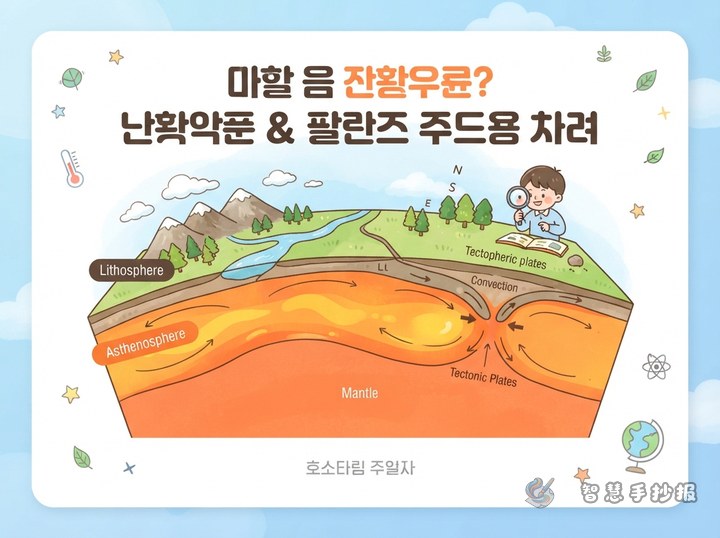
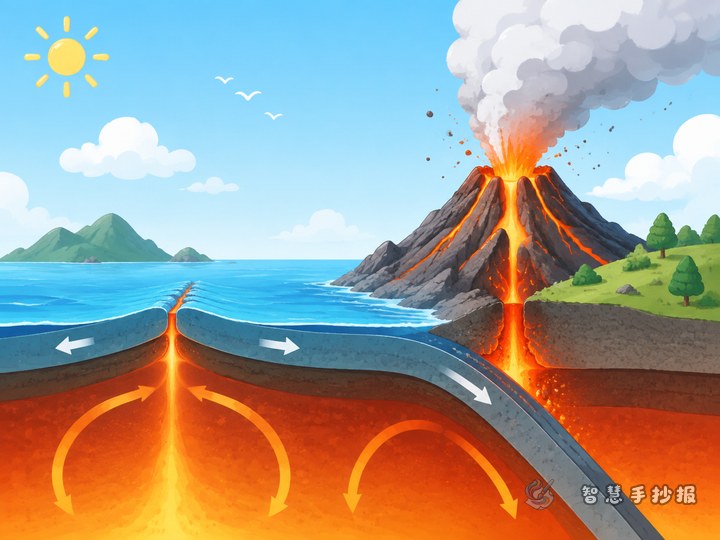
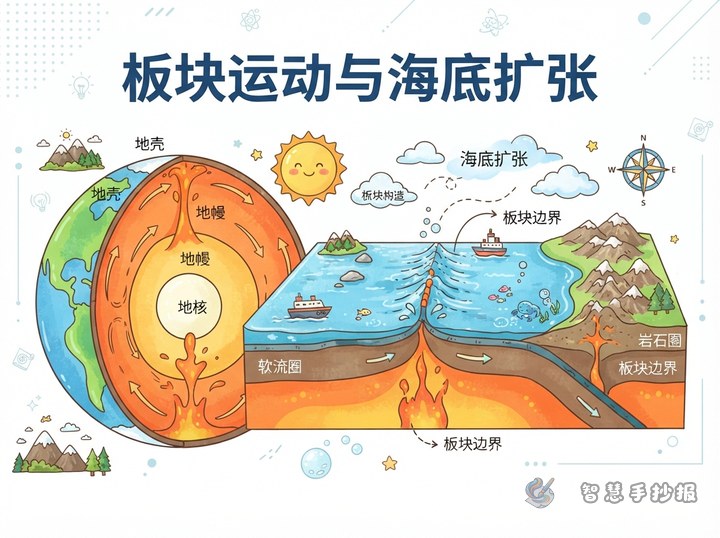
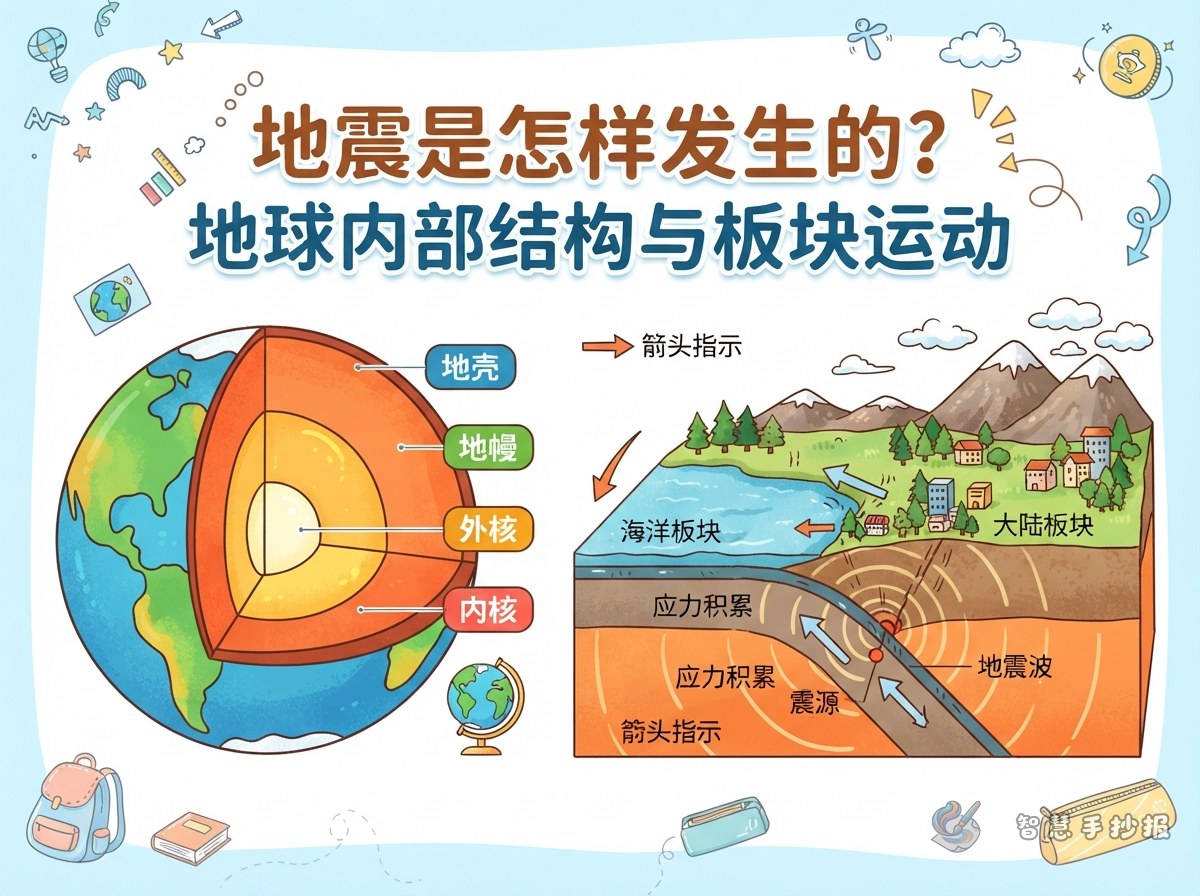
This handwritten newspaper can focus on “How do earthquakes happen?” and connect Earth’s internal structure, lithospheric plates, and the formation of earthquakes in one easy-to-follow story. Draw an underground cross-section in the center and use arrows to show plates pushing together, pulling apart, or sliding past each other. Short explanations beside the drawing will make the science easy to understand.
Key facts to include
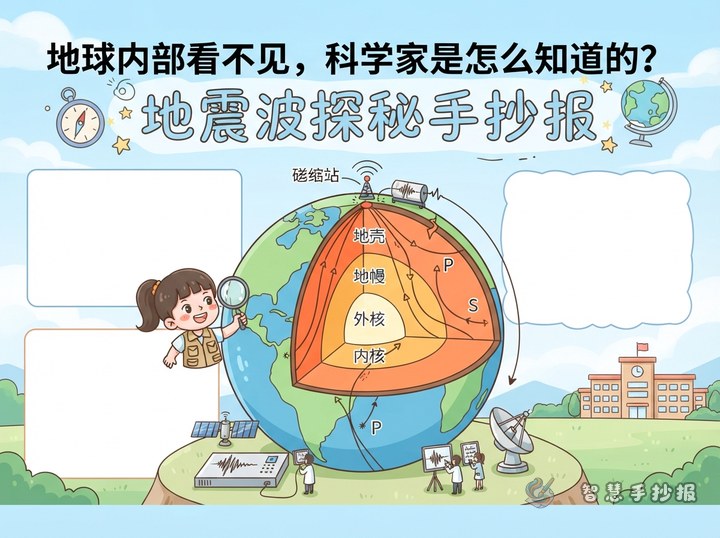
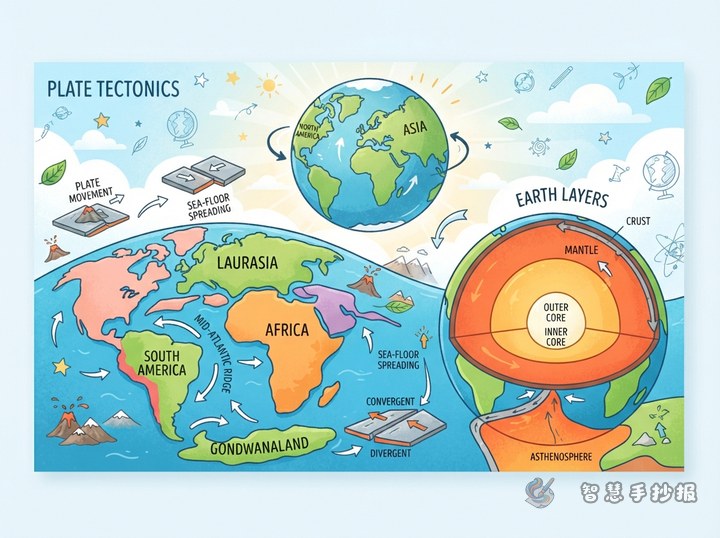
- Earth’s internal structure: Briefly introduce the crust, mantle, and core, including their positions and basic features.
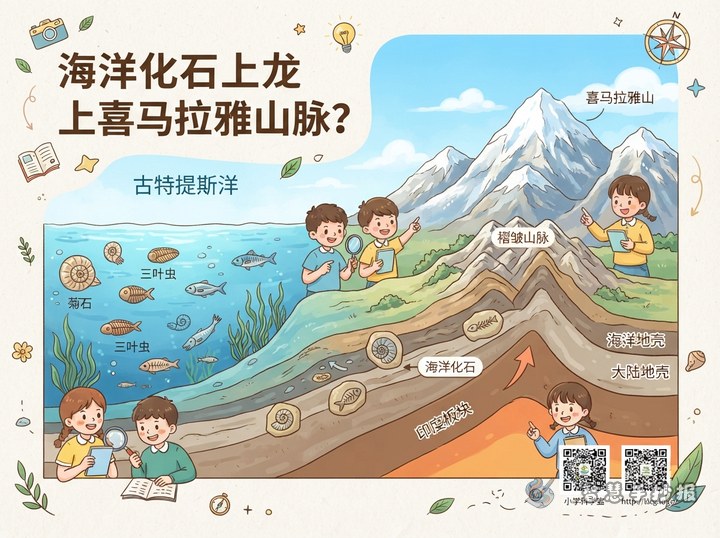
- Lithospheric plates: Explain that Earth’s rocky outer layer is divided into several large plates rather than being one unbroken piece.
- Cause of earthquakes: Plate movement can squeeze or stretch rocks. When the stored force is released suddenly, the ground shakes.
- Seismic waves: Add a small science box explaining that waves travel outward from the focus and can be recorded by seismographs.
- Safety reminders: Include practical advice such as staying calm, taking cover near sturdy furniture, and keeping away from windows and hanging objects.
A useful set of sections
Divide the page into four sections: “The World Beneath Our Feet,” “How Plates Move,” “Earthquake Formation in Three Steps,” and “Earthquake Safety Tips.” The three-step diagram can show plates moving slowly, rocks being squeezed, and stored energy being released suddenly. Keep each section short so the page remains easy to read and write.
Design the page like an underground exploration
Place the title at the top and decorate it with an Earth cross-section, seismic-wave lines, or a fault line. Put the largest Earth diagram in the middle, internal layers on the left, plate movement on the right, and safety tips along the bottom. Blue can represent the crust and oceans, orange-red can show the warm mantle, and dark gray can represent rocks and faults. Use a contrasting color for important terms.
Details that make the project clearer
The Earth cross-section does not need to look realistic. Clearly label the crust, mantle, core, plate boundary, and focus. Keep all arrows pointing in consistent directions and place each explanation close to its matching diagram. Avoid describing earthquakes as Earth’s anger; emphasize natural movement and scientific safety advice. After choosing the content, you can continue organizing the sections and designing the page in the WeChat mini program “Smart Handwritten Newspaper.”