Start with the key idea: how sound reaches our ears
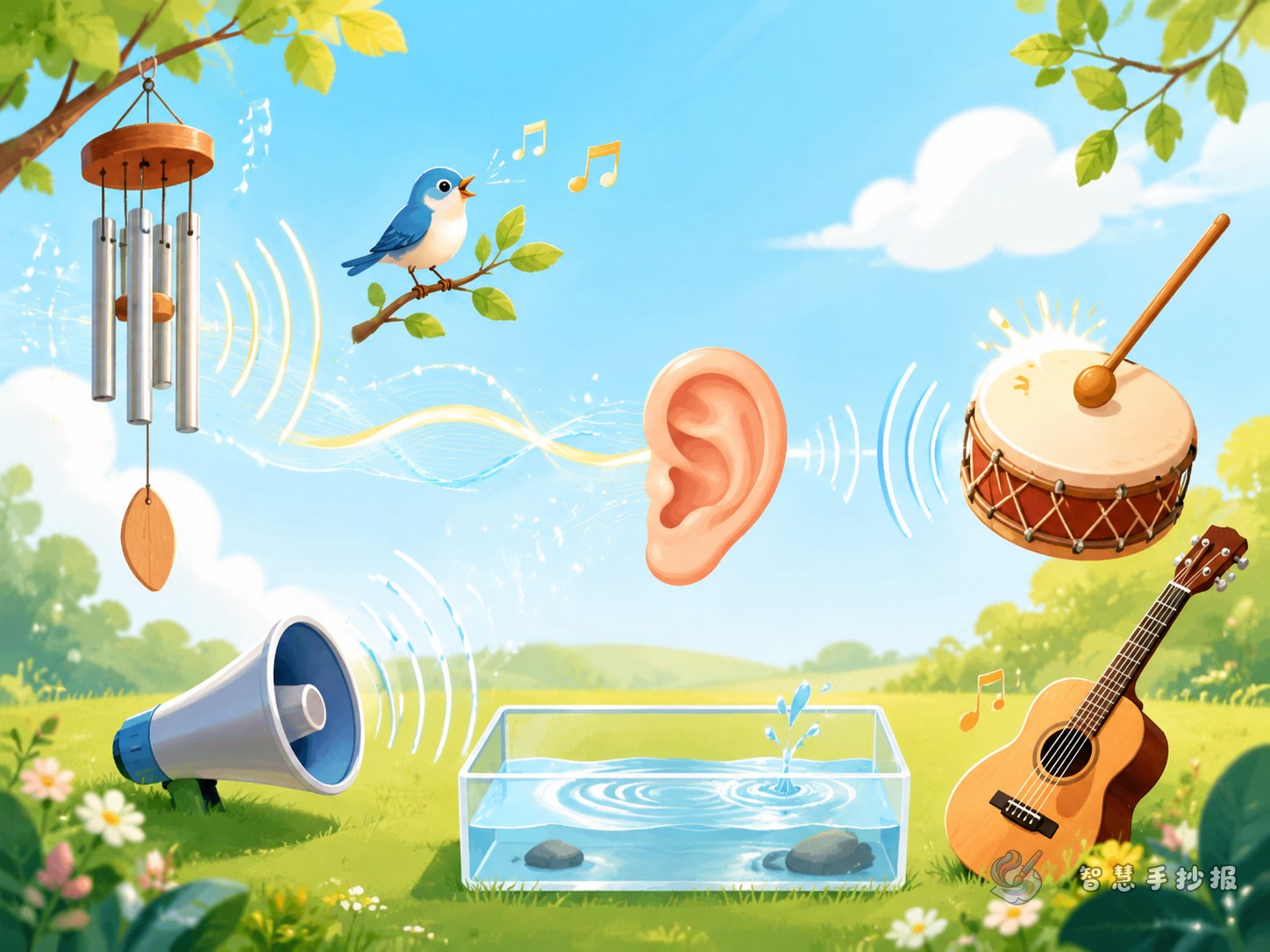
This handwritten newspaper can focus on one simple science point: sound is made by vibration and travels through a medium. You can explain it in an easy way. When a drum is hit, the drum surface vibrates. The air vibrates too, and that vibration travels to our ears. Then we hear sound. This makes the topic clear and suitable for young students.
A question-style headline such as “How Does Sound Travel to Our Ears?” works well because it feels natural and matches what children may really want to know.
Ready-to-use content sections for the page
Section 1: Where sound comes from
- Sound is usually produced by vibrating objects.
- A drum makes sound when its surface vibrates.
- When we speak, our vocal cords vibrate too.
Section 2: How sound travels
- Sound travels through air, so we can hear people talking.
- Sound can also travel through water and solid objects.
- Without a medium, sound cannot travel easily.
Section 3: Sound in daily life
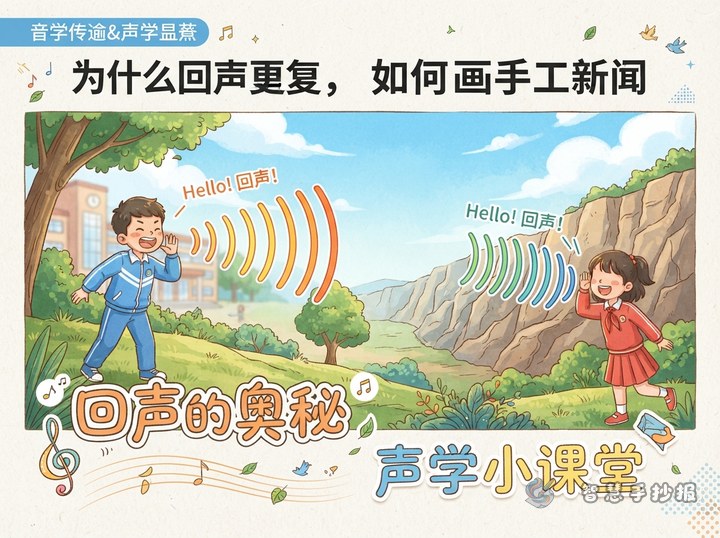
- You may hear an echo when shouting in the mountains.
- You can still hear sounds through a door because sound can pass through some materials.
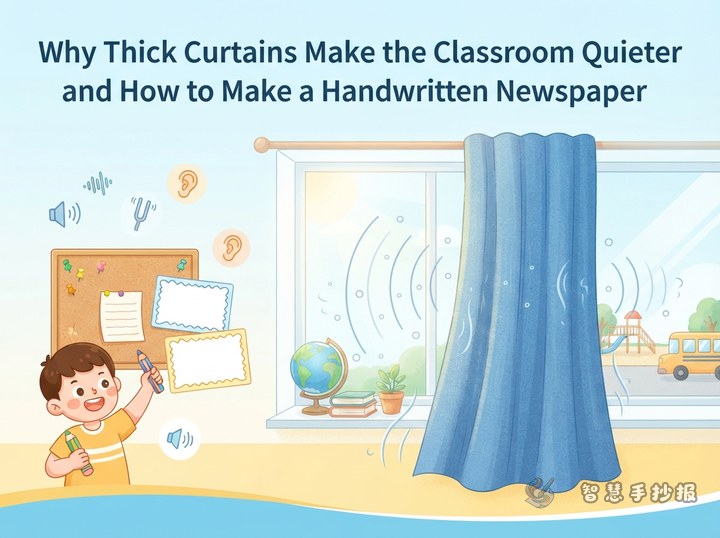
- Soft materials like blankets and curtains can help reduce noise.
Add interest with simple experiments
To make the handwritten newspaper more lively, include a small experiment corner. For example, place your hand on your throat while speaking to feel vibration. Flick a ruler hanging off the edge of a desk to hear different sounds. You can also make a string telephone with paper cups to show that sound can travel through solids.
Keep the experiment notes short and clear. Focus on what you did, what you noticed, and what it shows. That format is easier for students to write and for readers to understand quickly.
Layout ideas that look neat and student-friendly
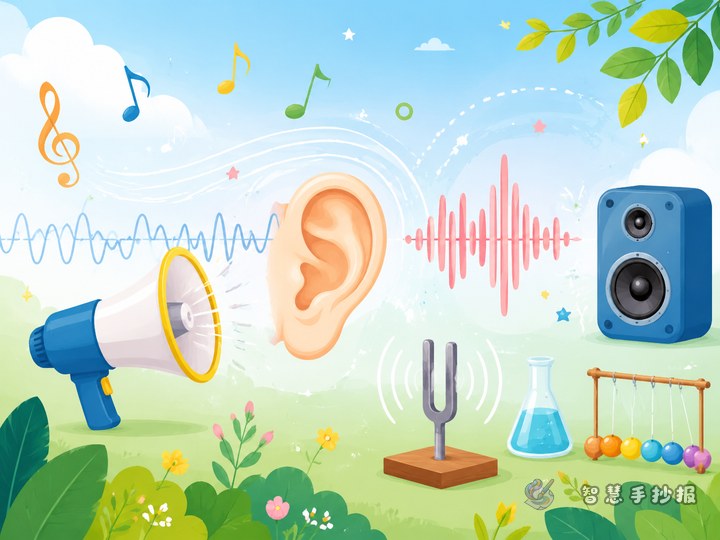
A good layout is a large title in the center with small sections around it. In the middle, draw an ear, sound waves, a drum, or a microphone. Around that, place sections such as “How Sound Is Made,” “How Sound Travels,” “Fun Experiments,” and “Noise Reduction Tips.” This keeps the whole page focused and balanced.
- Use blue, light purple, and bright yellow as the main colors.
- Decorate borders with waves, music notes, and curved sound lines.
- Highlight key words like vibration, air, echo, medium, and noise in bold writing.
A simple ending that completes the work
You can end with a short conclusion: sound is everywhere in our lives. Learning how sound is made and how it travels helps us understand the world better and reminds us to listen carefully, speak politely, and reduce noise.
If you want to continue improving titles, layout blocks, or decorative details, you can use the Zhihui Shouchaobao WeChat mini program to keep creating your handwritten newspaper.