Turn the Poster into an Alphabet Treasure Map
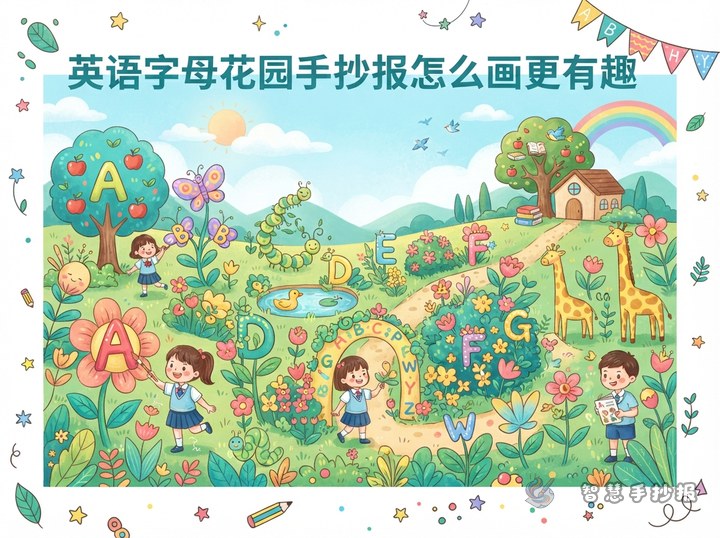
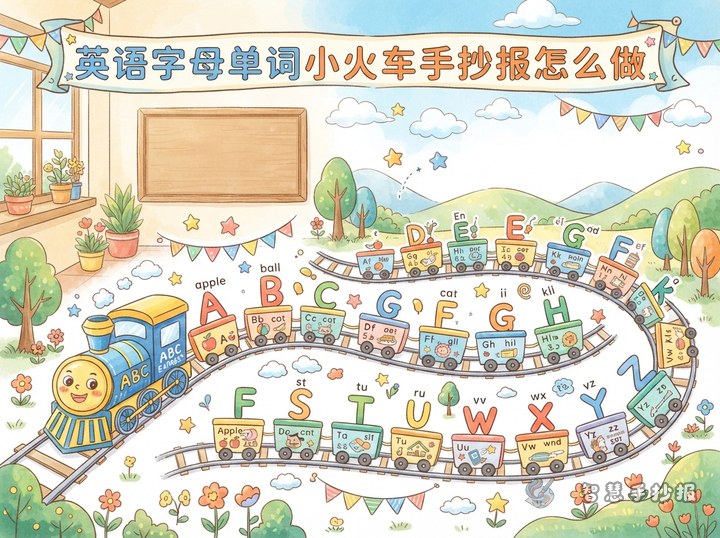
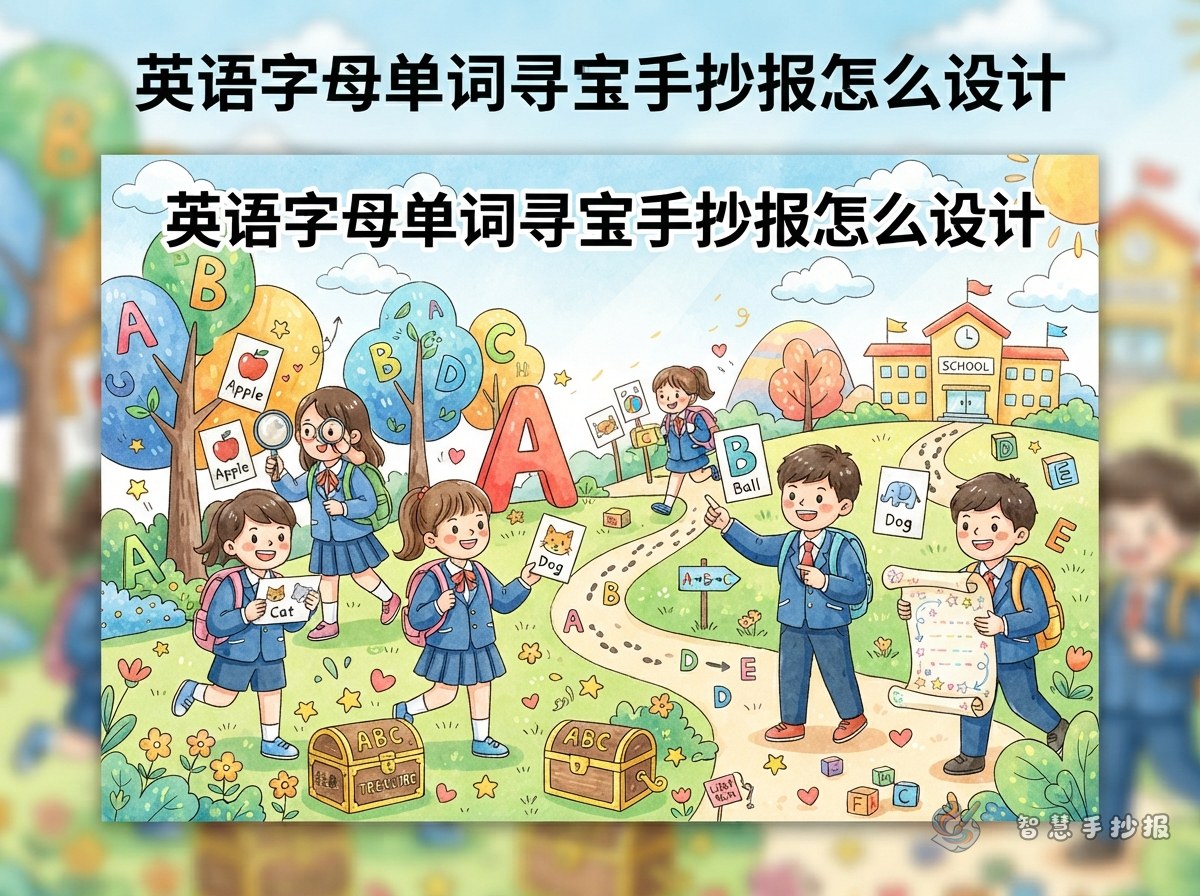
Build this beginner English poster around the story of searching for word treasures. Draw a winding path across the page, starting with the letter A and ending at a treasure chest labeled “Word Treasure.” Each stop on the path can introduce one or two letters, simple words, and matching pictures. This gives the poster a clear story instead of making it look like a plain list of letters.
Choose six to eight familiar letters, such as A, B, C, D, E, and F. It is not necessary to include all 26 letters. Clear letter shapes, correct spelling, and comfortable spacing are more useful for young learners.
Place Letters and Words Along the Route
Divide the route into several learning stops. For example, write A a—apple, B b—book, C c—cat, and D d—dog. If there is enough room, add E e—egg and F f—fish.
- Letter area: show the uppercase and lowercase forms together, such as A a.
- Word area: choose short, familiar words that are easy to illustrate.
- Picture area: draw a small apple, book, cat, or dog beside each word.
- Reading hint area: add a short pronunciation reminder only when needed, without covering the English word.
Add one tiny task at each stop, such as circling the lowercase letter, finding another word with the same beginning sound, or matching a word to a picture. Keep the instructions short so that first-grade students and beginners can understand them.
Use Treasure Details to Support Memory
Useful illustrations include a map, compass, magnifying glass, footprints, signposts, keys, and a treasure chest. The letters can appear on colorful signboards, while the words become clues hidden around the route. Write “Learn and Find!” or “Word Treasure” inside the chest as the visual ending of the poster.
Use several accent colors, but keep the English words in a consistent, readable style. Small stars, flags, and footprints can fill empty corners without pushing the main learning content too close together.
A Simple Layout Plan for Young Learners
- Lightly sketch the title, treasure route, and four to six stops with a pencil.
- Write “Alphabet Word Treasure Hunt” at the top, with a smaller subtitle if desired.
- Place each letter, word, and picture along the route in an easy reading order.
- Finish the map border, treasure chest, and decorations before applying the main colors.
Use bright colors for the title, but choose a dark outline for the main words. Leave a small “I Can Read” section for the letters and words learned on the poster. This makes review easier and helps a teacher quickly see the learning focus.
Small Activities for Empty Spaces
If there is still room, add a “Letter Hunt” section with A, B, C, and D. Children can search nearby pictures or words for the same beginning letter. Another option is a “Match the Word” activity connecting apple, book, cat, and dog to their pictures. These short activities fit the poster format better than long explanations and invite children to take part in the learning.
After planning the content, open the WeChat mini program 智慧手抄报 to continue arranging the title, sections, and colors into a complete poster layout.