Decide How the Vine Will Grow Across the Page
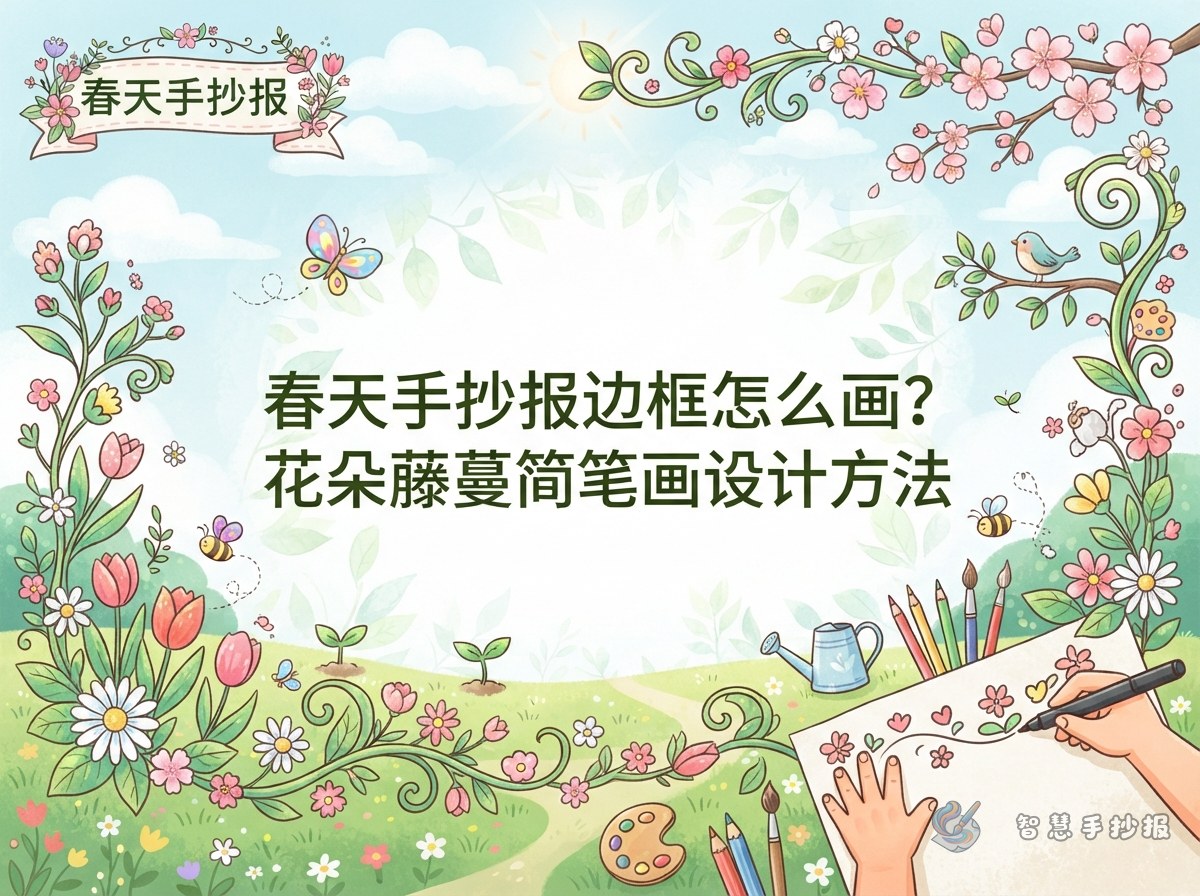
A flower-and-vine border does not need to form a rigid rectangle. Let a vine grow upward from the lower-left corner and continue naturally along the side or top. Before drawing it, lightly mark the positions of the heading, content sections, and illustrations so the decorations do not reduce the writing space.
For a page with plenty of text, decorate only one side and the bottom. If the page contains less writing, place matching flower clusters in the four corners to create balance without enclosing every section.
Build the Border One Simple Shape at a Time
- Sketch the main vine: Draw one smooth, gently waving line and avoid tight loops.
- Add leaves: Place small oval leaves alternately on both sides, with their tips following the direction of growth.
- Draw flowers: Start with a round center and surround it with five soft petals. Make corner flowers a little larger.
- Include small accents: Add buds, butterflies, or bees only where there is enough open space.
- Outline and color: Check the arrangement, trace the final lines, and apply light, even colors.
Plan Content That Belongs Inside the Border
Signs of Spring
Write short observations about warmer weather, new leaves, blooming flowers, and active animals. One or two sentences per observation will fit neatly into a main content panel.
How Plants Grow
Explain that seeds need water, warmth, and light. A short sequence such as seed, sprout, seedling, and flower can become a small educational section beside the illustrations.
My Spring Actions
List simple plans such as caring for plants, observing nature, spending time outdoors, or recording changes in a classroom plant. This gives the page a clear purpose as well as a decorative theme.
Short Spring Lines to Add to the Page
- A gentle spring breeze wakes the new green leaves.
- Flowers brighten the season, and we can help protect nature.
- Take your curiosity outside and discover signs of spring at school.
- Treasure every new leaf and leave flowers growing where they belong.
Place short lines below the title, beside a leaf cluster, or at the end of a section. Longer passages should remain inside tidy text panels rather than following the curve of a vine.
Keep the Final Layout Light and Readable
Position the title near the top center and place it on a pale yellow or pink background shape. Divide the writing into two or three sections of different sizes instead of many identical boxes. Use two shades of green for the leaves and limit the flowers to two or three accent colors.
After planning the sketch, open the Smart Bulletin Board WeChat Mini Program to choose a layout, organize the sections, and continue creating the bulletin board. Make the writing easy to read first, then use flowers and vines to finish the open edges.