Turn an Invisible Topic into a Detective Story
A poster about the Earth's interior can easily become three plain circles. Give it a question instead: how do scientists know what is deep underground when nobody can go there? A title such as 'Earthquake Wave Detective' or 'An Ultrasound for the Earth' gives the whole poster a clear mission.
Storyline idea: an earthquake happens, seismic waves set off, they travel through the crust and mantle, meet boundaries, and bring information back to scientists.
Facts You Can Put on the Poster
1. Seismic waves are underground messengers
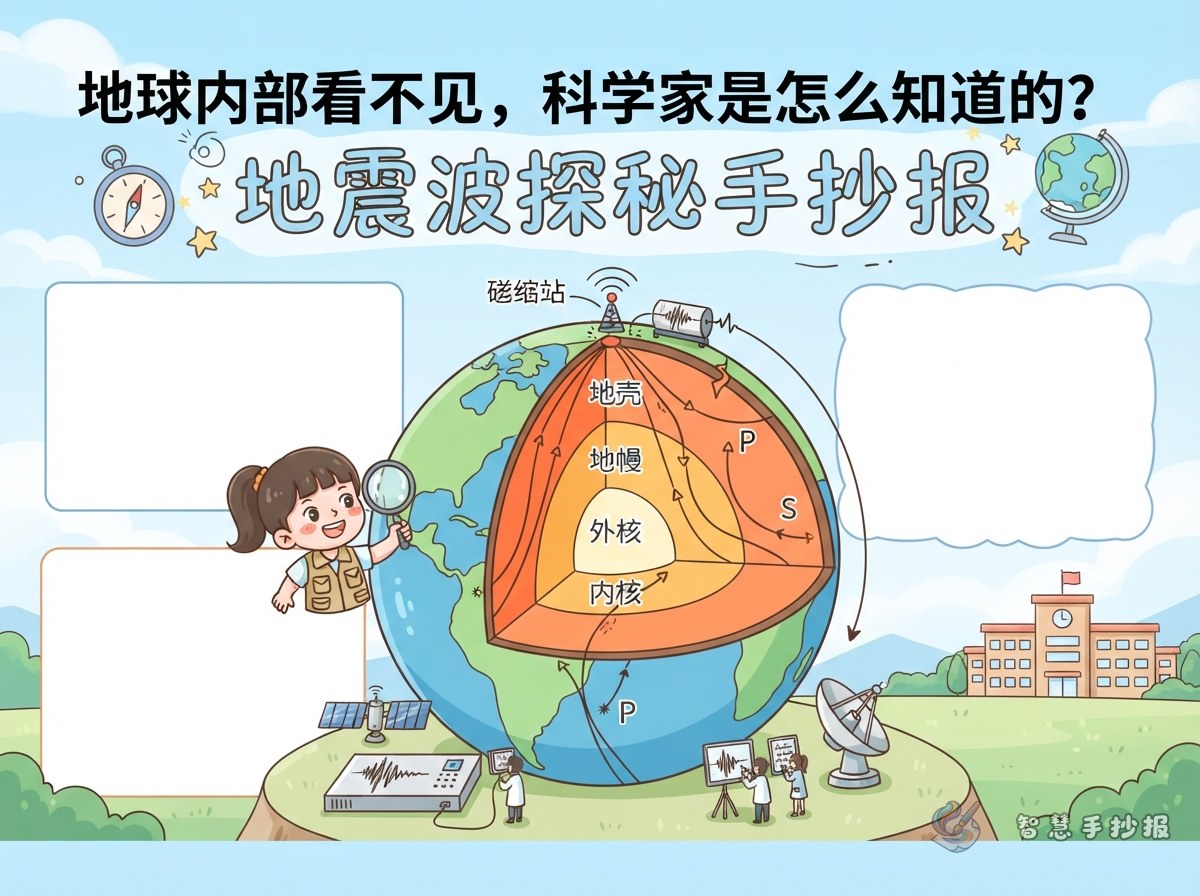
There are two main types. P waves are fast and can travel through solids, liquids and gases. S waves are slower and can only travel through solids. When these waves pass through different materials, their speed and direction change, and scientists use those changes to picture the inside of the Earth.
2. Two important boundaries
- The Moho: the boundary between the crust and the mantle, where seismic waves suddenly speed up.
- The Gutenberg discontinuity: the boundary between the mantle and the core, where S waves disappear, showing that the outer core is liquid.
3. The three main layers
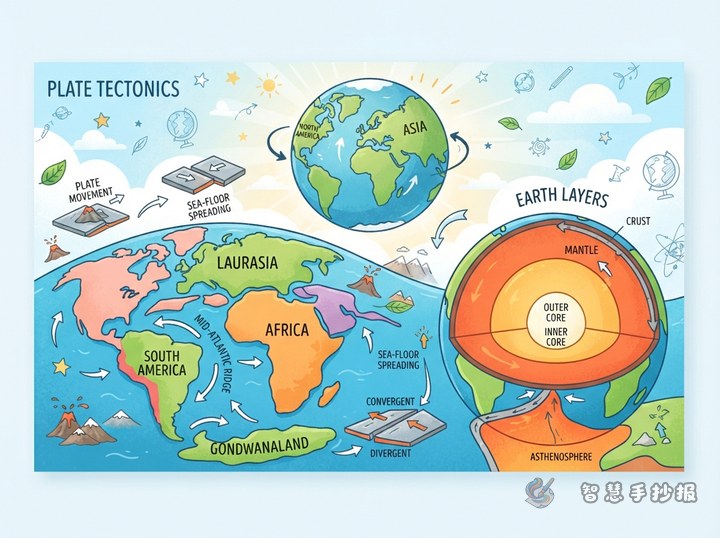
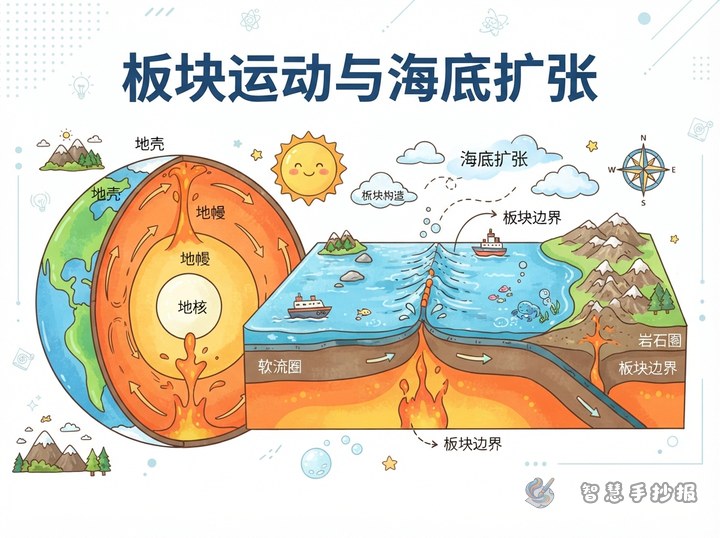
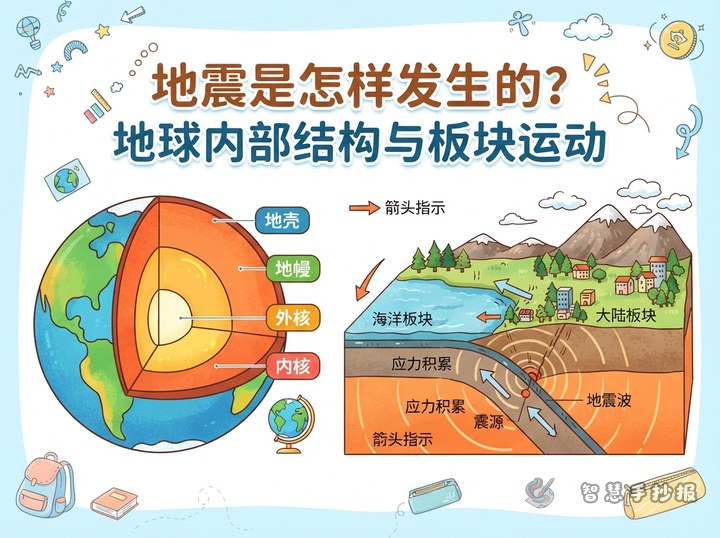
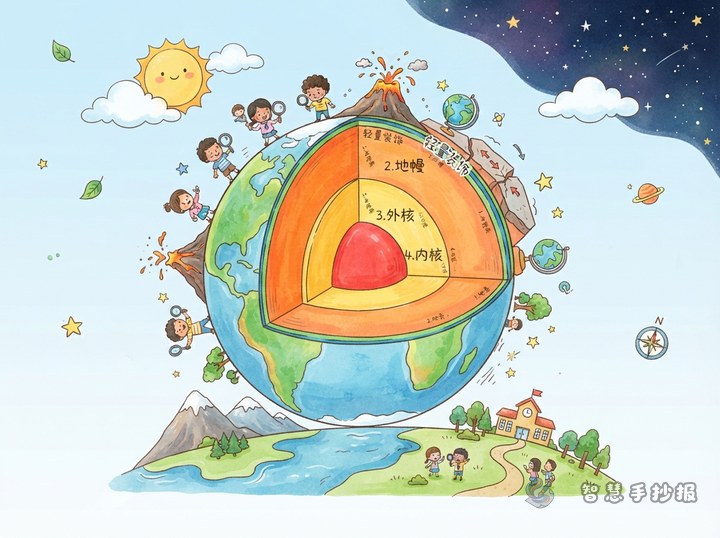
From outside in, the Earth has a thin rocky crust, a thick mantle where the asthenosphere helps plates move, and a core with a liquid outer part and a solid inner part.
Four Boxes That Keep the Layout Tidy
- Detective team sets off: start with a question, such as 'Why can't we just dig a hole to the center?'
- Seismic wave report: draw the paths of P waves and S waves and mark where their speed changes.
- Boundary discovery day: make two small cards for the Moho and the Gutenberg discontinuity.
- My field notes: sum up the crust, mantle and core in three short sentences.
Drawing Tips for the Cross-Section
Place a large Earth cross-section in the middle. Use different colors for the crust, mantle, outer core and inner core. From the earthquake point, draw two arrows: one for a P wave and one for an S wave. Put text on the left, column cards on the right, and a small question strip along the bottom.
- Colors: light brown for the crust, orange for the mantle, bright yellow for the outer core, and deep red for the inner core.
- Title: use 'Underground Detective Agency' as the main title and 'Messages brought back by earthquake waves' as the subtitle.
- Decorations: add a magnifying glass, a stethoscope or sound wave symbols to match the exploration theme.
Sentences You Can Copy Directly
- The Earth is like a giant onion, but we cannot cut it open with a knife.
- Seismic waves are messengers that can travel through the whole planet.
- The place where S waves cannot go tells us the outer core is liquid.
- The Moho and the Gutenberg discontinuity are two important doorways underground.
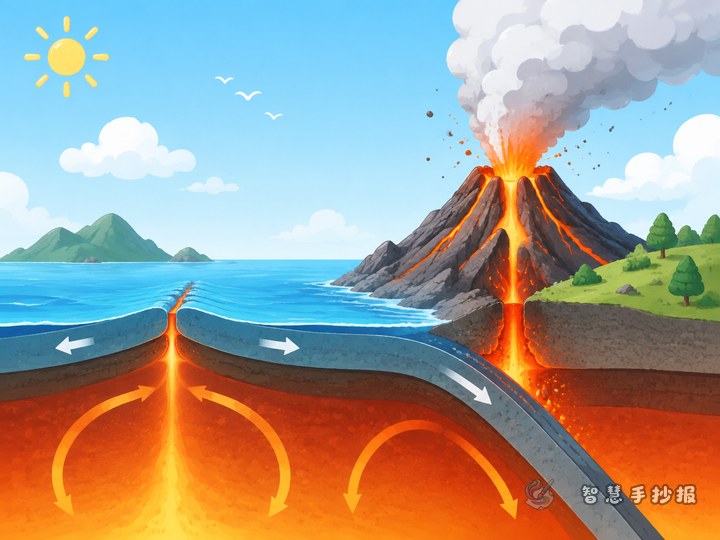
- Plates move slowly on the asthenosphere, and earthquakes and volcanoes often appear at plate boundaries.
Add One More Layer of Thinking
If you have space, add a corner called 'My Question': what other methods do scientists use to study the Earth's interior? Leaving a question on the poster can be more interesting than writing every answer. For more layouts, borders and text ideas, you can continue in the Smart Handwritten Newspaper WeChat mini program and turn your draft into a finished poster.