Make the Volcano Path the Main Picture
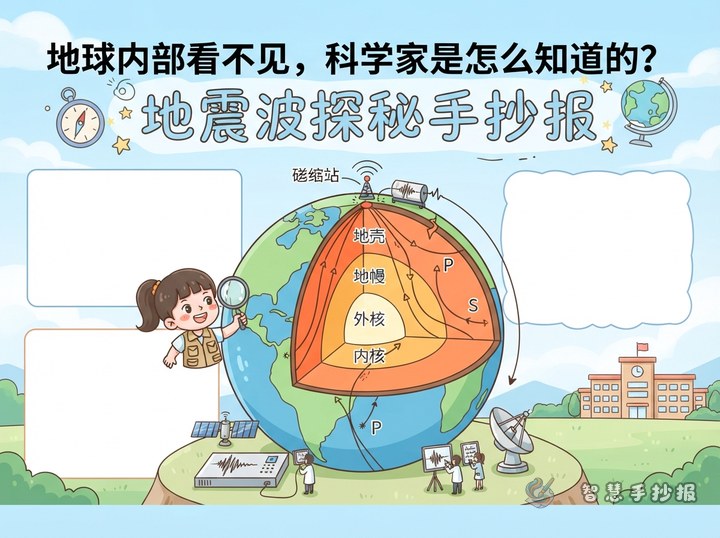
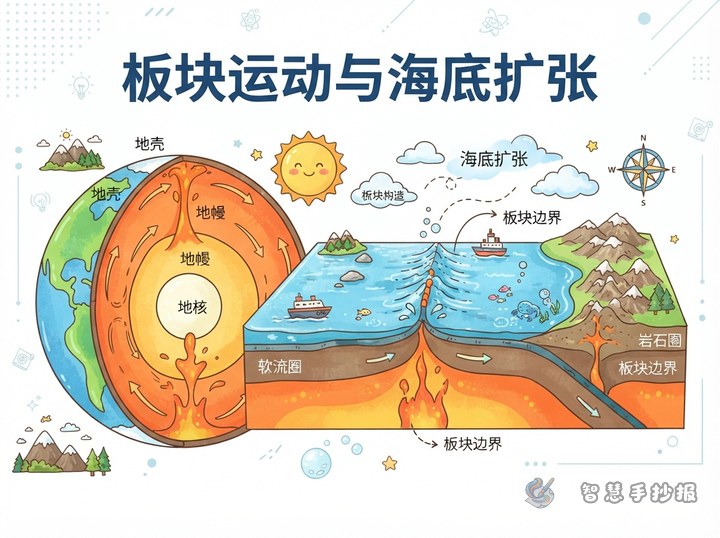
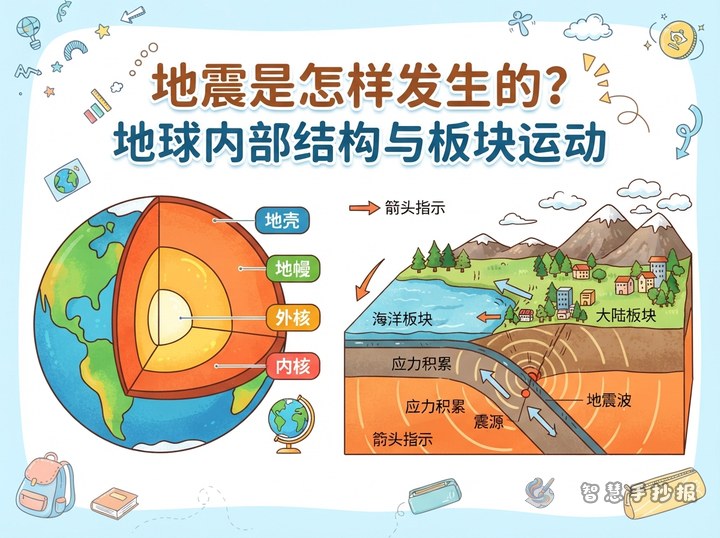
Instead of opening with an abstract explanation of plates, use the question of why volcanoes erupt to draw readers in. Then connect Earth’s interior with plate movement. Place a cross-section of a volcano in the center, label the crust, mantle, outer core, and inner core below it, and use bold arrows to show plate motion and rising magma.
Four labels for the central diagram
- Use a thin outer band for the crust and label it as the hard surface where we live.
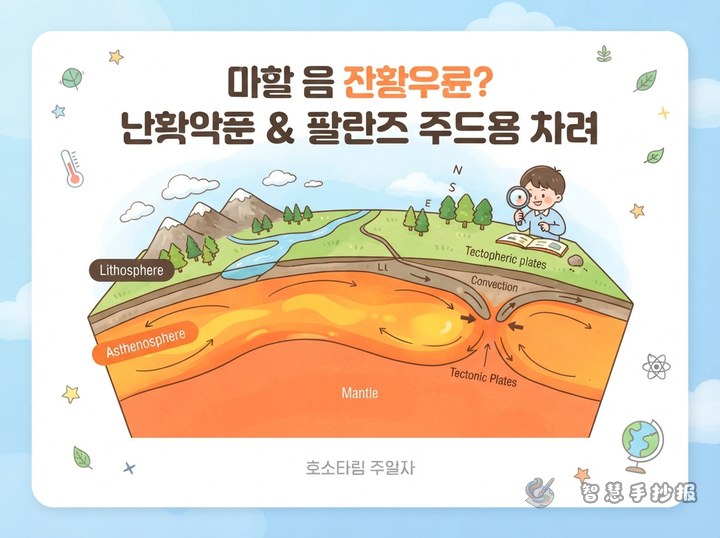
- Color the mantle orange and red, adding slow circular arrows to show heat-driven movement.
- Mark the outer core and inner core deeper inside. Simple labels are enough for a primary school poster.
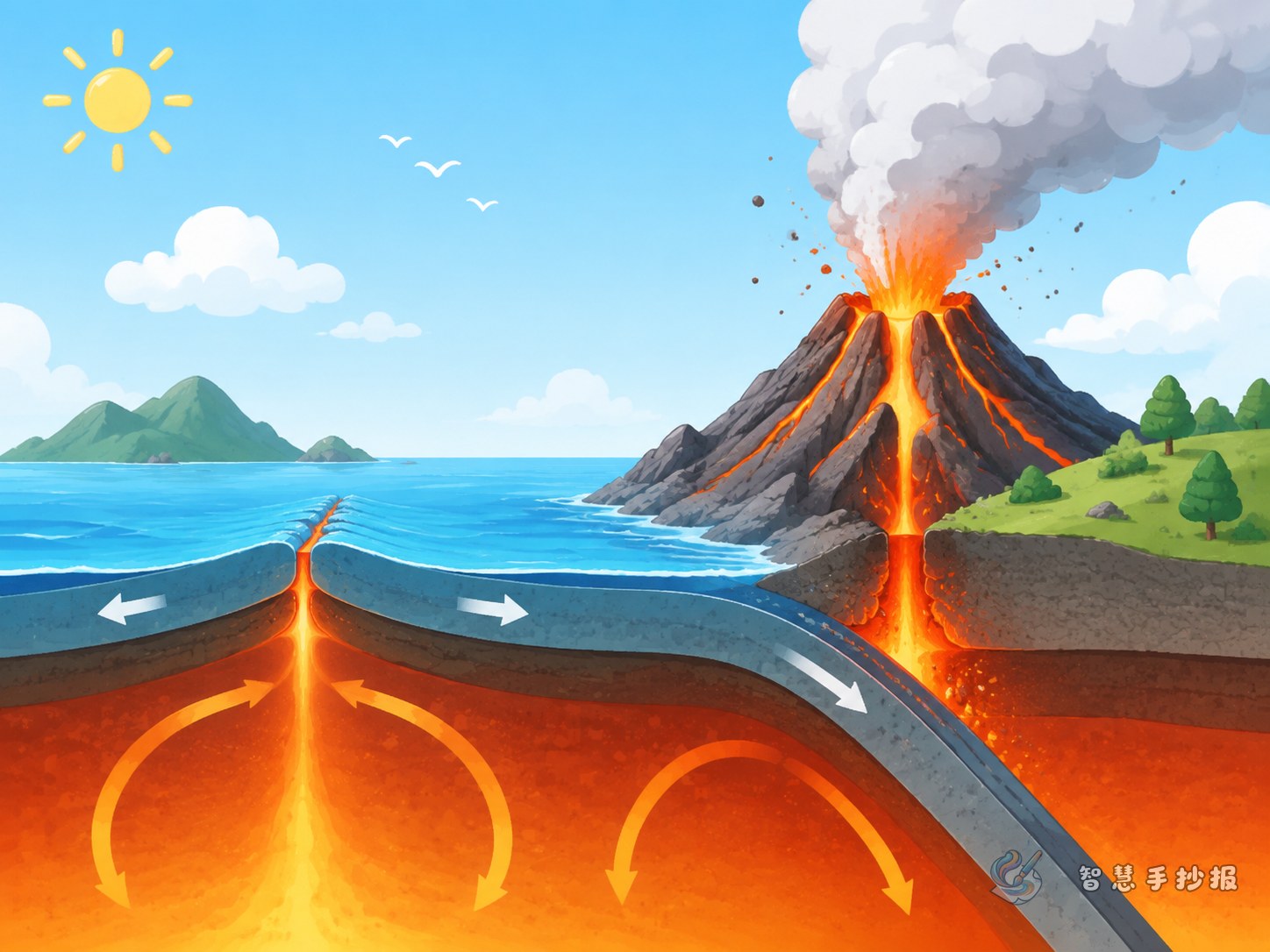
- Draw a magma chamber, a rising channel, and a volcanic vent near a plate boundary. Connect them with the sequence forming, rising, and erupting.
Explain the Process in Three Steps
- Heat movement in the mantle: Earth contains internal heat, and mantle rock moves extremely slowly. Arrows can make this idea easy to understand, but note that the mantle is not one giant ocean of liquid.
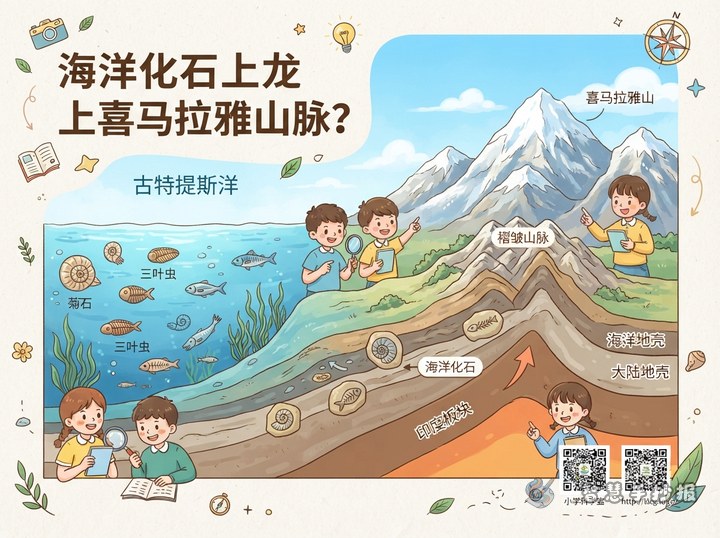
- Plate subduction: When plates meet, a colder and denser oceanic plate may sink beneath another plate. Rock and water carried downward can help some material melt, producing magma.
- Magma rises: Magma collects underground and may travel upward through cracks. When pressure is released and magma reaches the surface, lava, ash, and gases may be released.
Add a small note in the lower corner: volcanoes can also form where plates pull apart and magma rises. Underground it is called magma; after it reaches the surface, it is usually called lava. This makes a useful comparison card.
Copy-Ready Science Cards
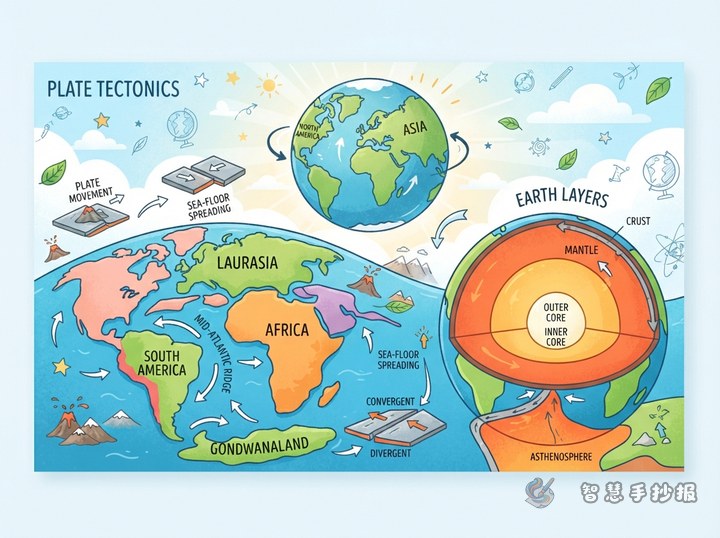
- What are plates? Plates are rigid pieces of the lithosphere, made of the crust and the uppermost mantle. They move slowly like pieces of a giant puzzle.
- Are all volcanoes erupting? No. Many volcanoes are dormant, and an eruption requires suitable conditions involving magma, gas, and pressure.
- Why do volcanic belts form? In areas with frequent subduction or rifting, magma can rise more easily through cracks, so volcanoes may appear in long groups.
- Is the mantle an ocean? No. It is mostly solid rock, although heat and long-term pressure allow it to deform and flow very slowly.
One-sentence conclusion
Plate movement changes the forces acting on rocks, partial melting produces magma, and rising magma can reach the surface and create volcanic activity.
Turn the Layout into an Earth-Cross-Section Adventure
Try a large central picture with four information boxes around it. Put the title at the top, the volcano cross-section in the middle, the four Earth layers on the left, and the three stages of subduction on the right. Place the magma-and-lava comparison and one-sentence conclusion at the bottom. This guides the eye from Earth’s depths to the volcanic vent.
Color and decoration ideas
- Use brown or gray for the crust, orange and red for the mantle, and yellow for the core to make depth easy to read.
- Draw plate boundaries with thick dark lines, motion arrows in blue or purple, and magma channels in red. Clear contrast is better than using too many colors.
- Add small rocks, a globe, a compass, or volcano icons, but keep them away from important labels.
Final Check: Let Every Label Explain the Picture
Before finishing, check whether the crust and mantle are labeled, the arrows show both subduction and rising magma, and the text distinguishes magma from lava. The title should make the poster topic clear at a glance. To arrange columns, title boxes, and science illustrations more easily, continue in the 智慧手抄报 WeChat Mini Program and adjust the content to fit your paper size.